

The Festive Winter Shrub Perfect For Borders That Has Fragrant Spring Blooms
It can be difficult to find a plant that looks good in the garden year-round — especially one that looks festive in December and produces sweet-smelling flowers in the spring. There is, in fact, a broadleaf evergreen shrub that offers a splash of color — via its bright red berries — during the winter season, when many other plants are dormant. After the festive berries, which appear in fall and stick around into winter, die away, the plant switches to bloom production. Fragrant flowers cover the shrub in spring. What is this pretty plant, you ask? It's called a Japanese skimmia (Skimmia japonica) — and it checks all your ornamental gardening boxes with ease.
What's more, the Japanese skimmia is a deer-resistant plant that will thrive in a shady corner of your yard. Shade-loving shrubs that produce vibrant berries and blooms are hard to find, making this shrub a top choice for gardeners looking for year-round beauty in a partially shaded area. This plant does best in USDA Hardiness Zones 6 to 8, growing well in conditions that mimic the damp, shaded woodlands of its native ranges in Japan and Taiwan. Because of its manageable size (it typically grows 3 to 4 feet tall and up to 5 feet wide), you can use it as an edging shrub to add definition to a garden design.
The annual cycle of Japanese skimmia contributes to year-round visual interest
The Japanese skimmia is an evergreen shrub that will make your landscaping look great all year. This year-round interest is easily one of its best features. However, if you're looking forward to enjoying the plant's red berries during the winter months, you'll need to invest in a few Japanese skimmias. This shrub is a dioecious species, which means the male and female flowers grow on separate plants. The female plants grow the berries, but they rely on the male plants for pollination to make that happen. To guarantee an abundant winter berry display, you need to plant at least one male Japanese skimmia for every group of six female shrubs.
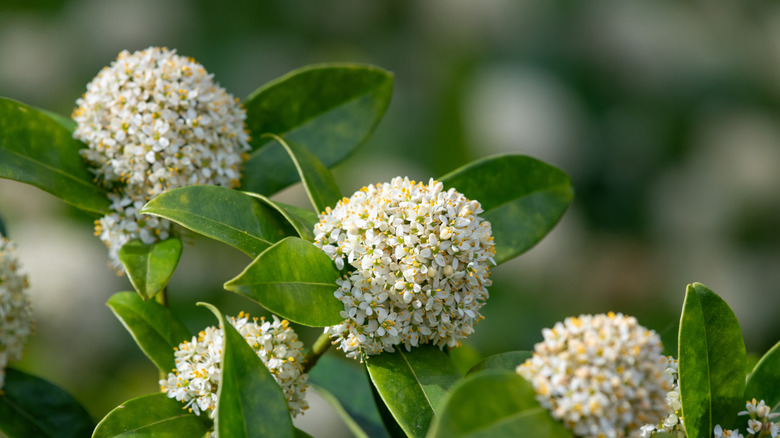
Beginning in late fall, male shrubs grow dark red buds that sit on top of the green leaves. These buds and the full foliage add contrasts beautifully with the leafless dormant perennials in your garden throughout winter. Female plants, once pollinated, produce berries that ripen bright red in October. The berries are an important winter food source for backyard birds. They are, however, toxic to humans and can cause serious illness if ingested. Keep the plant out of reach of young children. As winter turns into spring, the buds on the male plants open into sweet-scented white flowers. Although both male and female plants produce flowers, the fragrance is strongest on the males and the blooms are larger.
How to make sure your Japanese skimmia grows beautiful red berries

Paying attention to the specific needs of a Japanese skimmia is the best way to get it to grow the most berries and flowers. The main thing to consider is light exposure — or its need for a lack of it. These gorgeous flowering shrubs that thrive in the shade do best planted under tall deciduous trees or along the north side of a building. Planting this shrub in full afternoon sun will result in the glossy, dark green leaves turning yellow or burning. Consider, too, the scent of the flowers. The plant is an excellent choice for garden borders near doorways, windows, pathways, or patios where passersby can enjoy the smell.
Regularly mix some compost or well-rotted manure into the garden bed to mimic its natural soil conditions. The spot you choose also needs to have loose, well-aerated soil. The shrub doesn't do well when its roots are sitting in water, so good drainage is vital. Japanese skimmias are relatively easy to maintain throughout the year. Add thick mulch annually around the plant's base to keep the soil moist and introduce vital nutrients. To keep your shrubs looking tidy, minor trimming, like removing dead or diseased branches, can be done after spring blooming has wrapped up. Because these shrubs are dense and slow growers, major pruning is rarely needed.