

Help Your Pepper Plants Thrive With A Leftover Liquid From Your Kitchen
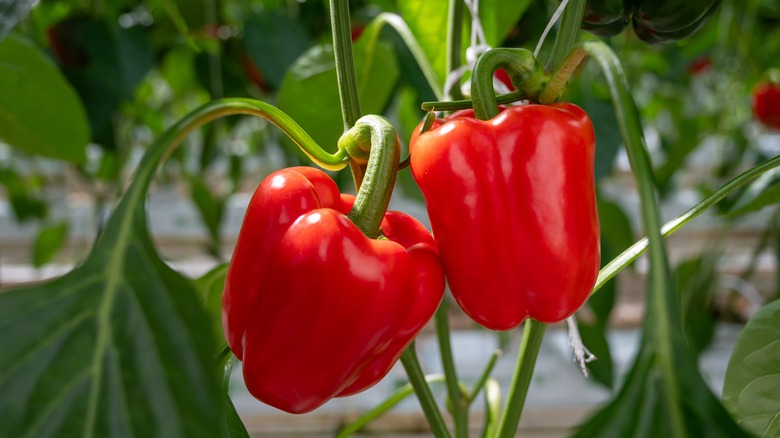
The kitchen is a treasure trove of unexpected things you can use to improve your garden — beginning with the many food scraps that can be used as fertilizer instead of ending up in the trash. A great example of this is the liquid leftover after washing or boiling rice, commonly known as rice water. Specifically, this liquid is often said to help pepper plants thrive and produce more fruit.
Rice water may be a waste product in the kitchen while preparing dinner, but in the garden, it's a valuable resource that provides extra nutrients for your peppers. Small amounts of nitrogen, phosphorus, and potassium are found in this "liquid gold," and they play an important role in helping pepper plants grow healthier, develop stronger roots, and become more resistant to disease.
Beyond that, there's also a lot of starch in rice water, a complex carbohydrate that serves as food for microorganisms in the soil. Eventually, this process helps with water uptake for the plants as the microbes loosen the soil. Better yet, as starch breaks down in the soil, it can then be absorbed by plant roots, providing them with even more energy for plant growth. Moreover, rice water contains micronutrients such as iron, magnesium, and calcium, all of which are beneficial to plant vitality.
Types of rice water to use on your pepper plants
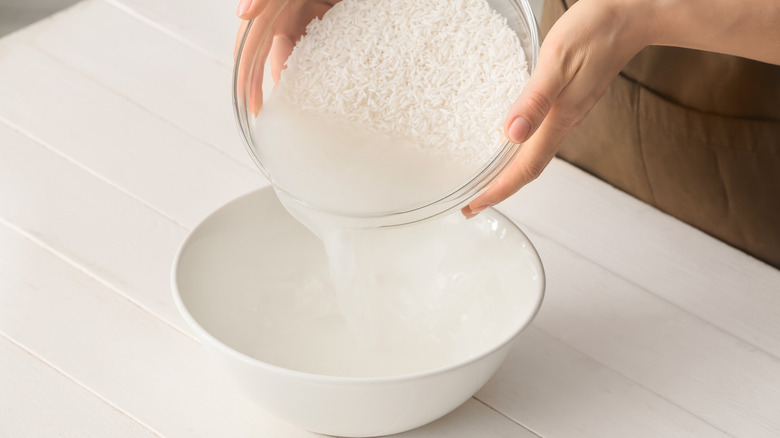
When preparing rice, you typically wash the grains before putting them on to boil. Even if you're using a different cooking method, you still need to rinse the grains to get rid of any excess surface starch, pesticides, dirt, and other bits you wouldn't want to end up on your plate. The result is rice water that appears cloudy due to the starch released during rinsing. This washed rice water is the first type of rice water you can use to water your plants.
Another option is to use boiled rice water, which draws out additional nutrients from the rice. To make this type of rice water, boil the rice (without salt or any other seasoning) in a water-to-rice ratio of 2:0.5 cups. After it boils and the water turns cloudy, strain out the liquid and allow it to cool completely before using it to water your pepper plants.
Finally, the third type of rice water you can use on plants is the fermented version. You can make this by adding a bit of rice to a jar of water, covering the jar, and letting it sit in a dark spot for one or two weeks. This fermented rice water will have the most beneficial bacteria due to the fermentation process, but it also takes the longest to prepare.
How to use rice water as a natural liquid fertilizer
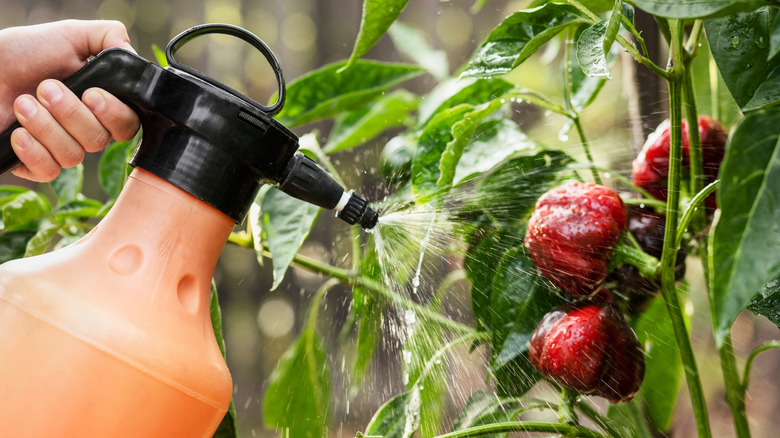
A recent study shows that, when added to gardening plants like peppers, rice water works more or less like regular NPK liquid fertilizer. Providing the plants with a healthy dose of nutrients, the solution can help peppers look more vibrant, develop more buds, and eventually produce more fruit. If you're planning to use washed or boiled rice water, simply pour the liquid into a spray bottle and use it to water the base of your plants or mist the leaves if they appear particularly lackluster. For the fermented rice water, dilute it with plain water first in a ratio of 1:2 before using.
While rice water is generally a mild natural fertilizer, avoid overuse, as it can be harmful. Once a month is a good starting point. That said, too much of it can lead to excess starch in the soil, which may attract pests, promote the growth of unwanted bacteria, or cause root rot, ultimately damaging your pepper plants. Interestingly, rice water not only improves the health and development of your peppers, but it can also be used to naturally repel pests from your garden — a benefit that's appealing to gardeners looking for more natural solutions.