

The Invasive Flower That May Be Attracting Ticks To Your Home
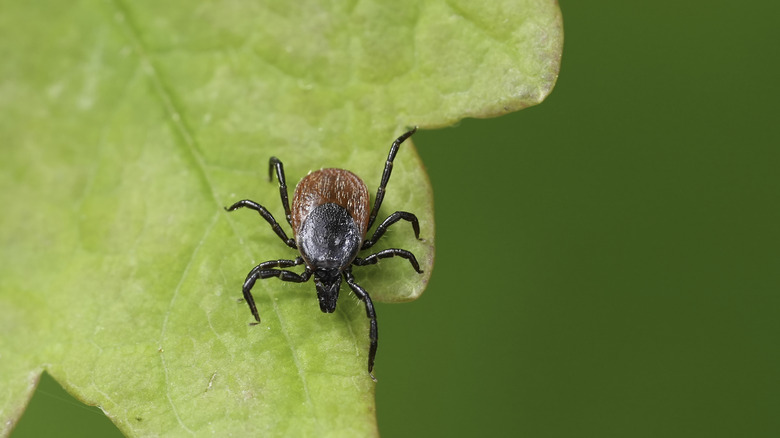
Ticks are more than just an annoyance when they enter your yard or home — they are known to carry diseases that can pose serious health risks to any occupants in the home, including pets. It is a common belief that tall grass will invite ticks to your yard, which is true. However, if you have a perfectly manicured lawn and ticks are still a problem, the issue may not be the grass. You may have an invasive flower hiding in your garden, boosting the tick population: Japanese honeysuckle (Lonicera japonica).
Unlike the many plants you want around to keep ticks out of your yard, Japanese honeysuckle invites the ticks in. Research studies have shown that areas that are invaded by honeysuckle are much more likely to also be infested with ticks. This, in turn, increases the risk of tick-borne illnesses in both humans and animals. By learning to identify and remove invasive species from your home, you can improve the living conditions for yourself, your family, and your community.
How to identify Japanese honeysuckle
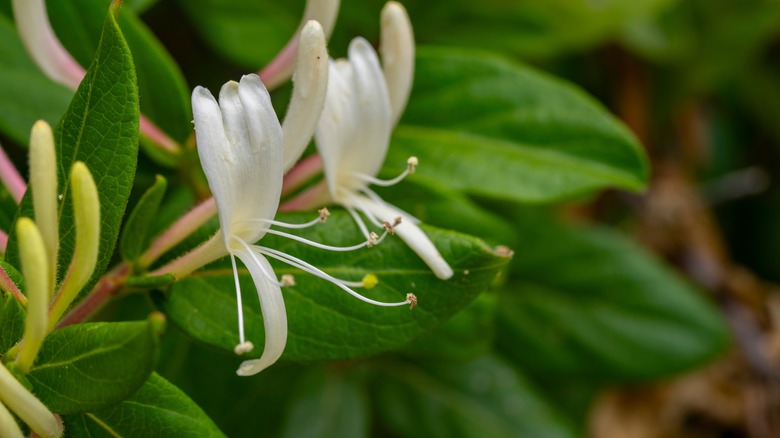
There are actually several common things in your yard that could be luring ticks, but Japanese honeysuckle poses the additional problem of being invasive. Addressing the problem starts with learning how to identify the culprit. Japanese honeysuckle is a flowering vine that can crawl across the ground or climb structures. Not only does it create the ideal breeding ground for ticks, but it also chokes out native plants. It can survive in USDA hardiness zones 4 to 11.
The leaves are described as oval and opposite. They can grow to be between 1 and 3 inches long. In the spring, the vines produce white or pink tubular flowers with two lips that are usually smaller than 1 ½ inches. When the flowers die in the fall, the plant produces small, round, black berries. The stem is a reddish-brown color with thin hairs. Japanese honeysuckle also grows relatively fast (up to 10 feet per year), so if you don't notice it the first year, you probably will the next.
How to get rid of Japanese honeysuckle from your yard
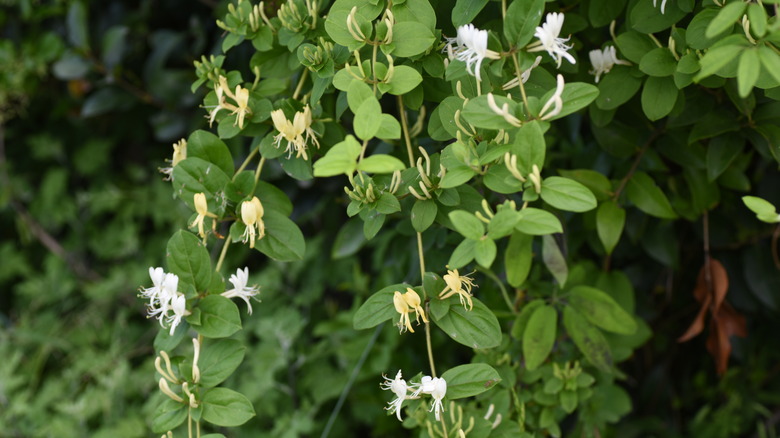
Removal is much easier if you identify the problem early on. If the plant is still young, it is less likely that the roots have become completely established. Japanese honeysuckle is an aggressive grower, which means that the roots need to be pulled completely to make sure that it does not regrow. If you are going to try to pull or dig the plant out by the roots, make sure to do it before the fall when the plant starts fruiting. This will prevent the fruit from dropping seeds that will germinate in the freshly disturbed ground.
It is best to avoid cutting or mowing the plant, as this is only a temporary solution. Cut plants will regrow, and they may come back thicker than before. If manual removal fails, you can consider chemical options like glyphosate or triclopyr, but you may want to contact a professional before resorting to harsh measures. Once it is gone, you can select plants to replace the invasive honeysuckle that are easy to maintain. With the right selection, you can reduce the risk of the honeysuckle growing back and repel any remaining ticks.