

Popcorn Ceiling Vs Textured Ceiling: Is There A Difference?
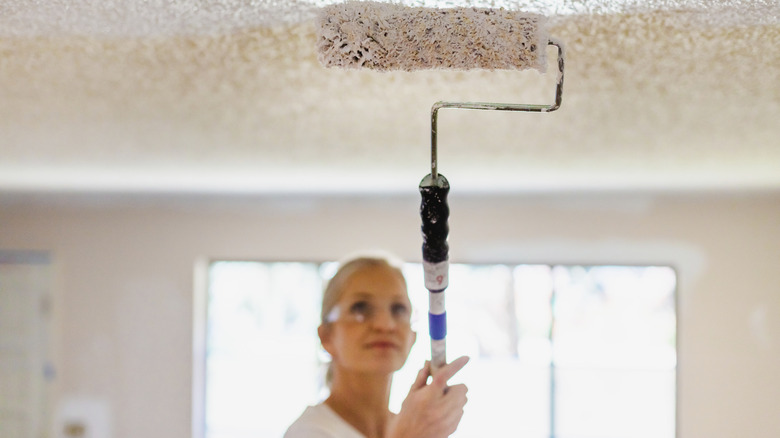
Are you renovating your home and thinking about what to do with the ceilings? If your ceilings have texture, you may wonder whether they are popcorn ceilings or another finish entirely. There is a difference between popcorn and textured ceilings, and the term "textured ceiling" is actually a broad category for any non-perfectly smooth finish, meaning styles like knockdown, stipple, and orange peel patterns are included. The specific type of acoustic finish that covered residential ceilings for decades became so common that it got its own nickname, "popcorn," due to its distinct look and application.
Choosing between a smooth ceiling, a popcorn finish, or a subtle texture can affect everything from a room's appearance to its acoustics and the difficulty of any future changes. The main benefits of nearly all types of textured finishes are their ability to disguise imperfections in the drywall that would be very obvious on a flat surface and to add sound damping. The ingredients in the formula used for older acoustic ceilings make them stand out, especially in homes built between the 1950s and the 1980s. Understanding the composition and installation method of each type is important if you plan to repaint or patch the ceiling treatment in your home, and especially true if you want to remove your popcorn ceiling.
Why older popcorn ceilings often contain asbestos
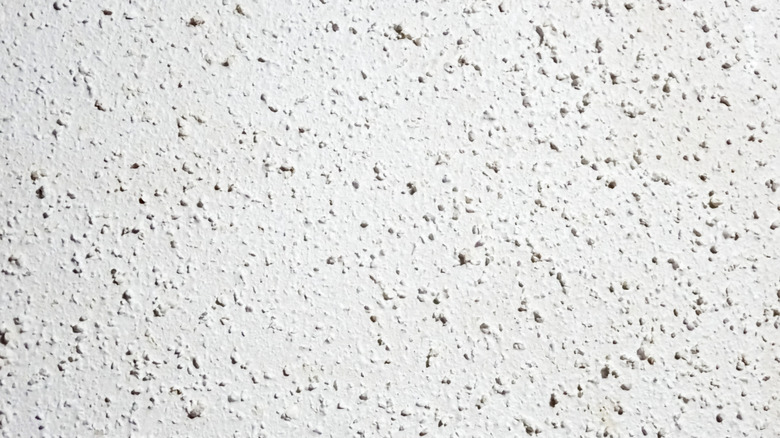
Popcorn ceilings, sometimes called cottage cheese ceilings, became common in the mid-20th century because they were budget-friendly and offered builders a practical solution for uneven surfaces. To get the unique lumpy look of a popcorn ceiling, the finish was created by spraying a mixture of paint and small particles made of vermiculite, Styrofoam beads, or polystyrene. Along with being cost-effective and easy to spray on, the rough coating was excellent at absorbing sound and concealing flaws in drywall installation.
Unfortunately, the age of these ceilings now presents homeowners with a serious issue. Homes built before the 1980s have a high probability that the popcorn material contains asbestos. Asbestos was originally used for its fire-resistant properties and was banned from spray ceiling textures under the Clean Air Act of 1978, although businesses continued to sell their remaining inventory for several years. If you're concerned about this, knowing the best method for testing your popcorn ceilings is important since scraping or damaging the finish of a popcorn ceiling can allow asbestos particles to float through the air. Removal often turns into a difficult, time-consuming process that usually requires professional remediation. The uneven nature of the surface of the ceiling also attracts dust, which makes it difficult to clean.
What benefits do textured ceilings have?
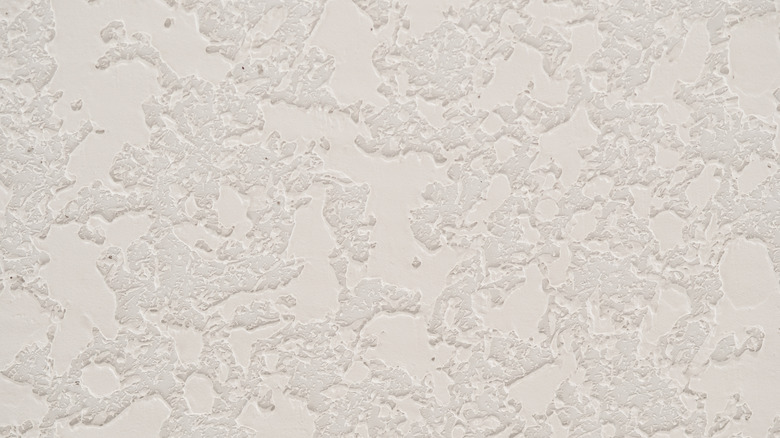
Aside from the popcorn style, other textured ceiling finishes offer a more modern appearance and easier maintenance. Many builders prefer using finishes like knockdown, orange peel, or swirl to add some visual interest without the heavy look of popcorn. These other textures are made with joint compound and applied using a variety of techniques. Knockdown texture is created by spraying compound onto the ceiling, forming small peaks. Before the material fully dries, a large, flat trowel is used to flatten the peaks, which creates a texture that resembles stucco.
Orange peel is another popular style, named after the dimpled pattern on an orange. This is a much more understated look than some of the other textured finishes. Because the texture isn't as rough, it makes it simpler to patch and repair an area of a ceiling that has this finish. Skip trowel, a texture that's created by applying irregular, thin layers of joint compound in decorative patterns, mimics the look of plaster, and works well in various home styles. These modern ceiling finishes are usually faster to remove and don't carry the same health risks as older popcorn ceilings. This is why many homeowners prefer a simple textured ceiling style for renovations and new builds, especially when they're looking for the best ceiling textures that reduce noise.