

The Functional And Seamless Door Making A Comeback In 2026

Whether you're looking to maximize space, create more privacy in your home, or simply add an element of timeless design, the classic pocket door is a great solution. Pocket doors initially became popular in the United States, as well as in England, during Victorian times, thanks to their space-saving design. By 1850, they were all the rage, and by 1880, they had been optimized to better withstand daily wear and tear by moving the tracks that were initially installed on the floor to the ceiling. Nowadays, that updated design is much the same, with pocket doors still running on an overhead track and sliding fully into a wall cavity to become hidden from view. However, they're now available in more sizes, styles, and finishes than ever before, and thanks to material advancements, this functional and seamless door is making a major comeback.
As several designers explained to Good Housekeeping, pocket doors are becoming a go-to you'll see more and more of in 2026 because they blend functionality with style. "There's a certain air of drama when you reveal what's been hidden away, so not only do they save space, but they're an opportunity to make a statement," designer Michelle Cheney explained. What's more, as designer Deborah Sauri cheekily told The Spruce, there's also a great hidden perk to consider, especially when having guests over. "[They're] especially convenient if you didn't want to clean up the mess behind the doors," she mused.
The pros and cons of pocket doors
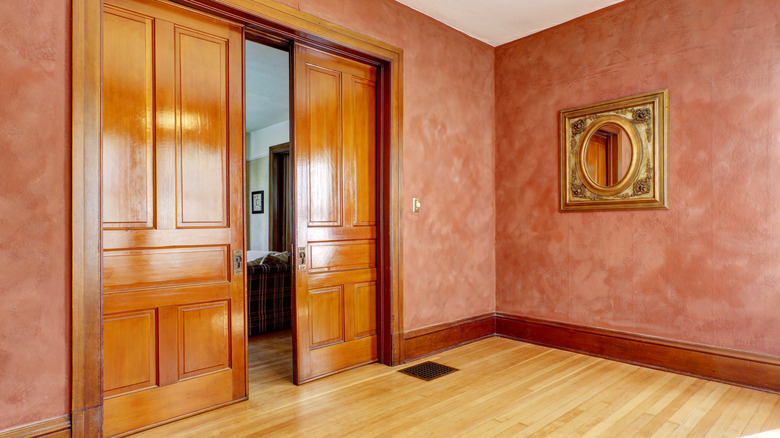
While pocket doors first rose in popularity nearly 200 years ago, their space-saving design is as useful as ever. Unlike traditional doors that swing out into a room, pocket doors slide into the wall, so they don't take up any real estate. They're particularly suited to tighter areas, like closets and bathrooms, although they can also serve as wonderful dividers between larger spaces, like a living room and home office. This nifty door solution is also perfect for houses with pets or small children, as a half-pocket door can be used at the top of a staircase to prevent dangerous falls. What's more, they can easily be customized to fit any aesthetic with paint, stains, stencils, or even fun wallpaper.
However, it should be noted that pocket doors do come with a few downsides. For one, they don't close as tightly as traditional doors, which means they let through more noise, light, and even smells. What's more, they can only be installed in areas where there are no load-bearing studs, wiring, or plumbing within the walls, and they can be costly. The average price with installation runs between $1,400 and $3,000 when added to an existing wall.
Finally, pocket doors can sometimes come off their tracks while warping may cause them to get stuck completely. However, the use of improved materials helps curb the latter, as new cavity systems made of aluminum instead of wood offer better longevity, as well as a soft close, so there's no more loud banging.