

Ditch The Ice & Defrost Your Driveway With An Affordable Kitchen Essential
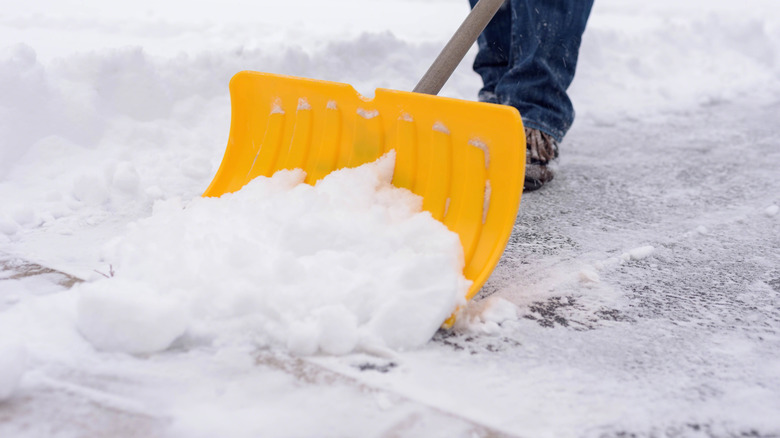
At the first sight of ice and snow, many people rush to the stores to buy rock salt and ice melt to spare themselves the hassle of finding and avoiding slippery ice patches. If you didn't look at the weather forecast beforehand, you might find yourself staring at empty shelves where bags of ice-melting products once were. While winter salt is practically an essential item for those who endure frosty temperatures, there are many alternatives that can be used in lieu of it in case you run out or can't acquire a bag at the store. For one, table salt is a common kitchen ingredient that doubles as an effective de-icer if you need to melt ice in a pinch. There are downsides to utilizing sodium chloride to melt ice, however, the primary one being the negative impact it has on the environment. For a safer alternative, an easy mixture of water, isopropyl alcohol, aka rubbing alcohol, and a bit of dish soap can be used to melt ice and defrost your driveway.
To create your new de-icing concoction, simply grab a spray bottle for application and mix the needed ingredients in the bottle. You'll need to combine two parts of water with one part of rubbing alcohol, finishing the solution with liquid dish soap. Mix well by shaking the bottle and spray it directly on icy spots to melt them down and prevent them from freezing over again. This mixture makes for a better and easier way to remove snow and ice from driveways since you most likely have the materials already in your home. It's also less damaging to your concrete driveways and the environment, so long as the alcohol and dish soap is properly diluted with an adequate amount of water.
Isopropyl alcohol lowers the freezing point of ice
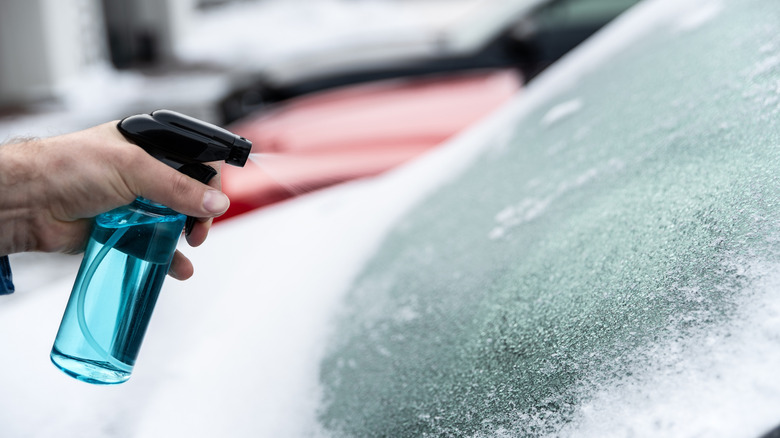
A liquid de-icing solution may seem to be counterproductive at first, but when you look into the chemical properties of this concoction's ingredients, it can be used in lieu of winter salt and it also makes for a safer alternative for plants. Isopropyl alcohol, or any alcohol for that matter, has a very low freezing point. Rubbing alcohol will not freeze until temperatures drop to -129.1 degrees Fahrenheit. Since the solution is primarily composed of isopropyl alcohol, it will not freeze over in the way that water or any other liquid does. Rather, it actually helps melt ice by lowering its freezing point, turning it to water and preventing it from refreezing.
Adding the liquid dish soap into the mix helps adhere the solution to the surface of the ice, helping it stick so the ice will melt into non-slick puddles. Diluting the solution with water helps make the concoction safer for wildlife and greenery, preventing it from dehydrating soil and eroding surfaces like how rock salt does. To ensure no puddles freeze over due to the added water, be sure to sweep away any excess solution after applying.