

Student's Colossal Discovery Could Lead To Longer-Lasting Appliances: 'That Was Crazy'
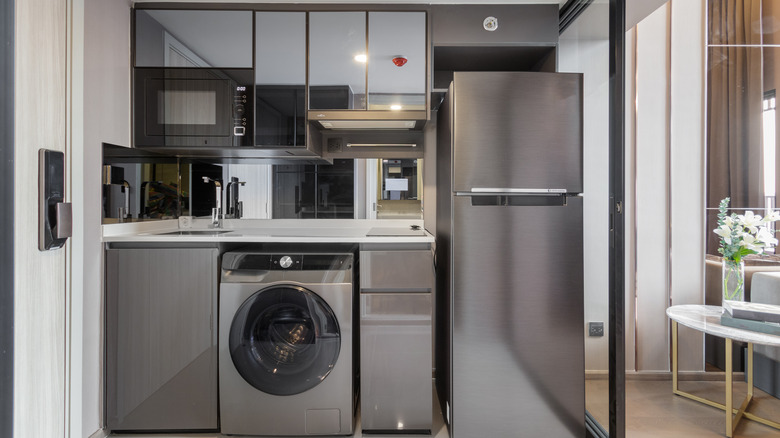
Imagine your power goes out, but you can still run your refrigerator, stove, and other appliances without relying on any external generator or home battery backup to supply them with power. How liberating it would be if your appliances had their own internal batteries that are capable of being nearly infinitely recharged, with enough electricity stored to last for hours and hours during a power outage? Consider what money you could save by investing in a highly durable battery at a time when electricity prices are out of control. Well, don't hold your breath: There are still a lot of technical hurdles to overcome to bring those batteries to market at a reasonable cost. But given the need for clean energy storage and increasing demand for electricity in general, the key to unlocking that future may be "nanowires" that can allow batteries to be charged and discharged over 200,000 times – around 100 times longer than a good quality lithium-ion battery today.
Nanowires are so tiny – far thinner than a single human hair –– that they are considered one-dimensional. Their size is what allows them to conduct electricity at super high rates and potentially at a low cost to produce. A graduate student's key discovery in making nanowires last far longer than standard lithium-ion batteries was made in 2016. That may sound like old news, but consider that lithium-ion batteries were conceived of in the 1970s but didn't reach consumer products until the early 1990s. A 2025 scientific article reports that recent research progress has been made in making nanowires a key to energy storage devices. Some battery-powered alternatives to traditional stoves are already on the market. Some day soon, all your kitchen appliances — plus your phone, your electric vehicle, your entire home — could be running on batteries that last for decades.
A bright future of batteries is around the corner
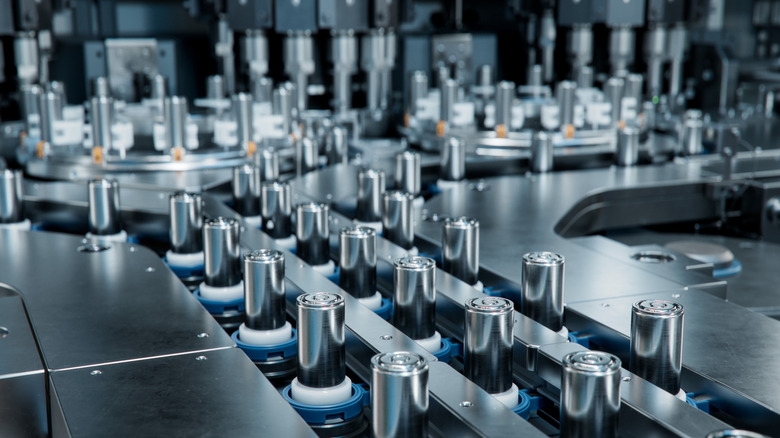
Increasing the efficiency of batteries with nanowires can help homeowners save money. By storing energy in your appliance batteries when electricity prices are lower (often at night) and using those batteries to run your appliances when electricity prices are higher may eventually be one among the many ways to reduce home energy costs. But home batteries are currently an expensive investment. And given there is a lot of concern about the dangers of lithium-ion batteries, increasing the conductivity of batteries through the use of nanowires would allow batteries to be made of safer, less expensive, but less energy-dense materials (like sodium-ion batteries) and still provide the power needed to run home appliances (and other devices large and small) for a long time.
As with any new technology, one major challenge is that it is still very expensive to produce high-quality nanowires. Being so thin, they are extremely fragile and can grow brittle and crack. In 2016, University of California-Irvine PhD candidate Mya Le Thai coated gold nanowires in a gel to overcome the problem of cracking, but it was only one key step on the journey to make nanowire batteries commercially available. Hopefully, nanowire batteries will follow the path of other clean technologies, including lithium-ion batteries themselves, whose cost dropped by 97% in the three decades after they first entered consumer products in the early 1990s. There are still technical and manufacturing hurdles to be overcome before the technology becomes commercially available, but with great interest in and great need for improvements in batteries, hope remains high that nanowires can unlock a cheaper, safer, cleaner future.