

Your Kitchen Cabinets Don't Have To Match. Here Are The Styling Tips That Prove It
We may receive a commission on purchases made from links.
When you picture a stylish kitchen, what exactly do you see? Is it sleek modern appliances and smooth understated lines? Or, maybe you see something more fun and unusual that involves trendy colors and quaint decor pieces? Either way, it's likely that you're picturing a room with matching cabinets from top to bottom, and this isn't a coincidence. Ever since the early 1900s, when homes started to move away from individual, freestanding furniture pieces, kitchens have typically been designed around uniform, integrated cabinets. As a result, it is easy to fall into the trap of believing that is the only way to style a kitchen — but it isn't.
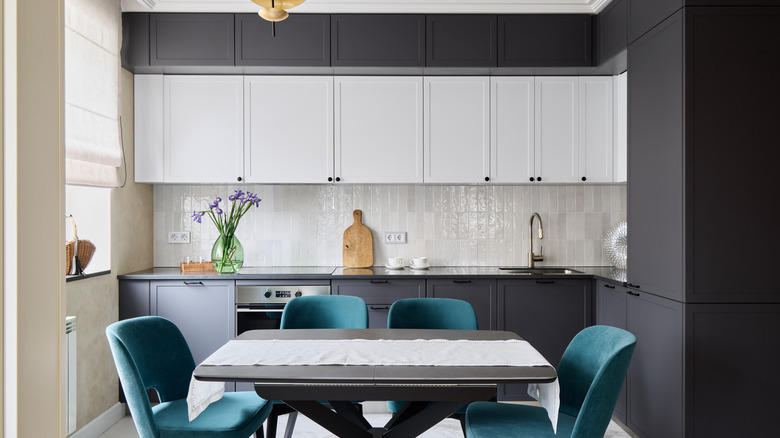
There are actually plenty of ways to style mismatched kitchen cabinets for a striking look that goes perfectly with your existing design preferences. From finding common elements to playing around with texture, dissimilar cabinets don't have to look disorganized or uncoordinated. One overarching guideline to keep in mind when implementing these styling ideas is to aim for some kind of shared element. If you'd like to try out different colors, for example, then keeping the shape and style the same is a great way to make mixed kitchen cabinets look cohesive and intentional. On the other hand, if you're curious about blending cabinets with different trims or designs, then keeping the same hardware or color scheme throughout can help to give them a changeable yet compatible feel.
Create a feature
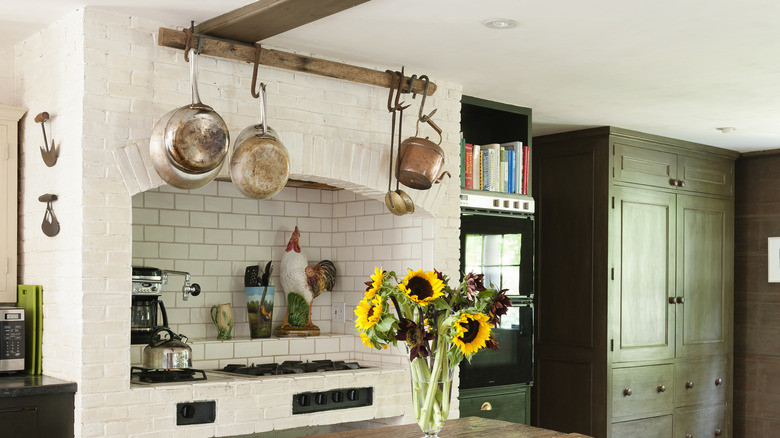
One concern people may have about mismatched cabinets is that their visitors might get hung up on the differences between each piece, ruining the overall effect. However, by adding a key eye-catching feature to your kitchen, you can pull the gaze away from the cabinet details, allowing them to be seen together as a whole. Consider adding in a fun mural, colorful backsplash, or fascinating light fixture to help the mixed cabinets blend seamlessly together in the background. Or, you can try something vertical like a hanging pot rack to connect the top and bottom cabinets together.
Lean into a theme
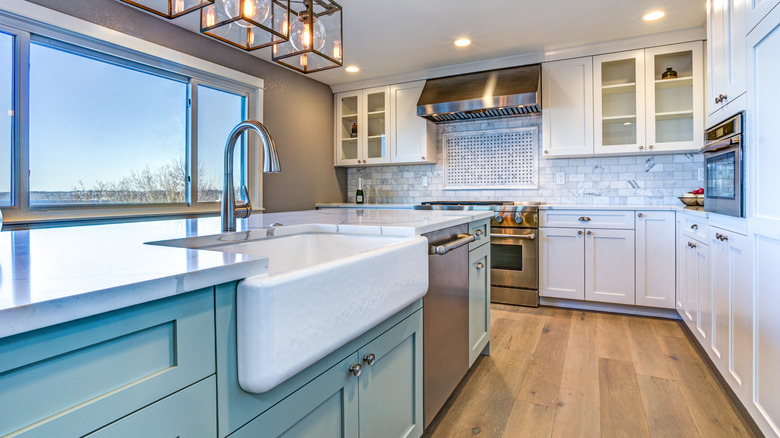
A great way to make mismatched cabinets feel cohesive yet interesting is to tie them together by a theme. For example, if your home has a clean, beachy style, you can carry that through your kitchen with pieces like a VVFLU sideboard buffet cabinet. Alternatively, if you prefer a mid-century design, you can look for cabinets that feature straight lines, earthy tones, and wooden elements. Help lower your budget by looking for cabinets at thrift stores, flea markets, or secondhand shops that fit the overall common theme.
Mix textures (but keep colors consistent)
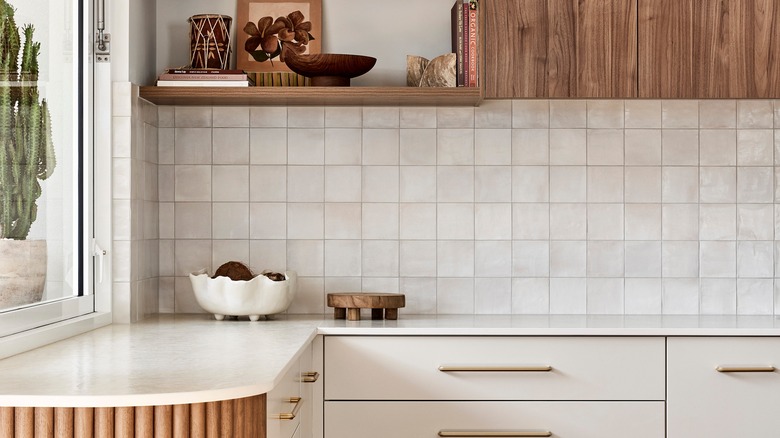
An element that can sometimes get overlooked in interior design, particularly in kitchens, is texture. While it can be tempting to think about size, shape, and color, varied textures give mismatched cabinets a dynamic look that is often missing from uniform kitchen designs. One option is to mix wood texture like fluting with transparent features like frosted glass or mesh for an open-shelving feel. Remember, however, when looking to refresh your kitchen by adding texture, keep the color scheme consistent to keep the space from feeling too busy, cluttered, or mismatched.
Choose soft furnishings
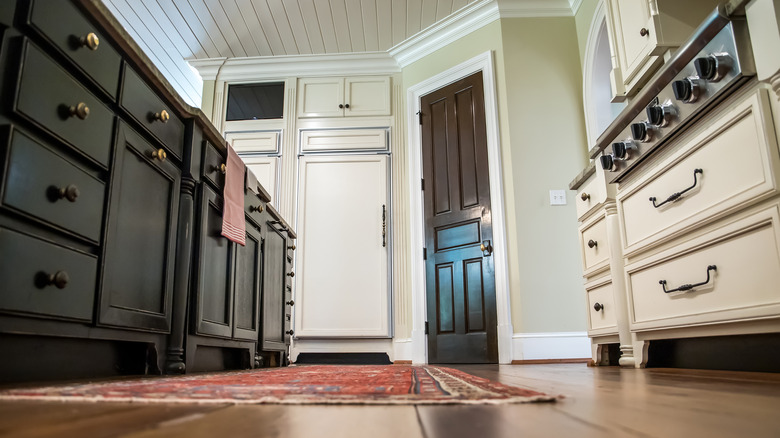
Believe it or not, one great styling tip for making mismatched cabinets work isn't about cabinets at all. Soft furnishings in the kitchen — such as rugs, tea towels, and seat cushions — can go a long way to making different cabinets come together in an aesthetically pleasing way. For example, if your cabinets feature multiple different colors, try finding some towels that feature all of the different shades to help tie them in together. Alternatively, if you want a fun, eclectic feel in the kitchen, pair mismatched cabinets with a patterned rug to create a layered look.
Create natural zones
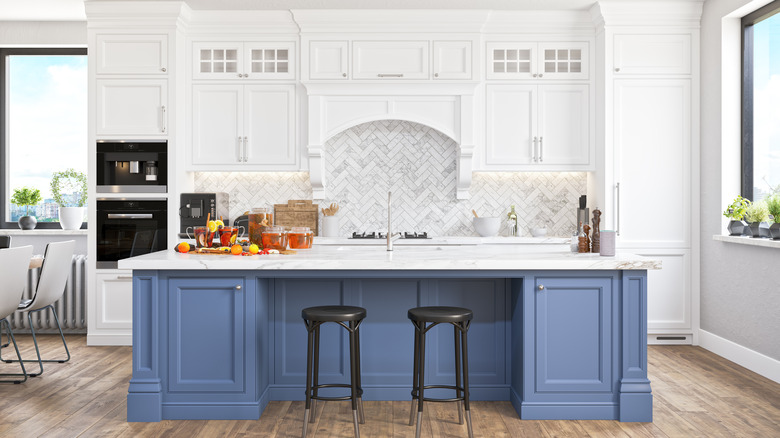
Color, texture, and shape can be powerful tools for creating different zones in your home without the need for walls or doors. As such, if you have a kitchen with different sections such as a dining area, cooking area, or breakfast nook, which have cabinets all the way through, you can use a mismatched scheme to separate them out. For example, using a different color, finish, or texture on your island can help it feel like an individual space for sitting, working, or socializing, effectively partitioning it off from the areas dedicated to cooking and baking.
Consider repurposing
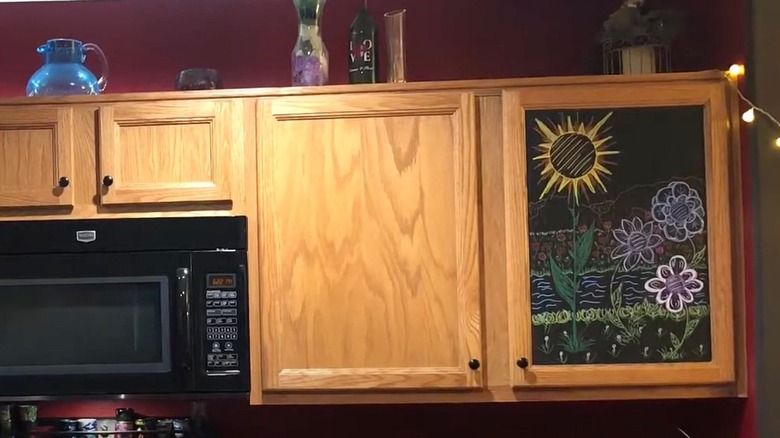
One way mismatched furniture can seem disorganized is if it doesn't feel like each piece is meant to be there. To avoid this in your kitchen, try giving the cabinets that differ a specific purpose. This is great if you've got one or two cabinets that are different from the rest due to damage or remodeling. For example, paint a cabinet door with chalkboard paint so that it can be used for memos, reminders, or important dates. This makes the mismatched cabinet feel intentionally different rather than a random accident.
Opt for consistent hardware
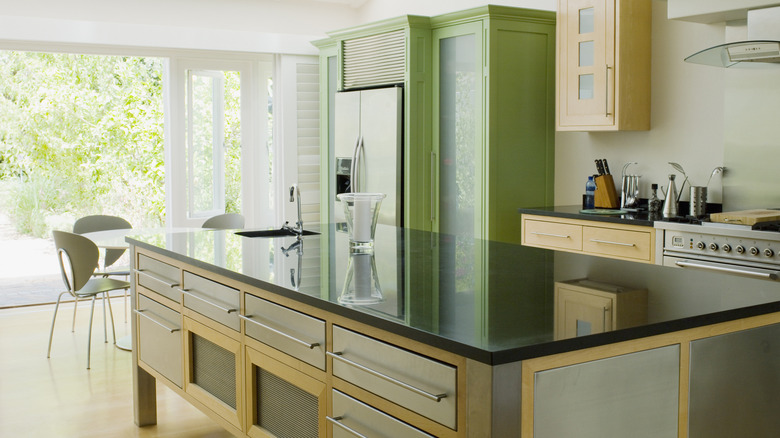
If you've decided to go with two tone kitchen cabinets or mismatched ones, it can be tempting to get varied hardware to suit each specific cabinet. However, a great way to make your kitchen feel cohesive is to find hardware that ties each piece together and to use that consistently. While this may sound difficult, there are plenty of handles available that bridge multiple cabinet styles. For instance, these Asidrama cabinet pulls have ornate detailing while their brushed nickel color contributes a contemporary feel, making them perfect for both modern cabinets and traditional ones.
Mix with open shelves
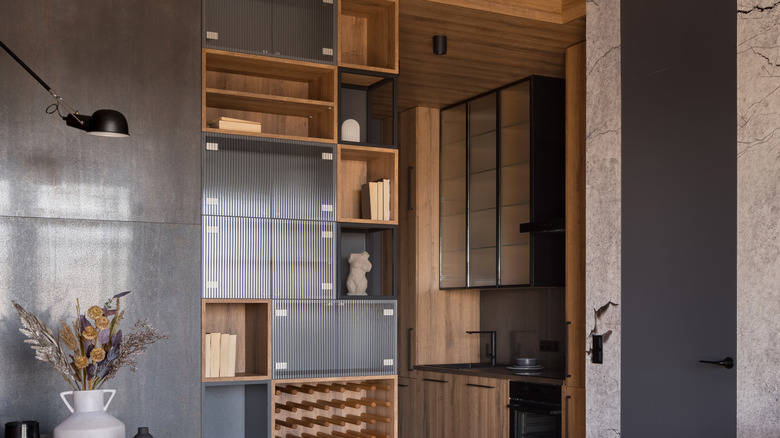
If you have multiple different types of cabinets that feel at odds and don't look great next to each other, such as a traditional china cupboard or hutch alongside modern slab cabinets, the room can end up with an incongruous feel. However, adding open shelving is a great way to create space between them and make the room seem more cohesive. Tie in the open shelving with similar colors and hardware for a layout that looks both interesting and intentional.