

Are Smaller Laundry Loads Really The Money Saving-Hack Everyone Says They Are?
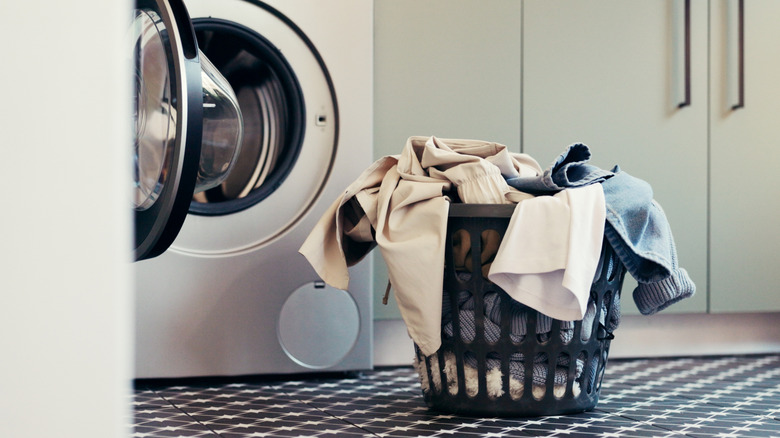
You may think doing laundry is a simple process. You throw in clothes, pick a setting, and let the machines do their job. However, there are a lot of debates on the right way to wash a load, such as whether you have to separate clothes, the kinds of products to avoid, the best machines, and even what should be washed and dried at home. Another common debate centers on the right load size. There are arguments for both sides, with larger loads making life easier, and smaller ones cleaning your items better. After all, not overloading a washer is a laundry hack that will leave your clothes smelling fresh.
From an energy use and cost-saving perspective, it helps to know which option is more efficient. Dean Brindle, head of product management for LG Electronics North America, told Better Homes & Gardens, "Smaller, more frequent loads use more water and energy, especially if the washer doesn't have load-sensing or is not Energy Star rated. Some non-Energy Star-rated washers use over 20 gallons of water in some cycle options."
While non-Energy Star machines are the least efficient when it comes to small loads, the issue can still apply to newer washers and dryers. They are designed to adjust water usage and time based on how much laundry you put in the machine, which does make them better in some ways. Even with newer machines, running small loads is generally less efficient.
Why smaller loads use more energy than larger ones
Think about your dryer as a weird oven. It makes sense that it takes more energy to turn on your oven and preheat it for several small bakes than to leave it heated and bake something for a little longer. It works the same way for your dryer. It has to reach a certain heat to actually dry every load. It takes more energy to repeatedly heat the dryer than to maintain heat slightly longer for a larger load.
Another consideration is that every load puts wear and tear on the washer. These machines are full of moving parts, which means there are plenty of pieces that can break. Every load you run puts more stress on them and increases the chances of something breaking. As a result, smaller loads may lead shorter lifespan for your machines as a whole.
Additionally, underloading your washer can cause all the clothes to bunch up in one spot. This may make your machine more unbalanced, which also means it may struggle to spin the way it should. An unbalanced washer or dryer is not only loud but can also shift, damage components, and clean or dry less effectively.
Ways to save energy without running small loads
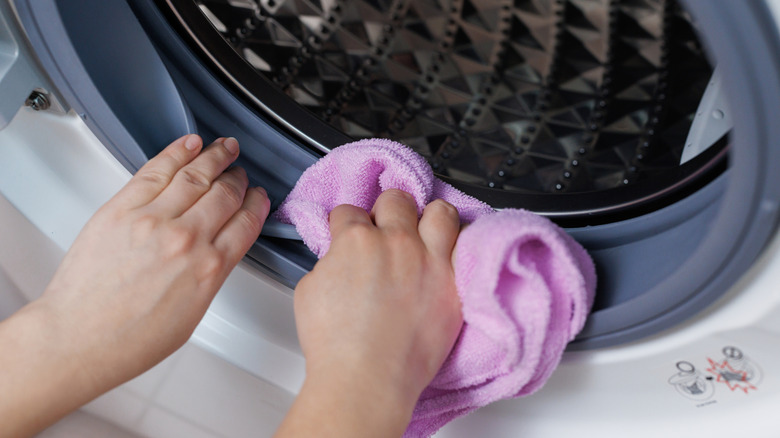
If you are looking to save as much money as possible while doing laundry, there are a few better tips and tricks to follow besides running a series of small loads. While you don't want to overload your washer and dryer, doing a full load is better for your machines. Make sure you read through your washer and dryer manuals to determine how to properly clean your machines. There are usually filters, tubes, and areas that need to be regularly cleaned out in your machines to make them more efficient. Additionally, there are a few settings you can change, such as using cold or tap water to wash your clothes. Most clothing gets just as clean this way, and washing your laundry in cold water actually helps to reduce color fading and bleeding.
Also, try to air-dry any clothes you can. Dryers account for roughly 6% of total household energy use, according to the U.S. Energy Information Administration, so cutting that whenever you can makes a lot more of a difference than you might expect. On warm, sunny days, hang up your clothes and let them air dry. Or, if you have a mostly dry load, instead of running them again, consider hanging them up to finish. On days you have to dry your laundry in a machine, knowing the right setting to choose can help stop your dryer from taking so long to dry your clothing.