

Prevent Your Clothes From Dyeing Each Other With This Washing Machine Cycle Tip
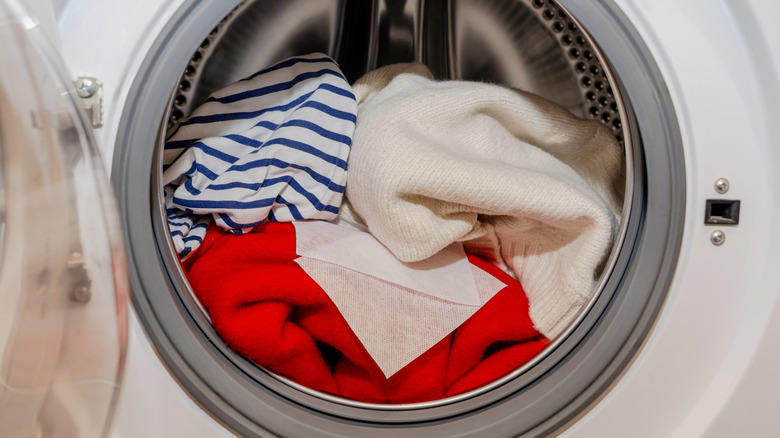
There are many things people get wrong when doing laundry that can inadvertently damage their clothes. Yes, most of us are aware that you should sort your garments by color before sticking them in the washing machine, but that isn't always enough to prevent colors from running. If you're sick of your dark- or bright-colored clothes transferring dye onto lighter ones, try this research-backed tip the next time you do laundry: using the shortest and coldest wash cycle on your machine.
In a recent laundry study backed by Procter & Gamble, scientists at the University of Leeds in the U.K. found that longer wash cycles and higher temperatures were both associated with higher rates of dye transfer. Put another way, washing your clothes in short cycles and cold water can actually reduce the likelihood of clothes dyeing each other. This simple tip won't just preserve the fibers of your garments and keep them looking fresh for longer; it's also better for the environment. Since you'll be using your washing machine for shorter durations, you'll buy yourself more time on laundry day. Using quick wash cycles can even lower your home energy bills. Seriously, what's not to love?
How to implement this science-backed tip & other tricks for preventing dye transfer

Implementing this washing machine cycle trick is simple. Just choose a preset quick wash cycle, or manually select the "cold" setting on your washer and shorten the duration of the cycle. It's an easy, science-approved way to prevent your colored clothes from dyeing each other. Notably, this workaround might not be the most realistic option for heavily soiled clothes or used towels. Though washing dirty clothes in hot water isn't strictly necessary — that's one of those common laundry myths that are damaging your clothes — it can help achieve a deeper clean, particularly when paired with bleach or antimicrobial laundry sanitizer. This will ensure that all germs and allergens come out in the wash.
There is some general advice to keep in mind if you're concerned about dye transfer when doing laundry. As a rule of thumb, always read the care labels on your clothes. Beyond using cold water and washing saturated clothes with similarly colored items, it can be helpful to turn colored garments inside out before tossing them in the wash. You can also use certain products to prevent colors from running, such as color catcher sheets.
It's recommended to launder new and unwashed items of clothing that may bleed by themselves. Is this the most eco-friendly move? No. However, it will guarantee that they don't come into contact with other garments as they shed any loose dye in that initial wash. Even after many washes, certain items may still bleed in the wash purely because of their dye color, fabric content, or how they were constructed (annoying, we know). It really depends on the item. In this scenario, hand washing is a good backup plan.