

15 Hardy Evergreen Plants For Outdoor Holiday Decor That Will Last
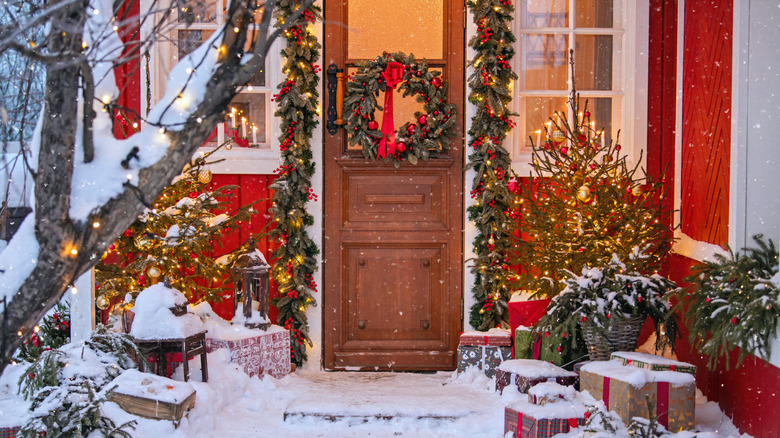
The winter can be cold and bleak, which is part of why the holidays offer a welcome reprieve. During the darkest months of the year, people all over the world hang lights, sing songs, and create festive cheer. But the Christmas season would not feel complete without the evergreen plants that have become its trademark. There is a coniferous plant for every part of the country, and while you might have to do some searching for the one that's right for your yard, you'll be thankful for the fragrance and color they add when the holidays come around.
To lift the holiday spirit, you can use trimmings from your evergreen plants, such as winterberry, English ivy, boxwood, and Norway spruce, to make wreaths, garlands, and centerpieces. These are great for adding a festive aesthetic to the outside of your home. They will dry out eventually, but you just need them to last a few weeks to complement your holiday season. We recommend pouring a mug of eggnog and putting on a couple of Christmas movies while you work on those decorations. You can also plant deciduous trees around your home and cover them with lights.
Southern magnolia
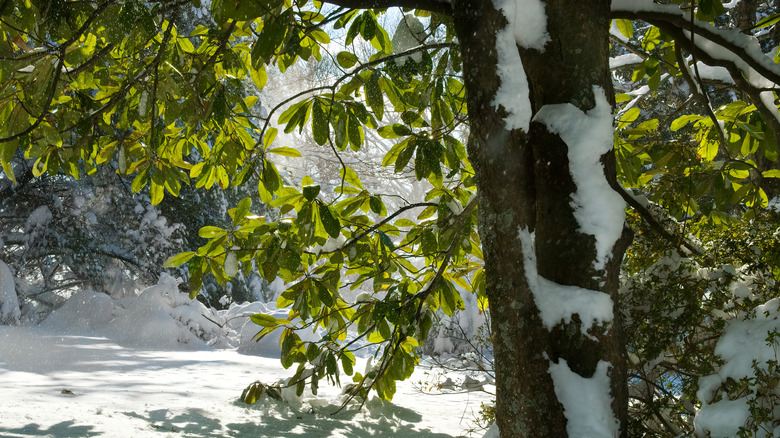
Southern magnolia (Magnolia grandiflora) is native to the southern United States but grows in USDA Hardiness Zones 6 through 10. This magnolia tree is very easy to care for and benefits from beautiful, large, shiny leaves with fuzzy undersides. You won't be able to incorporate its blossoms into your Christmas decor, since they bloom from late winter, but the leaves are excellent for using in a wreath to hang on your door. They last for several months after being cut. You can even try tucking the leaves into your Christmas tree to give it a unique, layered aesthetic.
Rosemary
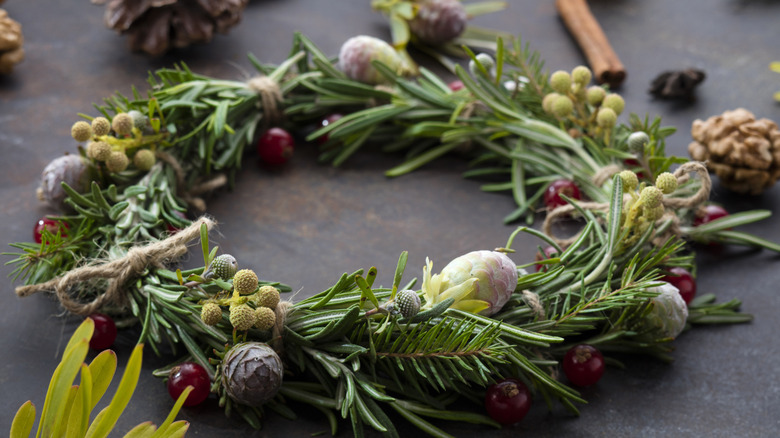
Rosemary (Salvia rosemarinus) offers a sweet fragrance that is reminiscent of holidays at home with family, where prime rib cooks in the oven and Bing Crosby croons fill our ears. This plant stays green year-round in zones 8 through 11, and it's known for its benefits in the garden, such as natural pest control and attracting pollinators. This evergreen shrub has needle-like leaves and blue, white, or pink buds. Rosemary is an excellent herb to use in homemade wreaths because it retains its fragrance and fresh look for a long time, greeting visitors at your door with festive cheer.
Mountain pepper
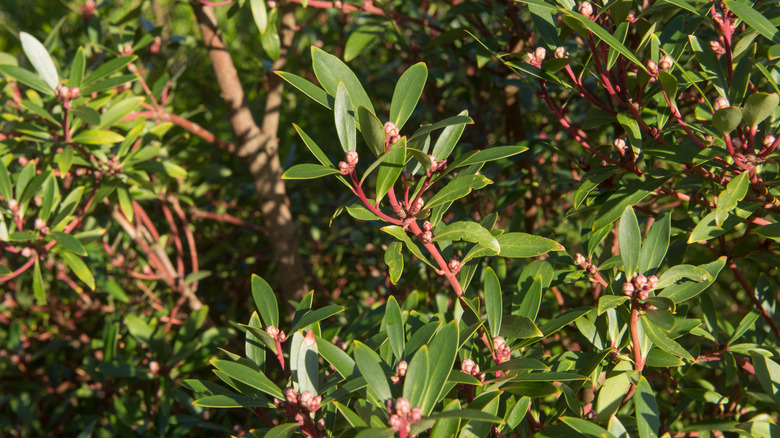
Mountain pepper (Tasmannia lanceolata) is an evergreen shrub that grows in zones 7 through 10. The plant originated in Tasmania, the southern-most state of Australia. Although this plant is native to temperate rainforests, it stays green throughout the year. Mountain pepper produces leaves that are small and glossy with a reddish tint, which should last for a few weeks as cut foliage. The red stems complement these beautifully, making them the perfect color scheme for a festive outdoor wreath or garland. The maroon to black berries, which appear in fall and winter, add to the aesthetics.
Japanese holly
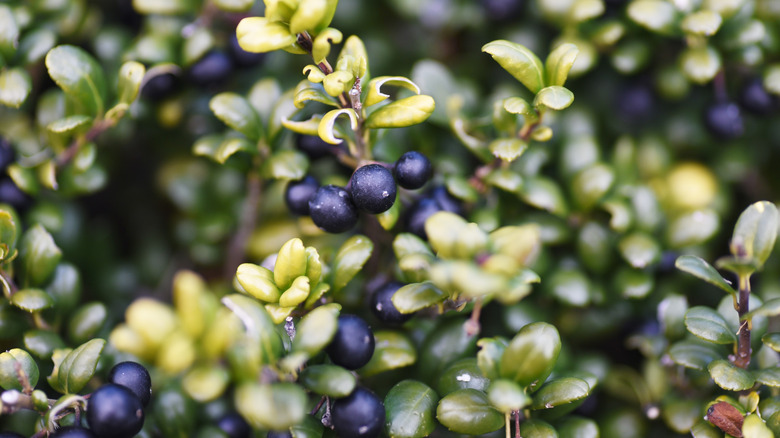
Ilex crenata, or Japanese holly, has dark, dense, green foliage that stays green year-round. It thrives in USDA Zones 5 through 8, and the glossy leaves will allow it to last for several weeks once you cut the stems from the plant. You'll also find that this plant's showy, black berries make it excellent for filling a wreath or garnishing a stocking that you can hang on your door.
Snowberry
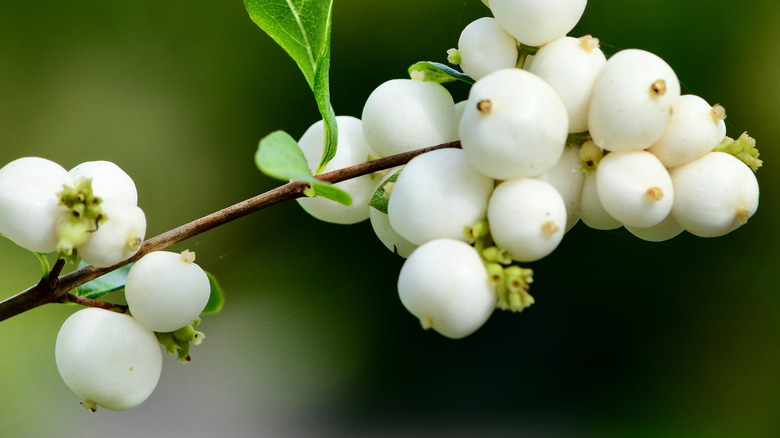
Sometimes it's nice to contrast the red berries of holly with the white berries of Symphoricarpos albus, or snowberry. This plant grows in USDA Zones 3 through 7, which means that it stays healthy in the coldest parts of the continental United States. As a deciduous species, this plant will lose its leaves during the winter, but after you cut a few branches, the berries can stay on for a couple of weeks, making them perfect for adorning outdoor wreaths. If you wrap a gift with twine, you can tuck a branch of snowberry into it.
Winterberry
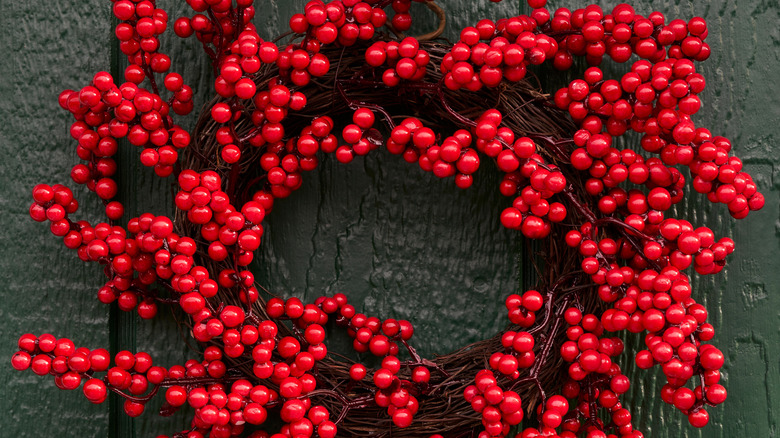
Ilex verticillata, or winterberry, grows well in USDA Zones 3 through 9. Its glossy leaves tend to fall off during the winter, but its bright red berries stick around. You need to prune this shrub to keep it healthy, and that provides an opportunity to decorate your home during the holidays. Take the branches and stick them into your Christmas tree to brighten it up. The colorful berries can be used as outdoor decor and should attract birds to your yard. They'll stay on their branches for weeks or even months after being cut.
Austrian pine
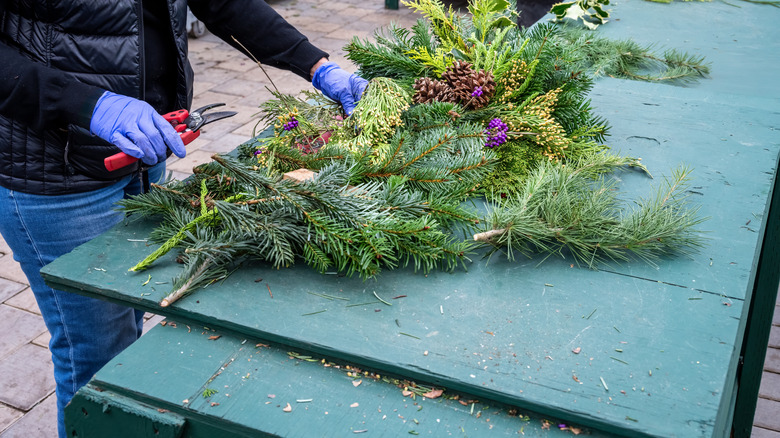
Pinus nigra, or Austrian pine, can be found in USDA Zones 4 through 8. These trees grow slowly, but they can live over 80 years and provide excellent shade. You can trim the branches to make a sweet-smelling wreath, but make sure to soak them in water for a few hours so they stay green for longer. These trimmings will start to dry out after around two to three weeks, but they do make a gorgeous addition to a lush wreath you can hang on your front door.
Himalayan cedar
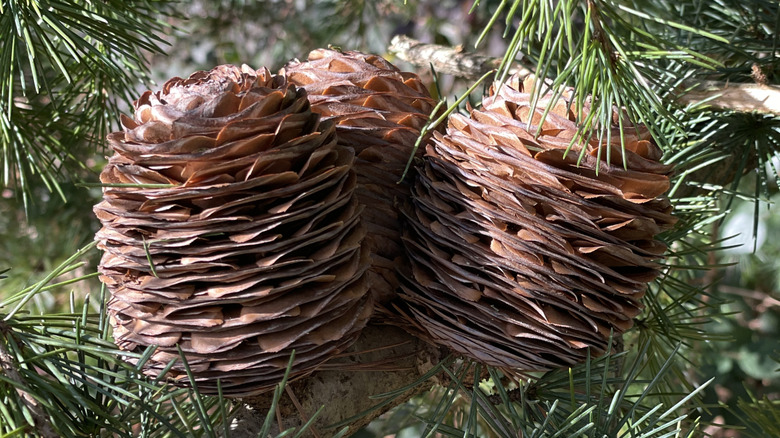
Cedrus deodora, or Himalayan cedar, is a cedar with gray-green foliage that hangs like the untrimmed beard of Old Man Winter. It grows well in USDA Zones 6 through 9. You can use the trimmings from this tree to make wreaths, ropes of garland, and bouquet centerpieces. This is an excellent way to fill your porch or veranda with a rich cedar fragrance. The trimmings should last for around two to three weeks, but they become increasingly flammable as they dry out. The attractive cones also make stunning additions to your festive decor.
Eastern white pine
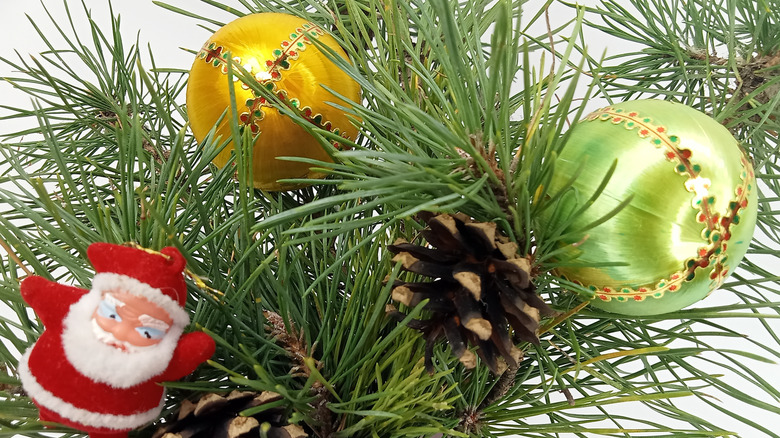
You can find Pinus strobus, or Eastern White Pine, in USDA Zones 3 through 8. This is often used as a living Christmas tree, and you can even get a miniature version, known as Pinus strobus 'Nana', which only grows to a maximum height of seven feet. Nevertheless, you can pair some trimmings with lights and string some garland together. Branches with pine cones are particularly appealing. Just make sure to hang these branches soon after trimming, because they will eventually dry and become flammable. These should last for about two to three weeks.
Norway spruce
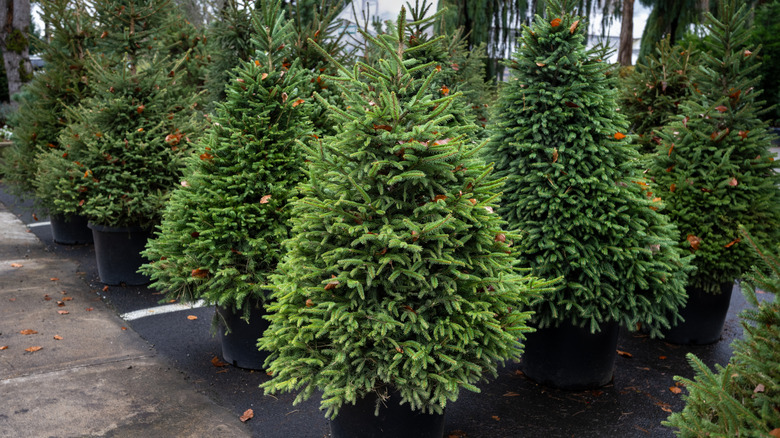
Picea abies, or Norway spruce, prefers colder climates in USDA Zones 2 through 8. The tree is native to Scandinavia, and because of this, its branches have evolved to shed snow rather than break. The branches hang, which is an attractive quality, and the reason this species is often sold as a living Christmas tree. You can hang the branches from porch railings or windows. They're great for wreaths, ropes of garland, and Christmas bouquets. Two to three weeks is the limit for keeping these trimmings looking their best.
'Icee Blue' yellow wood
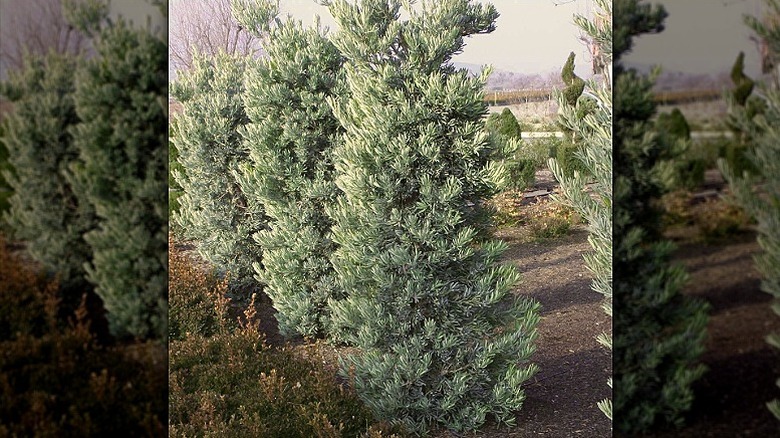
Podocarpus elongatus 'Icee Blue', or 'Icee Blue' yellow wood, is a conifer native to South Africa that grows in USDA Zones 9 through 11. This means that the tree thrives in warm climates, and its striking blue-green foliage makes it ideal as a living Christmas tree for southern regions. You can prune the branches and wrap them around your mailbox pole or porch railings. Unlike many conifers, the narrow leaves are odorless. Although some yellow wood trees live for hundreds of years, the cut branches will dry out within a few weeks.
Sweet bay

Laurus nobilis, or sweet bay, is a tree native to the Mediterranean region that can thrive in USDA Zones 8 through 11. Its dark green, oval-shaped leaves are perfect for vibrant wreaths, and have been used by the Greeks and Romans to symbolize honor and victory. You can complement a holiday garland or wreath with sweet bay branches, and you'll find that the leathery leaves will hold their color for several weeks. You can also grow this small tree variety in a container and decorate it to adorn your porch or patio for the festive season.
English ivy
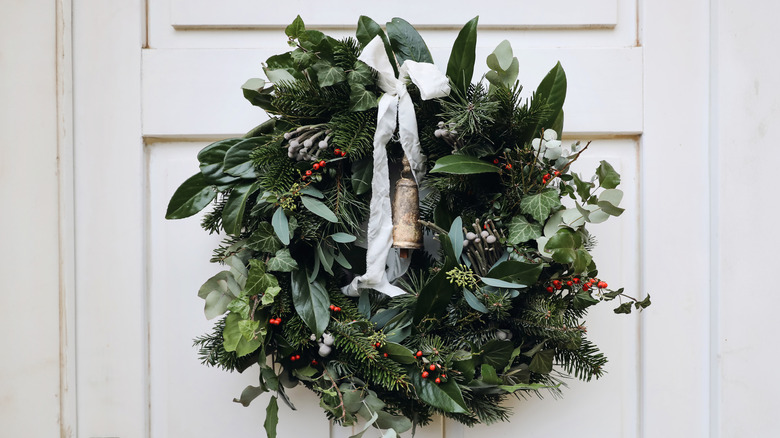
Hedera helix, or English ivy, is a climbing vine with glossy, lobed leaves. The plant is native to Europe and is considered invasive in North America. However, if you have some of this ivy growing near your home, you can cut some of the twining branches and weave them into garland arrangements to adorn your outdoor space or the wreaths on your door. It should hold its color for several weeks thanks to the glossy, leathery leaves. Just make sure to let your ivy dry out in the sun before disposing of it responsibly.
Boxwood
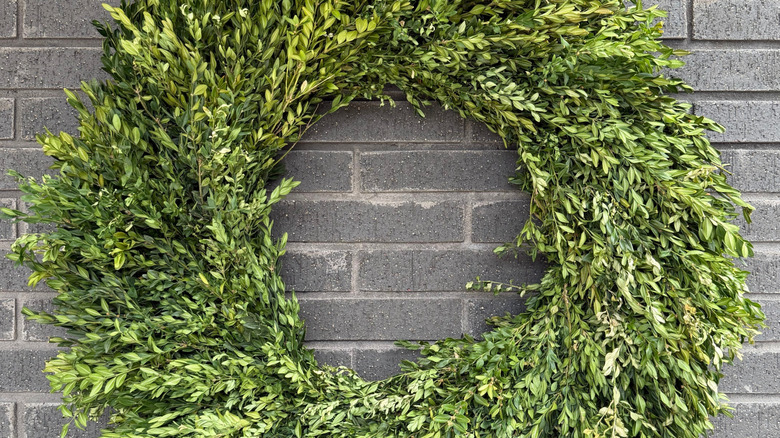
Buxus, or boxwood, is an evergreen shrub that grows in USDA Zones 5 through 9. These bright green shrubs, with their small, glossy leaves, are often shaped into attractive balls and will add contrast and depth to the outside of your home. During Christmas time, you can wrap them in colorful lights and bring them onto your porch if you have them growing in pots. You can also use the cut stems to make a stunning wreath, which should last for a few weeks.
Eastern arborvitae

Thuja occidentalis grows in USDA Zones 2 through 8, which covers most of the continental United States. This conifer is also known as the eastern white-cedar, the northern white-cedar, or American arborvitae. The shrub grows quickly and reaches heights of between 40 and 60 feet. During the holidays, you can decorate these trees with lights and baubles. You can also trim their branches and weave them into wreaths. This plant will last you a few weeks if you decide to decorate with the trimmings.