

The Easy-To-Grow Shrub That Creates Privacy & Feeds Pollinators
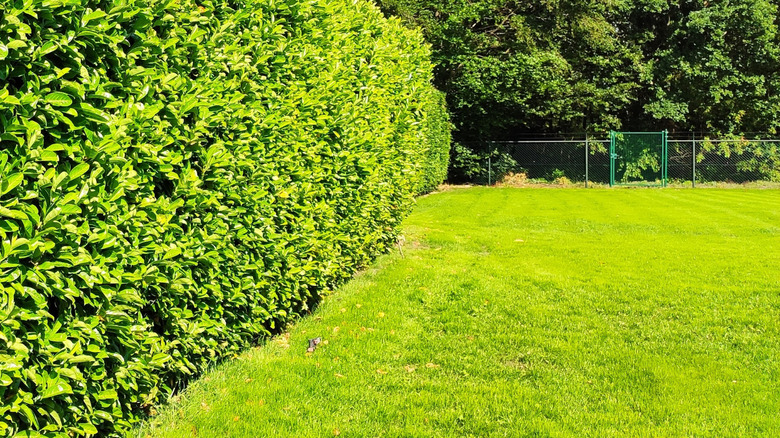
Isn't it nice when gardening is a satisfying hobby instead of a chore? When you fill your yard with no-fuss trees, shrubs, and perennials, it really helps put the joy back into growing plants. It doesn't take much, for example, to successfully grow and care for holly bushes — and there's one specific variety that's particularly easy to grow. Inkberry (Ilex glabra) makes for a lovely privacy screen that also feeds pollinators and birds. It doesn't require pruning and is highly tolerant of many plant problems and garden conditions. Inkberry is an attractive solution for anywhere in your yard — or pollinator-friendly garden — that you want a mass of green foliage.
This low-maintenance evergreen — also sometimes called gallberry — grows up to 12 feet tall and 8 feet wide. That's why it's such a great option for creating privacy. Inkberry has leathery, bright green leaves and an attractive, naturally rounded shape. This holly species is also one of the best fragrant plants to include in a butterfly garden. The shrub produces inconspicuous white flowers that attract pollinators of all kinds from May to September. Blooms are followed by berries that are black when ripe. They stay on bushes all winter long and are a good source of food for wildlife.
Grow inkberry shrubs for wildlife-friendly privacy screens
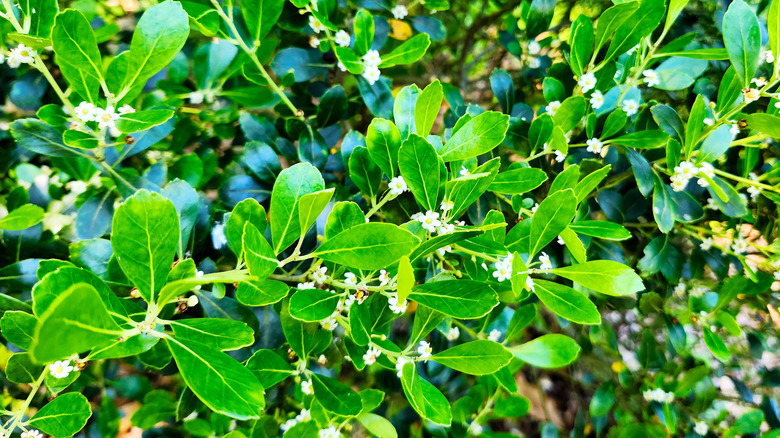
In addition to this holly's use as a hedge or privacy screen, Ilex glabra can be used as a foundation shrub, in a rain garden, or as part of a wildlife yard with other pollinator-friendly plants. Although inkberry flowers aren't showy, they are beloved by pollinators, including honeybees. In fact, the blooms of this holly are renowned for making excellent-tasting honey. For these evergreen shrubs to produce berries that will feed birds, make sure to grow both a male and a female plant in your yard. However, even if you can only fit one bush, it will still serve wildlife. Inkberry is a host species for the Henry's elfin butterfly (Callophrys henrici).
Let's say you live in the East Coast, in USDA Hardiness Zones 4 to 9, and want to grow a privacy hedge. As a responsible gardener, you're trying to avoid planting the most invasive trees and shrubs at all costs. Inkberry is the perfect plant because it's native to the eastern and southern U.S. — its native states span Maine to Texas. Grow this easy-going and adaptable shrub in full sun or part shade, where it can handle soil that is wet or average in moisture content. It's perfect for creating privacy in an area with sandy, acidic conditions. As a bonus, this holly stands up well to gardening challenges like erosion and salt.