

The Best Way To Insulate Hydrangeas During Cold Winter Weather
We may receive a commission on purchases made from links.
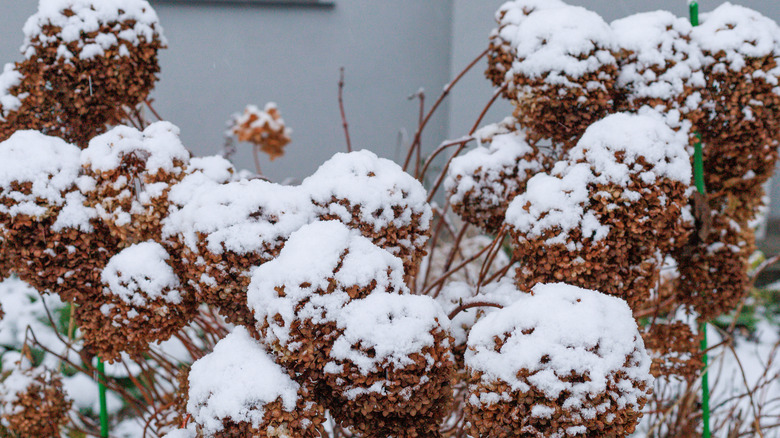
When temperatures drop, we humans bundle up, breaking out our best down coats and wool socks. But did you know that some perennial plants, like your beautiful hydrangeas, like a little winter coziness, too? Properly protecting these woody perennials during the winter can lead to bigger blooms and better growth in the spring and summer. This is especially true for bigleaf hydrangeas, which grow new blooms on old wood or the previous season's growth. Hydrangeas that die all the way to the ground over winter don't usually produce new blooms the next spring or summer. To prepare your hydrangeas for winter and ensure a healthy summer season, you need to wrap the dormant shrubs in burlap.
Even if you've prepared as best you can, your hydrangeas can come up against several winter foes, including freezing temperatures; heavy bouts of snow, hail, and ice; and high winds. Luckily, all of these threats can be easily remedied by wrapping the hydrangeas ahead of winter — especially if winter temperatures are predicted to fall below zero degrees Fahrenheit. Burlap is arguably the best wrapping material to protect outdoor plants from frost. It's cheap and readily available. It's typically reusable, for a time, and biodegradable at the end of its life. It's the perfect cold month preparation for big, diverse gardens or smaller backyards alike.
How to wrap your hydrangeas in burlap for winter protection
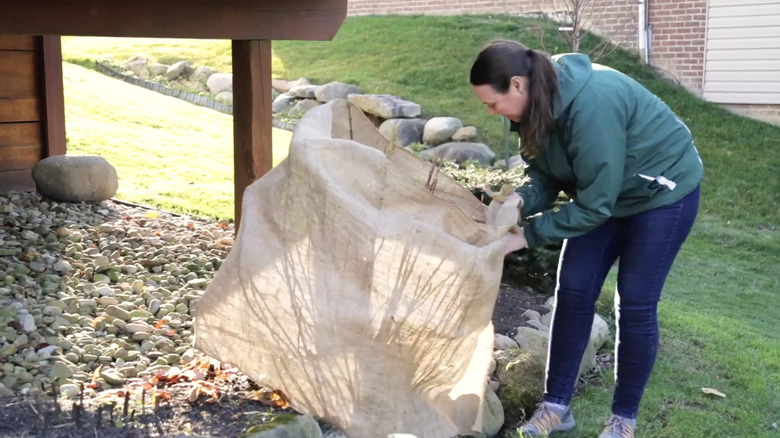
Your first step in using burlap to winter-proof your hydrangeas is choosing the right product. A 15-foot by 40-inch sheet of Anphsin Natural Burlap Plant Freeze Protection costs about $25. This particular product gets an average of 4.6 stars on Amazon, with many reviewers confirming it did a great job protecting their plants over winter. If you find a big sheet of burlap too fussy, try bags instead. A three-pack of 24-inch by 40-inch Liaycco Burlap Fabric Plant Bags costs about $20. Measure the height, width, and depth of your plant before purchasing a bag to make sure it fits. You can, of course, use any kind of burlap — as long as it is made of 100% natural fibers, which are the most breathable.
If an ice storm is fast approaching, draping burlap directly over your hydrangea is better than leaving it uncovered and exposed. When you have the time, make sure the burlap doesn't touch the plant. Damp burlap can freeze, damaging stems and foliage. Instead, construct a small frame for the fabric to sit on by driving three tall, sturdy garden stakes into the ground around the shrub. Double-layer the burlap on top of the stakes, letting the fabric drape to the ground. Use an upholstery stapler or garden twine to secure the burlap to the stakes. Secure the fabric to the ground with landscape staples. Once the weather starts to warm, you can remove this protective layer, but leave the stakes in place just in case the weather turns unexpectedly.