

Yes, Induction Stoves Are Trending. But Are They The Best Alternative To Gas Units?
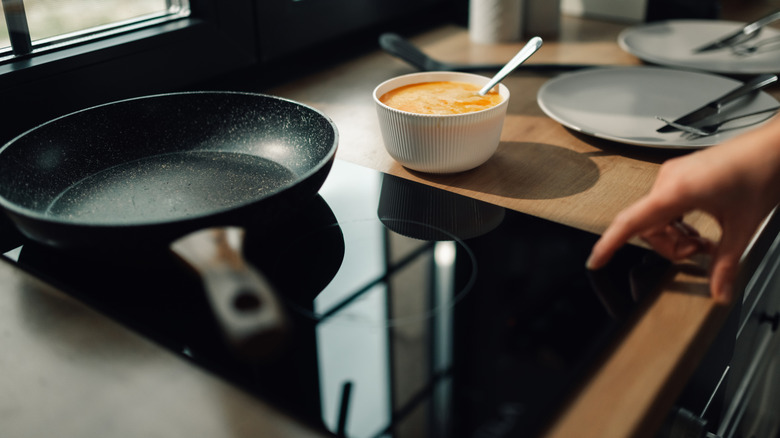
There's a growing movement in the U.S. advocating for the removal of gas cooktops in homes. There are potential dangers with gas. They increase indoor air pollution and have the potential to leak flammable gas. What's the alternative? A classic option is an electric stove, but there is another solution rising in popularity: induction stovetops. These nifty appliances have a lot of benefits, even over electric stovetops. They're a cooktop trend that's making kitchens safer and more efficient, and might be just the appliance to add to your home. Whether they're the right alternative to gas depends on your budget, your current cookware, and even your home's wiring.
Induction cooktops work by heating up metal pots and pans using an electromagnetic current passed through coiled copper wire hidden under the glass top. It falls under the broad category of electric stovetops, but it's safer and more efficient than, for example, coil stoves. You may be wondering whether it's worth getting rid of your existing gas-powered appliance and installing this new device. Though induction stoves have a lot of benefits and far fewer health concerns than a gas stove, the answer isn't a clear-cut yes to making the switch. The cost of these stovetops alone may make them an impractical choice for some homeowners. It's worth taking some time to compare the two cooking methods — and other options, too — before handing over your money.
The benefits of choosing an induction stovetop over other alternatives

There are several reliable induction stove brands to choose from — LG, Samsung, and Frigidaire, in particular, often come out on top. You operate these cooktops similarly to electric glass-top stoves, so you don't have to worry about newfangled settings or features. They are, however, miles ahead of other appliances in energy efficiency. About 90% of the heat they produce is transferred to your cookware, compared to 40% for gas and 74% for standard electric. Another benefit of induction cooktops is that, unlike gas, they don't emit unhealthy pollutants into the air.
Another perk of an induction stove is its safety features. The element switches off automatically if it can't detect a pot or pan on top of it, helping to reduce the chance of a house fire. The surface also stays relatively cool, so you don't have to watch the kids so closely in the kitchen or worry about melting that plastic cutting board you accidentally set on the stovetop. Induction cooktops heat up faster than electric stoves; you'll no longer spend forever waiting for water to boil or meat to sear. They are generally easier to clean than gas cooktops or even electric stoves, too. The smooth glass top is easy to wipe clean and, because the glass stays relatively cool, you won't have to scrub off burned-on food spills.
Why an induction stove may not be the best option for your kitchen
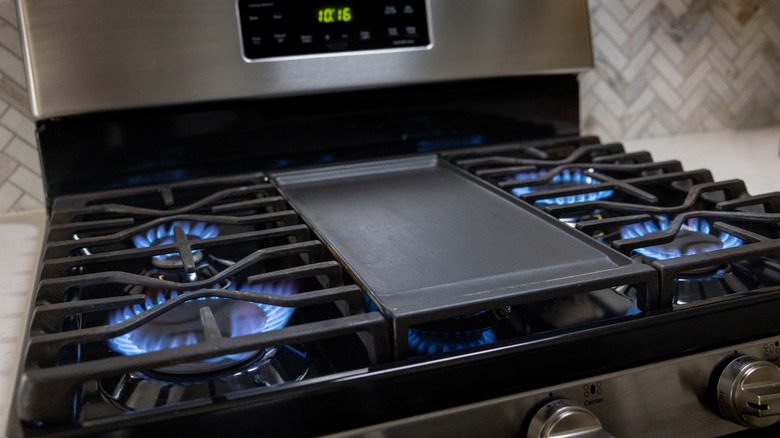
The benefits of induction cooktops appear unrivalled, but there are some reasons why this appliance might not work for your kitchen. Though the purchase price is consistently dropping, they are still roughly double the cost of a similar-sized electric or gas stove. Induction cooktops are more environmentally friendly than both gas and electric stoves in usage. However, if you are throwing away a perfectly fine stovetop to replace it with an induction appliance, that's simply a waste. If your existing cooktop and cookware are still usable, using them until the end of their lifespan and keeping them out of the landfill is responsible. Once they die, you can replace them.
Not only are induction cooktops expensive, but if you don't already own the right kind of pots and pans, you will probably need to replace those, too. Unfortunately, only magnetic metals, like steel and cast iron, work with induction stoves. If you are using aluminum and anodized aluminium cookware, it simply won't work. If you own a gas-powered cooktop, you are going to pay a pretty penny to install electrical outlets to power a new induction stove. Of course, the same would be true if you were installing a standard electric stove. They also require a large amount of energy, which may necessitate a specialized circuit breaker and high-voltage outlet — a costly downside of switching from a gas to an induction stove.