

Fiery Red Companion Flowers To Grow For A Hummingbird Friendly Garden
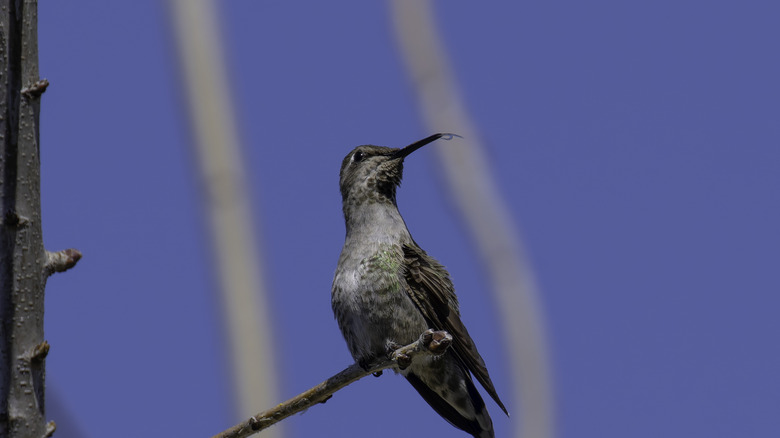
If you haven't heard about companion planting before, your garden is about to get far more optimized. While the term may sound complex, at its core, companion gardening is planting two plants with similar needs and a positive relationship near each other. Sometimes, this relationship revolves around boosted growth, such as one plant adding nutrients or structure for the other. However, other times, this positive relationship revolves around taking some of the hassle out of growing multiple plants by giving you options with similar growth requirements, as is the case for these two hummingbird-friendly flowers.
Lantana (Lantana camara) and mandevilla (Mandevilla spp.) are two eye-catching flowers that don't just hold up well to the same temperature and level of sunlight but also both attract pollinators to your yard. This can include butterflies — who are more than happy to visit this striking red combo — as well as hummingbirds. And the best part? Both lantana and mandevilla can be grown as perennials, allowing you to provide a colorful buffet for your feathered friends year after year.
While they share many aspects of care, there are a few differences to know when planting these fiery red companion flowers to draw more hummingbirds to your yard. This includes differences in USDA zones that may impact how well these two flowers grow year-round in your hummingbird-friendly garden. To get you started, here's everything you need to know about the care required for thriving lanterns and mandevillas.
How to grow lantana and mandevilla flowers together
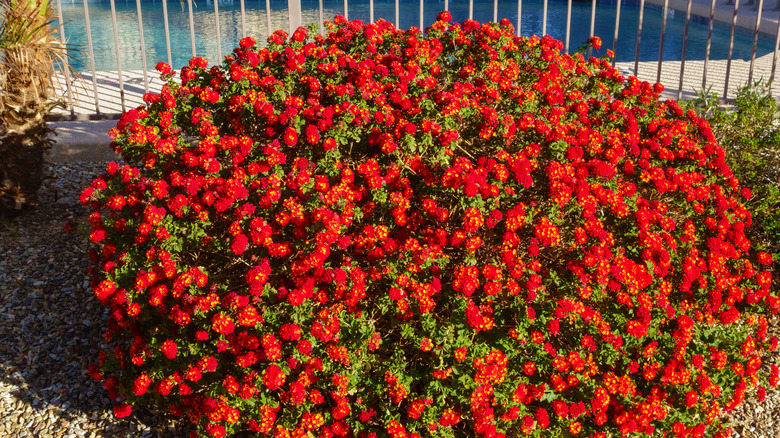
One of the reasons that lantana grows well with mandevilla is because they're both heat-loving plants that are native to tropical regions. As a result, you'll find that these pollinator-magnet flowers grow best in regions with warmer temperatures, especially if your goal is to see these beautiful flowers as perennials. Lantana flowers can handle a greater difference in climate, with hardiness in zones 7 through 11. On the other hand, mandevillas instead grow in zones 10 and 11.
While they differ in their preferred climates, lantana and mandevilla flowers share the same soil requirements, with both plants needing soil that has a neutral pH and good drainage. Lantanas require strictly full sun, while mandevilla can grow well in full sun or partial shade. This makes it easy to incorporate these flowers in a sunny spot in your yard where you can watch any visiting hummingbirds flit around with ease. While water requirements for mandevilla can depend on the exact species, lantanas often do best with consistent watering that doesn't lead to water rot. However, they also sport some drought resistance and can tolerate soil that is occasionally dry.
When growing lantana and mandevilla to attract hummingbirds to your yard, consider taking advantage of the benefits of a container garden, which they thrive in. This not only allows you to grow this eye-catching combo in areas you otherwise couldn't, like patios or porches, but also gives you more control over factors like sunlight and soil composition. Before planting, be sure to check if these plants are invasive or aggressive in your area.