

26 Types Of Cacti And Succulents You Didn't Realize Needed Pruning
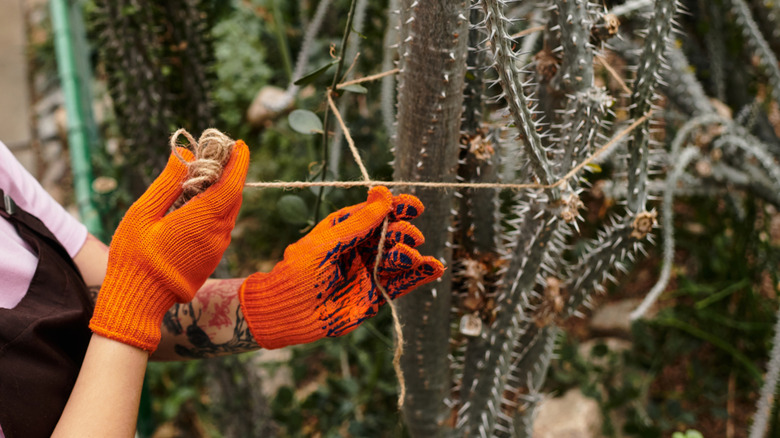
Saying succulents, including cacti, have a devoted fan base may be an understatement. That enthusiasm often borders on feverish, with many spending copious amounts of time and money to acquire exotic specimens from around the world. However, before assuming these low-maintenance plants can fully take care of themselves, it is worth pausing. Not all succulents thrive when left unattended. In fact, some varieties, such as desert rose, Peruvian apple cactus, opuntia, and aloe, require pruning.
Like any plant, succulents can grow askew or leggy, either with age or due to the unavailability of ideal growth conditions. This is usually the case for trailing varieties, such as string of pearls, turtle vine, and string of bananas, and can be corrected with a little trimming. In contrast, holiday plants, like Christmas cactus and florist kalanchoe, can be pruned for reblooms. Others, like African milk tree or pencil cactus, must be given a nice chop to limit their size and spread. In some cases, pruning becomes necessary to remove terminal spikes (think agave). Regardless of the reason, pruning succulents can be hazardous due to spines and toxic sap. So, keep your long-handled loppers or saws ready, along with a protective suit. If potted, lay the plants on their sides to minimize spillovers. With that established, here are 26 types of cacti and succulents you should consider pruning.
Christmas cactus
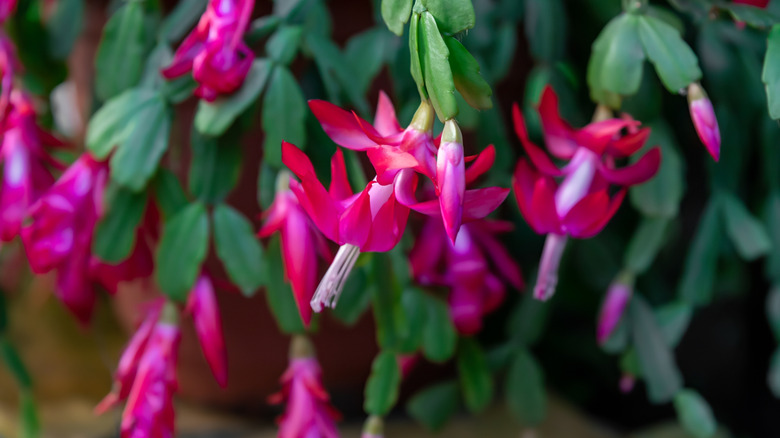
Christmas cactus (Schlumbergera x buckleyi) is prized for its fuchsia pink flowers that bring in merry cheer on the holidays. But after it has regaled you with its blooms through February, you may want to bring out a knife. The Christmas cactus may not get too tall, but it certainly gets leggy. To encourage lateral branching, cut short segments from a few stems. Your plant will turn full and lush in no time, serving looks for decades to come. Remember, it's safe to prune your Christmas cactus until it produces active growth.
Thanksgiving cactus
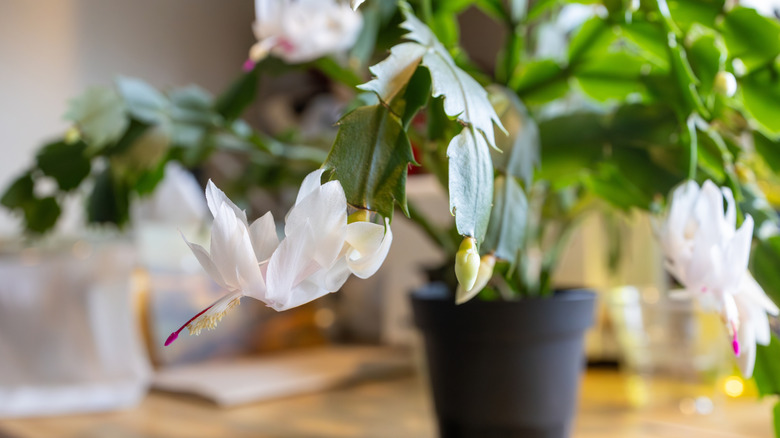
Although similar to Christmas cactus in many ways, Thanksgiving cactus (Schlumbergera truncata) differentiates itself in its flowering period. It's in full bloom during Thanksgiving and exhausts all flowers by the time December rolls in. Rarely, it may rebloom in February, given the right conditions. Before the new buds set in, cut down the stems with a sharp knife. Trim stems back to a joint with paired leaves rather than single segments. This will encourage the production of double buds, so the plant looks utterly smothered in blooms.
Easter cactus
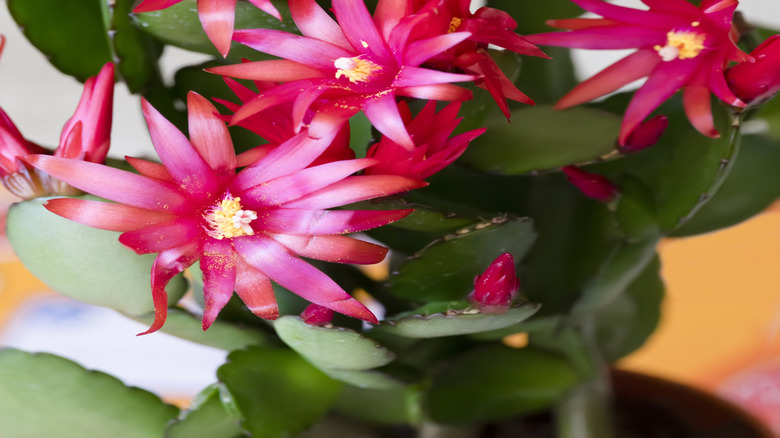
Since horticulturalists remain undecided about its true genus, Easter cactus can be listed under different botanical names, including Rhipsalidopsis gaertneri, Hatiora gaertneri, and Schlumbergera gaertneri. Luckily, this confusion doesn't detract from its beauty, brought forth by spring flowers or the benefits of pruning it right afterward. When you snip the stems down to the joint pair of leaves, you stimulate more branching, and by extension, more buds. As a result, your plant produces even more blooms while still maintaining its compact, full form. When pruning for size, avoid removing more than one-third of the plant's growth.
Peruvian Apple cactus
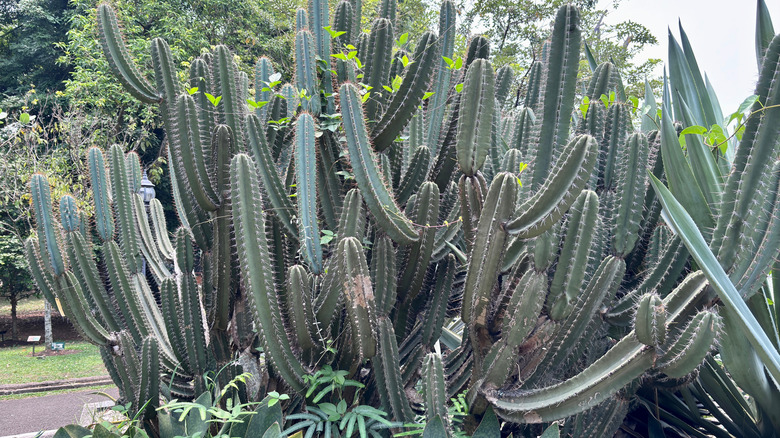
Peruvian Apple cactus (Cereus peruvianus syn. Cereus repandus) can be grown outdoors for its delicious fruit in USDA Zones 9 to 11, but you may need to prune it to control the size. Also known as night-blooming cactus, it grows quite fast, reaching heights of 10 to 15 feet. Without proper support, this columnar cactus can become unstable and flop over. Not to mention, harvesting fruits may also become cumbersome. To keep it thriving, cut the plant back in the fall when it isn't actively growing. You can even use the cuttings to root new plants.
Desert rose
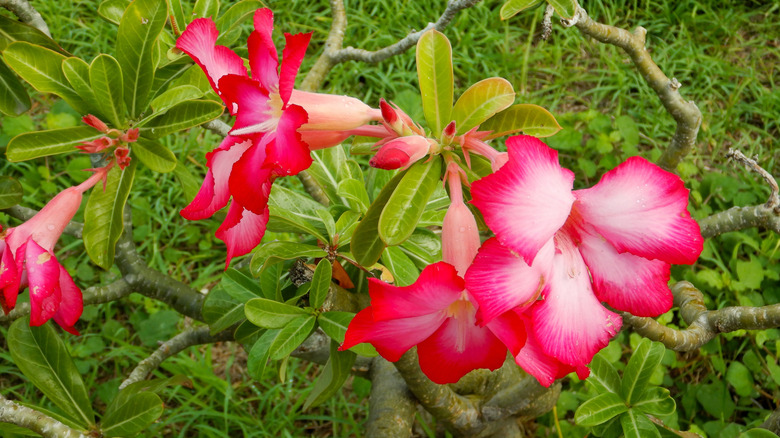
Desert rose (Adenium spp.) is a beautiful succulent that rewards its growers with rose-like, tubular flowers. However, as it matures, it develops an open habit, while unpruned branches grow knobby. Its flowering capacity can also diminish over time. To force more flowers in a smaller area, you may want to snip off the stems down to the new buds. If you've a grafted plant, remove any buds growing below the wound from the rootstock, as they'll be different from your current blooms. Carry out these cuts in early spring, so you may enjoy the summer blooms.
Agave
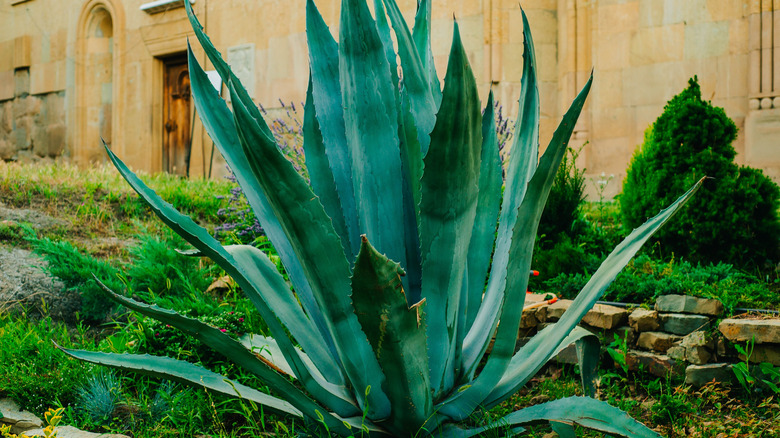
Unless you're trying to upgrade your home security using this landscape plant, you'll want to prune Agave (Agave spp.). Their fleshy leaves terminate in a vicious spine, which can lodge in the skin, making them unsafe in households with kids and pets. While pruned tips can turn brown, they aren't particularly noticeable. Pruning also helps restore their appearance, as you can get rid of dead and diseased leaves, along with any errant suckers. Be sure to wear gloves, a thick shirt, and eye protection, as they contain a toxic sap that burns on contact.
Aloe
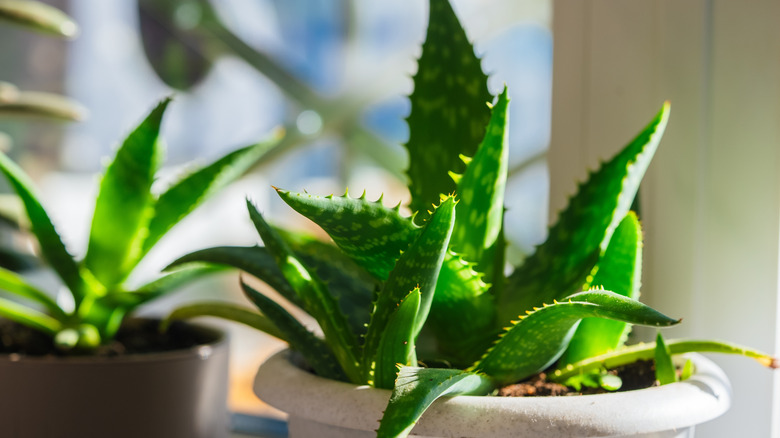
Whether you grow aloe (Aloe vera) for its aesthetics or the topical gel running through its leaves, you'll eventually arrive at a stage where you must prune it. Since many pests, including aphids and mealybugs, find it attractive, aloe tends to collect many diseased and decaying leaves. So, remove them to restrain further pest outbreaks. Besides, they can grow tall and floppy over time. Each spring, remove the oldest leaves at the base while preserving newer central growth. This also helps control their size. Be sure to wear gloves before handling the leaves to avoid skin irritation.
Jade plant
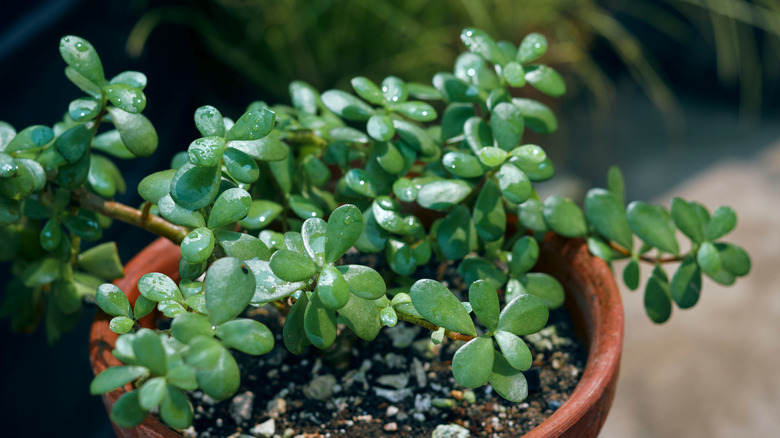
Jade plants (Crassula ovata) can grow quite tall, with some reaching over six feet. Even if the size isn't a concern, they become too top-heavy, while their stems struggle to support their weight. In such cases, it becomes necessary to prune jade plants to keep them happy and healthy. The best time to do it is in the spring before they resume active growth. That way, they can recover over the remaining growing season. Simply cut back errant or diseased lateral branches to the trunk to restore balance, but don't remove more than one-third of the total growth.
Prickly pear cactus
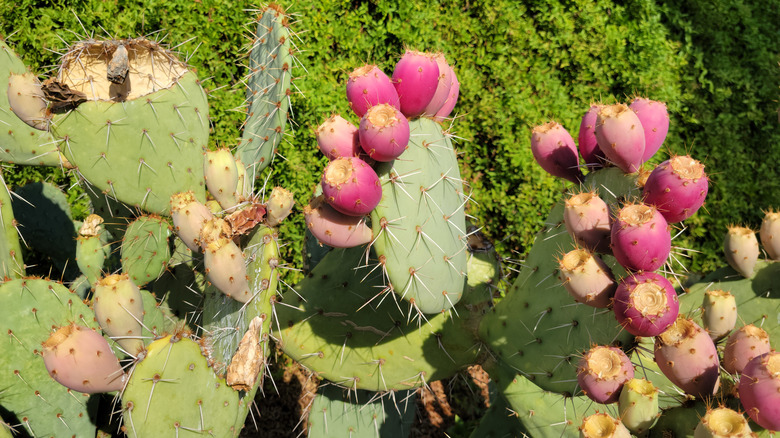
Prickly pear cactus (Opuntia ficus-indica) can quickly grow nearly 15 feet tall and 10 feet wide when left to its own devices. While you may not mind that if it's planted in a neglected area, its mature size can become bothersome in high-traffic areas, especially when you take its spines and barbs into account. To manage size and avoid sending the mailman to the emergency clinic, prune the plants in spring. Since the fleshy pads can be heavy, cut them off with a serrated knife. After they've been removed, cut the main stem at the desired height.
Spineless prickly pear
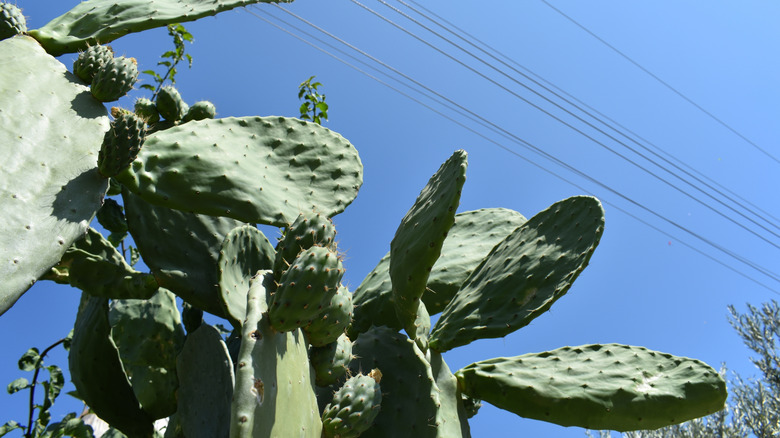
Spineless prickly pear (Opuntia ellisiana syn. Opuntia cacanapa 'Ellisiana') makes a nice substitute for prickly pear cactus because it doesn't have the vicious spines. It can still pose a safety hazard because its fleshy pads are covered in glochids, or tiny barbs that can be just as painful. It may also grow nearly six feet tall, requiring size control. These reasons call for pruning, though it's equally essential to eliminate any mushy or deformed growth left over from their dormancy. Prune them as you would any prickly pear — lopping off pads first, followed by the stems.
Pencil cactus
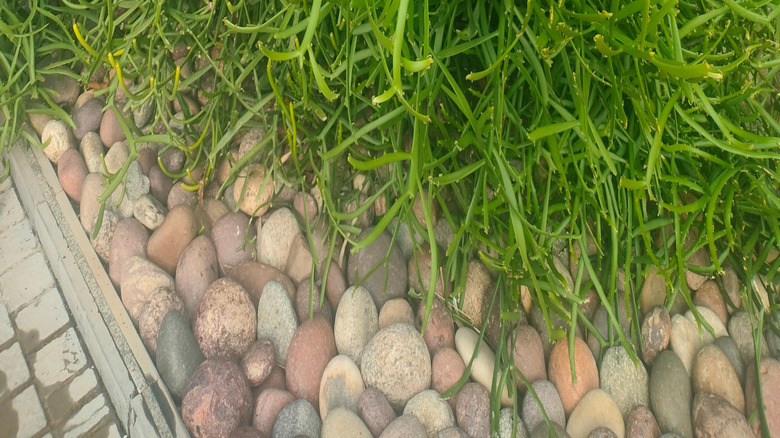
As a garden specimen or hedge barrier, pencil cactus (Euphorbia tirucalli) can grow nearly 25 feet tall. To ensure it doesn't interfere with any utility lines later, pruning it to a more manageable size is crucial. This will help you reshape the plant and neaten its appearance. Before pruning, wear a protective suit as the plant produces extremely toxic sap that irritates skin and stains surfaces. In spring, start by removing diseased and decaying wood and move on to the feeble branches, making sure they're cut to the base.
Crown of thorns
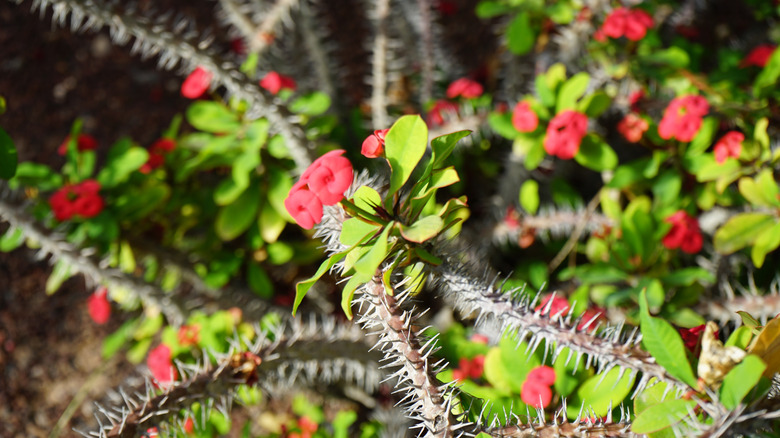
In the case of crown of thorns (Euphorbia milii), pruning can accomplish different objectives. If you've a large-leaved variety with an upright habit that refuses to bush out, you may cut back the plant severely down to four inches to stimulate the growth of lateral branches. If you're dealing with cultivars that sprawl out, you can remove the errant branches to the main stem for a compact shape. Either way, eliminate weak branches so the plant redirects its resources to healthy growth. Since their milky sap can damage tools, use knives, as they can be replaced easily.
Snake plant
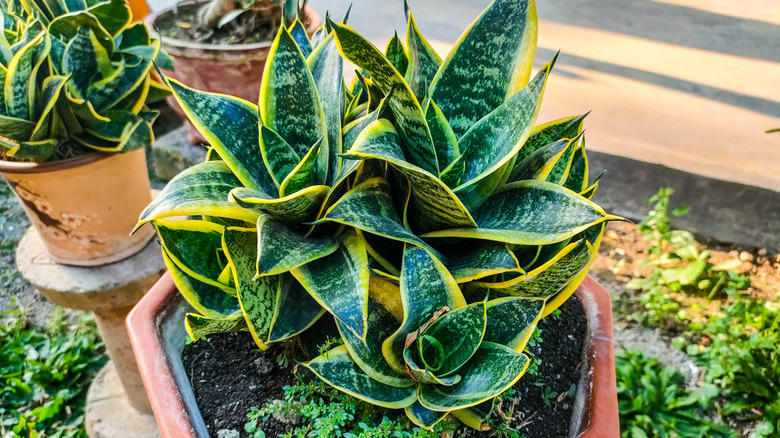
Although snake plants (Dracaena trifasciata) are easy to care for and don't require much shaping, they do benefit from maintenance. Over time, and especially if placed in low-light conditions, their foliage stretches out, becoming floppy. To tidy up their appearance and promote healthy growth, you may cut out the old, damaged leaves at the base. However, don't remove more than one-fourth of the total mass in one session. Note that cut stubs will persist while new leaves emerge from the center. Snake plants are best pruned during spring so they may recover through the growing season.
String of pearls
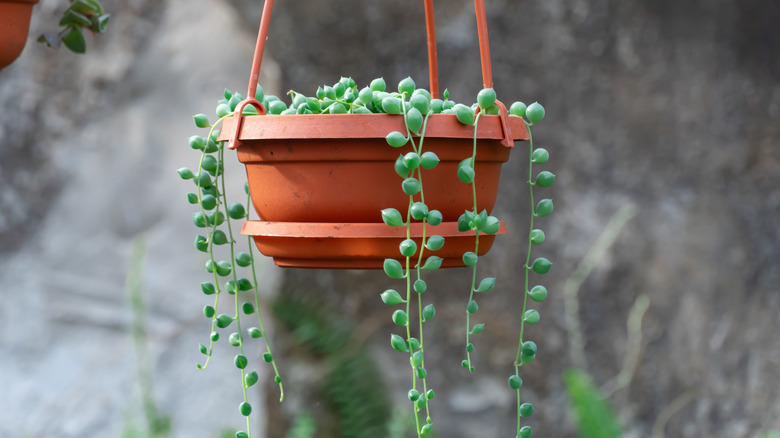
String of pearls (Curio rowleyanus, formerly Senecio rowleyanus) can eventually start to look sad, showing bare ends, shrunken pearls, or thinning. By giving them a regular trim, you can improve their density, ensuring a fuller plant that cascades without sparse or bare patches. You would ideally want to cut off the dead and spindly stems with scissors above a stem joint to promote new branching. If desired, you can take cuttings from the leggy portion to propagate new plants.
African milk tree

African milk tree (Euphorbia trigona) is an absolute statement maker, whether placed in your garden or potted up in your office. However, it has a shallow root system, which struggles to support its mature physique, assuming there is space to allow it to reach heights of up to 25 feet. To prevent your succulent from toppling over, prune the plant to the desired height without taking off more than one-third of the growth. Remember, Euphorbias are finicky, and new branches can grow in any direction. Wear proper protection before handling, as it has a toxic sap.
Elephant Bush
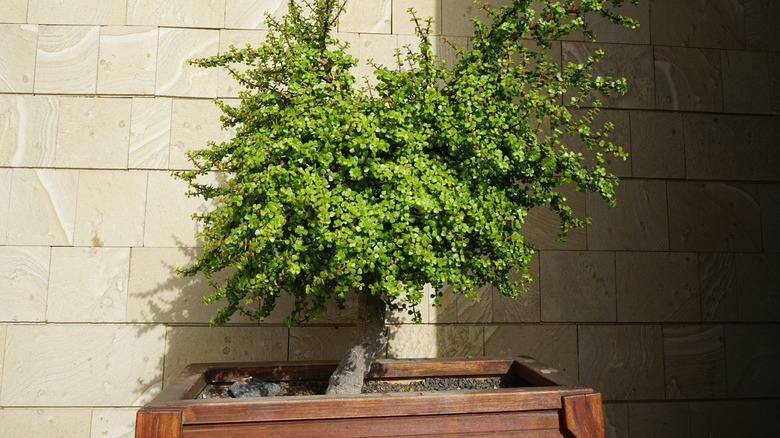
If you're growing elephant bush (Portulacaria afra) as a specimen in your garden, you may have to prune it. It doesn't have a distinct shape, with most branches emerging randomly. Sometimes, it develops a lean and may irresponsibly drop off the heaviest limbs, creating a safety hazard. The worst part is that these limbs can root in the soil, forming thickets. To avoid these outcomes and shape the tree properly, clip off the wayward stems down to a pair of healthy leaves in spring. This will induce the formation of new buds, opening out its canopy.
Red yucca
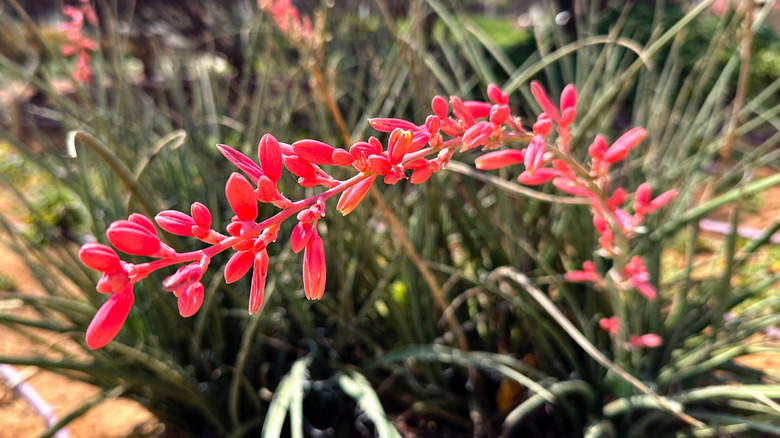
Red yucca (Hesperaloe parviflora) is a native red flower that will attract hummingbirds to your yard. But after the hummers have had their fill, snip off the dead flower stalks to the crown, along with the dead foliage that pests may use for overwintering. Keep long-handled loppers and leather gloves handy while tackling these perennial succulents. However, avoid topping them, as all it does is make them ugly and slow down recovery (because of fewer leaves). Instead, when they've overgrown the area, divide the clumps and plant them elsewhere for greater coverage.
Rose cactus
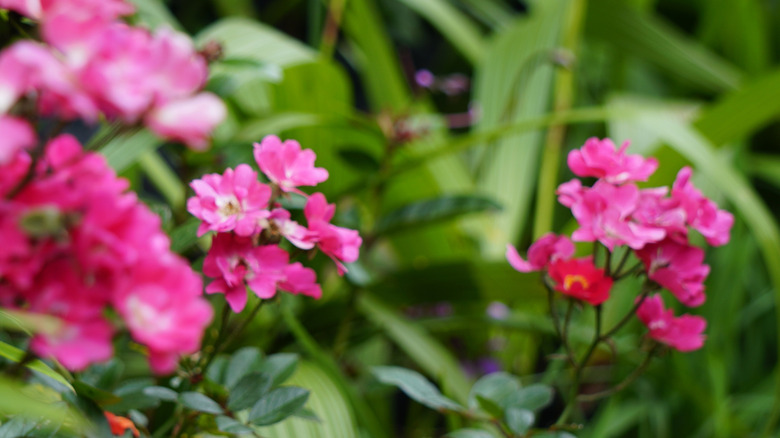
Although a member of the cactus family, rose cactus (Pereskia spp.) doesn't have the typical succulent pads. Instead, it features vines — or shrubs, depending on the variety — with green leaves. Because it can grow up to 40 feet and tends to be leggy, it benefits from pruning to maintain shape and control size. In spring, simply cut off the branches you don't want, and new growth should emerge from the areoles below the cut. Since their cuttings don't need callusing, you can root them in water to grow new plants.
Adam's needle
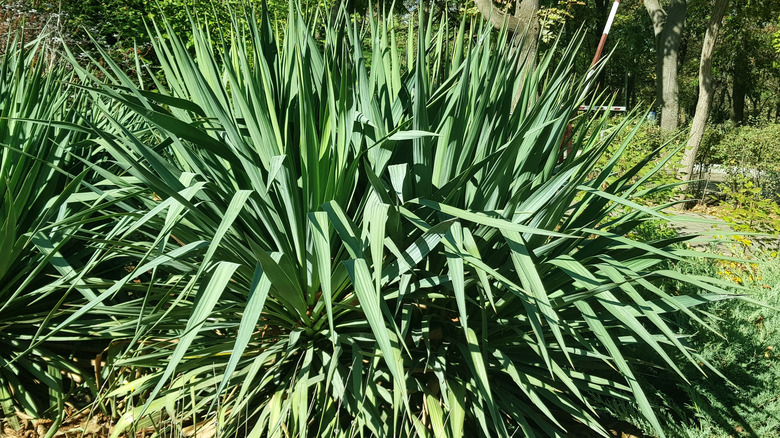
Adam's needle (Yucca filamentosa) can benefit from maintenance pruning. After it has terminated all flowers, remove the spent stalks to spruce up its appearance. If you're interested in saving the seeds, wait to prune until the black seedpods split and release their contents. Also, remove any wilting, yellowing, or decaying leaves from its base ("basal foliage") so the plant can refocus energy on healthy growth. Cleaning up this litter also robs pests of shelter. If grown indoors and allowed to become leggy, Adam's needle can be cut back by half in spring to maintain a compact shape.
Turtle vine
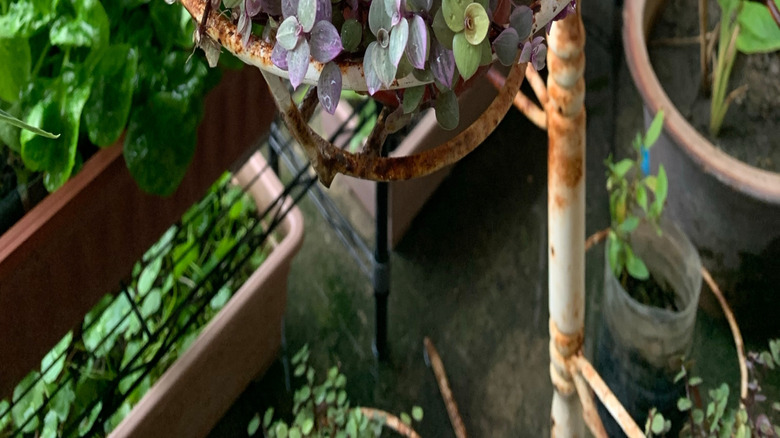
Turtle vines (Callisia repens) look gorgeous cascading down their pots and baskets. Sadly, they can grow spindly and sparse with age. To get them all perky, trim out dead and yellowing foliage. Be gentle, as the branches are delicate. Long-limbed stems can be cut in spring for size control, and the extra length can be rooted. Be sure to snip right above the node, as that's where new branches would appear, making the plant lush and bushy. If the plant has been severely neglected, it can be cut back entirely, with healthy stems saved for cuttings.
String of bananas
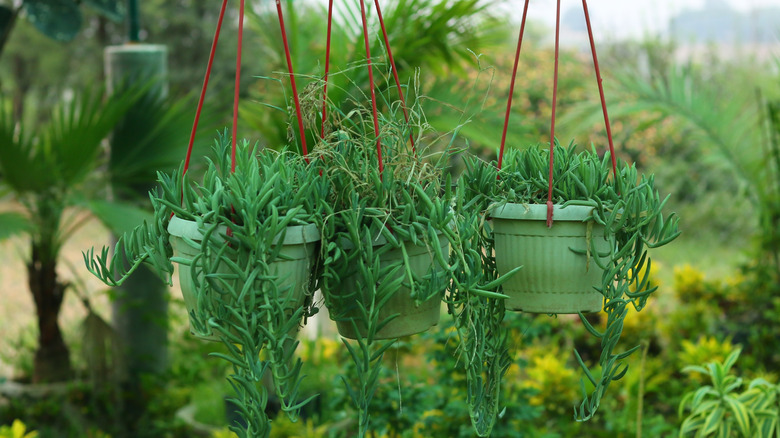
Named so because its glossy green leaves look like bananas, the string of bananas (Curio radicans) is a low-maintenance perennial succulent typically grown as a houseplant. Its fast growth can quickly cause the plant to look stretched and gangly. So, to improve its appearance and promote more branching, give the stems a light prune every spring or summer. Always cut above a node rather than through leaves, and wear gloves and eye protection before handling, as all plant parts are toxic.
Stenocereus
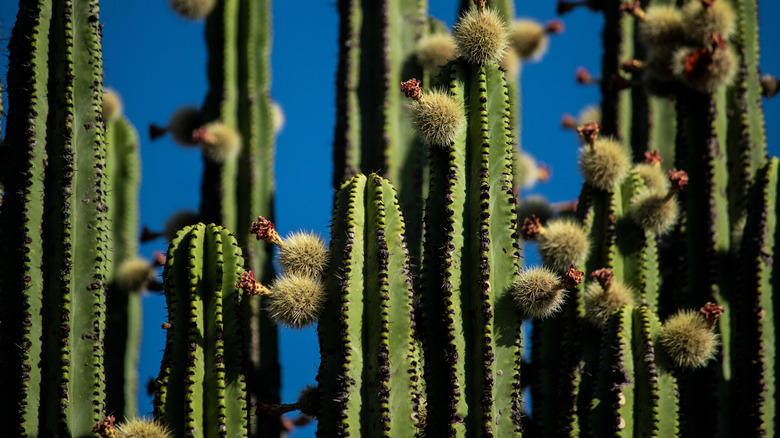
Stenocereus (Stenocereus spp.) encompasses several columnar cacti that may require occasional pruning. Multi-stemmed clumping varieties like organ pipe cactus (S. thurberi) can often grow too tall for the space, overwhelming it. When that happens, you can splice the stems at the ideal height and root the rest. The lower limbs on shrubby varieties, like grey organ-pipe cactus (S. pruinosus), can be pruned out for a more tree-like form. Cold-damaged, diseased, and withered stems should also be removed at the base to help promote vigorous growth.
Cholla cactus
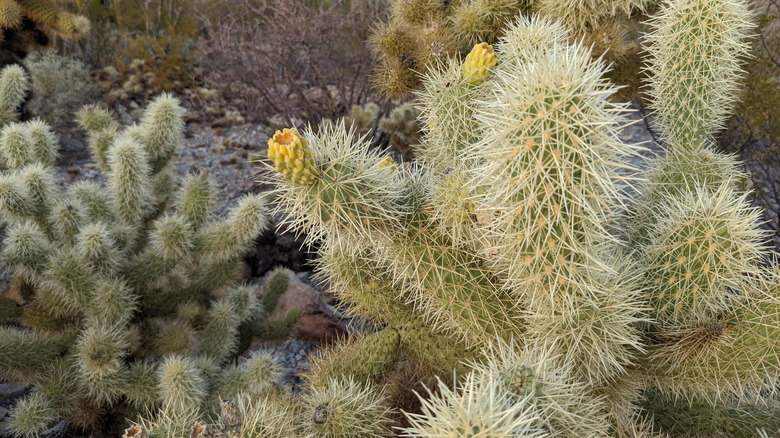
Cholla cactus (Cylindropuntia spp.) is popular with gardeners for its unique appearance and drought tolerance, which is especially valuable in arid climates and water-wise landscapes. To keep cholla cacti healthy and well-shaped, prune occasionally to remove sagging, damaged, or dead stems. Besides, when exposed to light breezes, they're known to drop limbs. Unless you want to haul them around or worse, deal with messy clones, you must shape them on time and control height while you're at it. Use tongs to twist the stems and cut at the joints.
Ghost plant
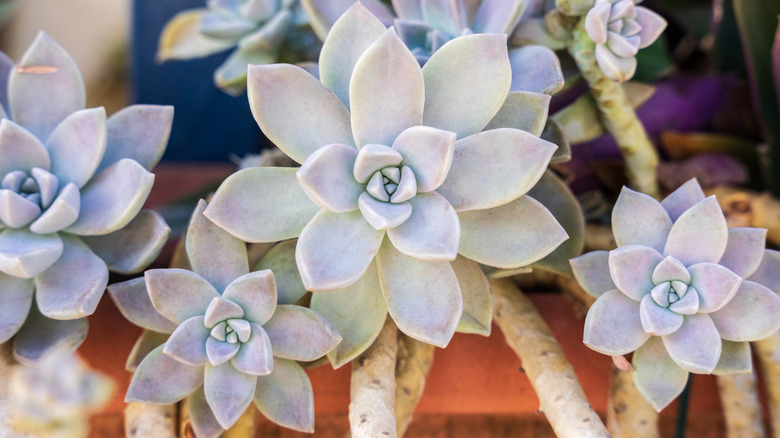
Ghost plant or mother of pearl (Graptopetalum paraguayense) is a highly versatile succulent that can be planted as a cold-hardy groundcover in mild climates or potted up as an indoor plant. Unfortunately, as the vines grow out, they take on a bare look. So, to encourage a fuller appearance, prune out the leggy segments with a sterilized pair of sharp scissors. Be delicate when pruning, as the stems can break easily. Plus, mere touches can rub off the powdery coating that lends the succulent its ghostly aesthetic. Also, be sure to remove damaged and dead leaves.
Florist kalanchoe
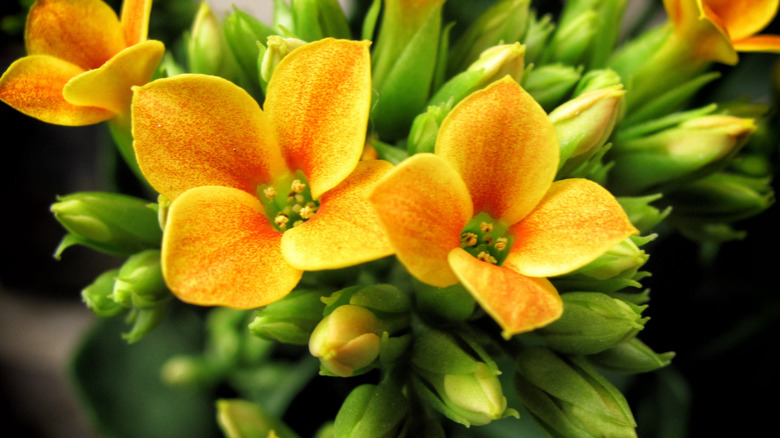
Homeowners often tap into florist kalanchoe (Kalanchoe blossfeldiana) to tide them through gloomy winters — their bunches of red flowers are truly spectacular. However, if you want these succulent houseplants to rebloom next year, you'll need to prune them. As the flowers fade, remove their stalks, tidy up the dead leaves, and chop down any leggy sections. You'll also want to pinch their tops to encourage stems to branch off and fill out the plant. Proper light conditions are also essential for reblooming, as pruning alone is not enough.
Stonecrop
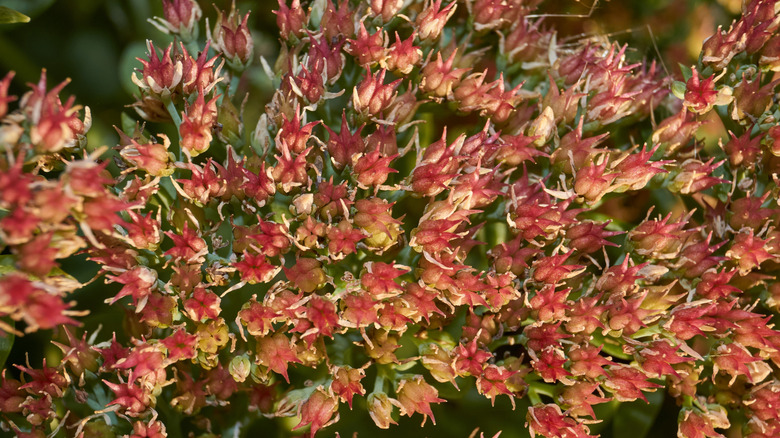
Certain stonecrop or sedum (Sedum spp. or Hylotelephium spp.) varieties and cultivars, like the popular 'Autumn Joy' for one, can grow limp late into the growing season, sprawling about the soil in an unseemly manner. To avoid that, after the first flush of flowers, pinch off the tips of all the spindly stems to the next joint. This should coax the plant into producing more branches, which should help it retain its compact, full habit until it's frost-killed. If plants appear overly leggy, foliage can be cut back by half to encourage bushier growth.