

How To Tell If Your Garden Soil Is Ready For Planting With A Drainage Test
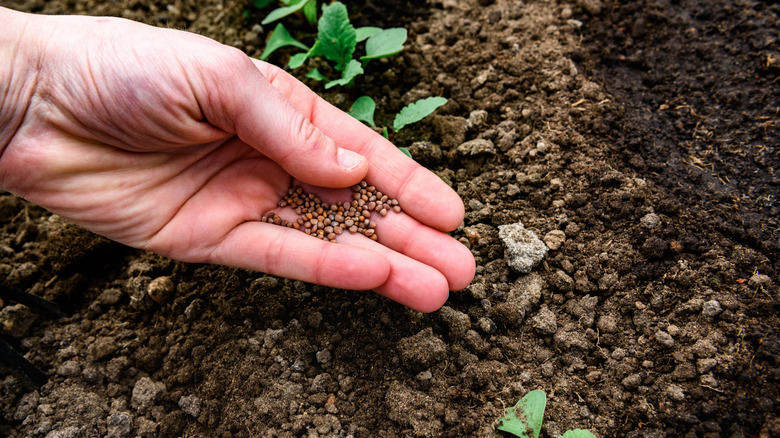
Drainage is everything when it comes to soil. You'll see seed packets and planting guides for plants that can tolerate all kinds of soil conditions, but the one condition virtually every plant needs in its soil is good drainage. Ideally, soil retains both empty pore space between soil particles for aeration and sufficient water to irrigate plants. In soils that are not draining well, the pore spaces between particles are largely filled with water following precipitation or watering, making plants placed in that soil subject to root rot. Erosion and runoff are issues, as well, if the soil surface becomes waterlogged.
Understanding soil drainage is an important part of how to prep your soil for successful planting. Does your soil drain well? Don't fret if you don't know because you can easily determine if your garden soil is ready for planting with a drainage test, called a percolation test and often abbreviated as "perc" or "perk" test. The test involves filling a hole with water and measuring how quickly it drains. Though it involves the effort of digging the hole, it's a simple test.
Conduct a percolation test to measure your soil's drainage
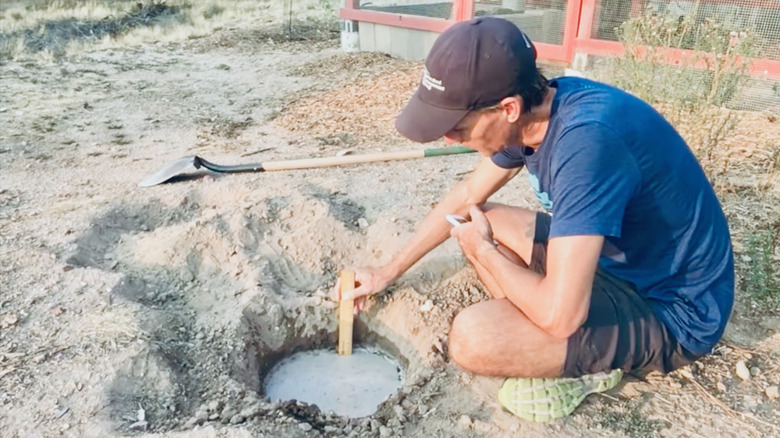
Your first step in a percolation test is to dig a hole about 12 inches deep and up to 12 inches wide in the spot you want to test. Next, saturate the soil, filling the hole with water and letting it drain completely. This first soak can take a while — sometimes up to a full day — so be patient. Once it's fully drained, refill the hole with water right away.
Now you're ready to measure. Insert a ruler in the hole and note the water level. After 15 minutes, check again to see how far the water has dropped. Multiply that number by four to estimate how many inches per hour your soil drains. Here's what those numbers mean: If your measurement is in the range of 1 to 3 inches per hour, your soil is draining perfectly. More than 4 inches in an hour means your soil is sandy and drains fast. If your soil is draining at a rate of less than 1 inch per hour, your soil's composition is likely heavily on the clay side or compacted, which indicates poor drainage. You can improve the heavy clay soil in your garden with the easy, natural fix of adding organic material to it.
Don't assume your soil drainage is the same in every spot in your landscape, as variation in drainage rates from one area to another is not uncommon. You may want to conduct percolation tests in more than one spot. A percolation test is just one of the simple ways to test your soil before planting, but it's arguably one of the most important.