

The 10 Best Evergreens For Winter Holiday Decor, Suggested By Our Pro Gardener
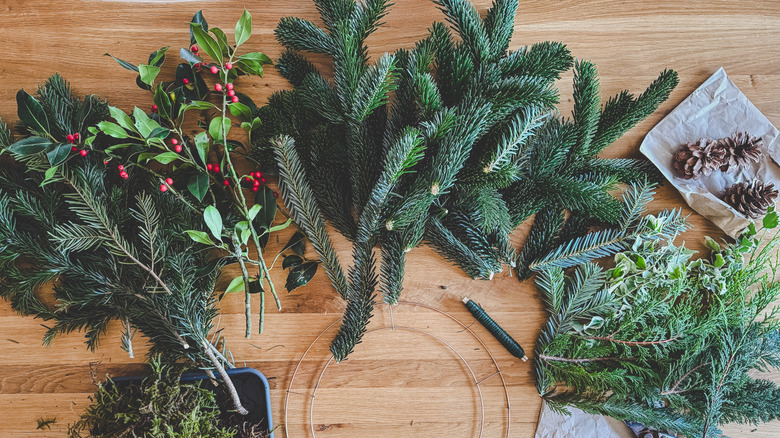
One of my favorite tasks as a professional gardener is creating winter holiday displays with greenery. Most folks are familiar with pine, fir, and spruce trees, and these boughs are often used to make door wreaths. Holly boughs with berries are seen on cards and wrapping paper. But some other common evergreen plants, like English ivy and juniper, also make beautiful additions to your holiday greenery displays.
Where do you get these green supplies? You can buy them from nurseries this time of year, and some Christmas tree farms will let you take their spare boughs and cuttings for free, as well. I often go foraging in nearby woods or around my neighborhood to snip branches and boughs. You can harvest evergreens from your yard, if you have them growing, or forage in suitable spots. Take care when harvesting: wear work gloves and sturdy clothes, sunglasses or safety goggles, and use clean, sharpened snips and pruners. If you reach overhead to cut branches, shield your eyes from falling needles or debris.
Many of the evergreens we associate with winter holiday decor are conifers. This name literally means "cone bearer" (for the brown cylindrical seed-covered fruits or "cones" produced by these trees). The pine cones are also great craft supplies for decor. Some of these conifers have needles with sharp edges or points, so handle them carefully when making your displays to avoid scratches or abrasions.
Holly
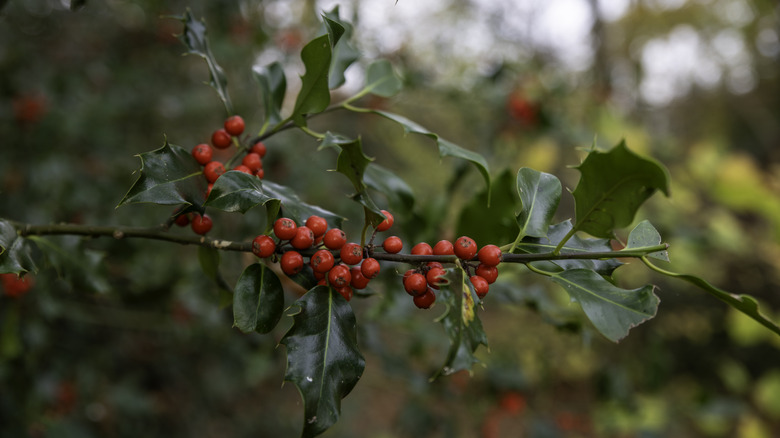
What winter holiday display would be complete without holly? It's even mentioned in many holiday songs (or as I call them, "holly day songs"). With or without its bright red berries, the glossy dark green leaves are gorgeous, and easy-care holly bushes are popular landscaping shrubs. However, using holly boughs in a display does require one important element: moisture. Cut holly branches dry up quickly without water. Place the cut ends in a vase or jar of water within your display, or, if using sand/potting medium, keep it consistently moist.
English Ivy
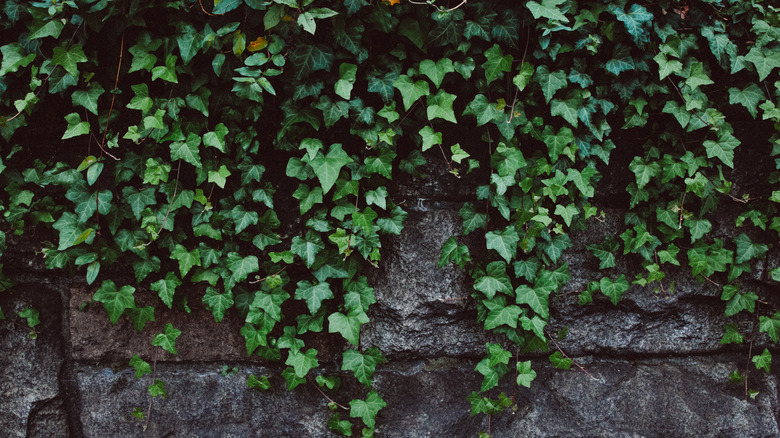
If you're hearing the words "the holly and the ivy" in your head right now, good! The old carol reflects the English folklore around these plants and their symbolic importance at winter solstice, as symbols of rebirth, protection, and rejuvenation. English ivy's geometrically-shapely leaves and graceful tendrils add lovely texture to evergreen displays. The leaves will remain green in your display without water for a few days, but will stay more vibrant if the stem ends are kept moist.
Pine
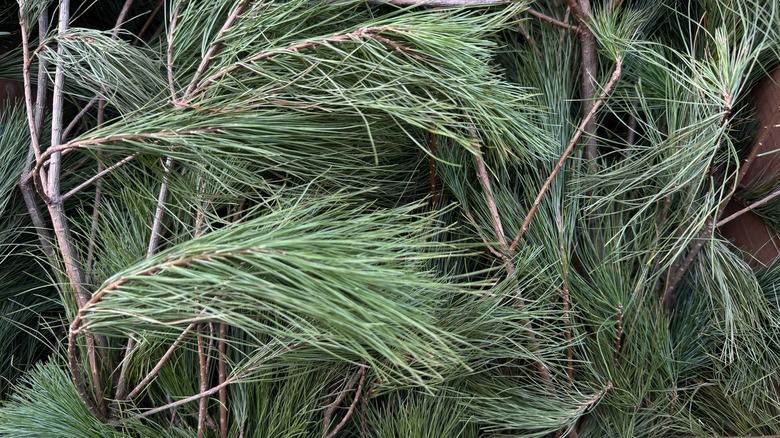
There are many types of pine (Pinus) trees and shrubs, and many of them produce beautiful cones that can also be used in decorations. Some pines, like eastern white pine, produce long, feathery needles that add graceful elegance to displays. When handling pine branches or cones, be careful of the tacky, resiny sap that may stick to your hands and clothes. Isopropyl alcohol followed by mild soap and water will safely remove it from your hands, or if you get it on your clothes, a bit of WD-40 will remove the sticky sap.
Cedar
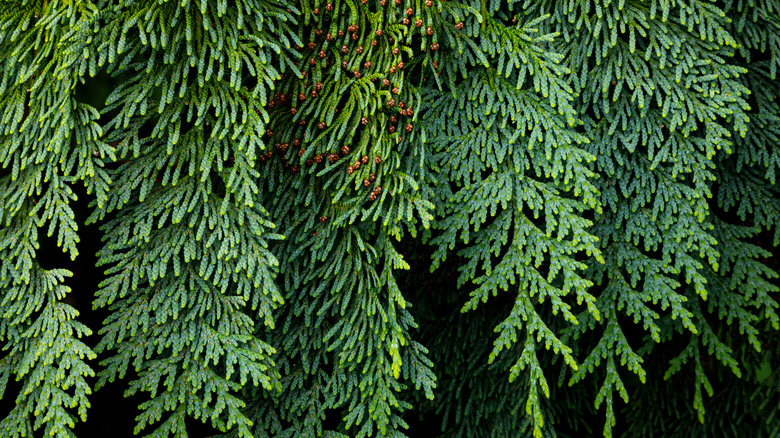
Cedar trees are known for their lacy, vibrant foliage and fragrant wood. Some varieties also produce tiny cones that stay on the tips of leaves throughout the winter. These trees are from the Cedrus genus, but some trees called cedars are actually junipers, like the eastern red cedar (Juniperus virginiana). The cut boughs stay fresh and green even without water, so they're perfect for wreaths and indoor centerpieces. Cedar also gets bonus points for being clean and easy to work with: no sharp needles or sticky sap to worry about.
Spruce
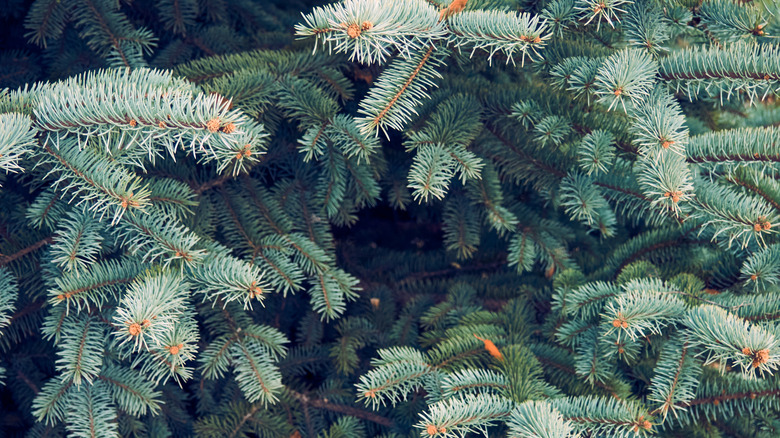
There are many spruce varieties, but most people recognize the popular blue spruce (Pinus oungens), also known as the Colorado spruce, which is often chosen for Christmas trees. The powder-blue tones are beautiful, and the invigorating scent of the needles instantly evokes the winter season. Handling spruce boughs requires some care, as the short, stiff needles sometimes have somewhat sharp tips. Spruce holds up well in displays, but indoor heat will eventually cause needles to dry up and drop off.
Fir
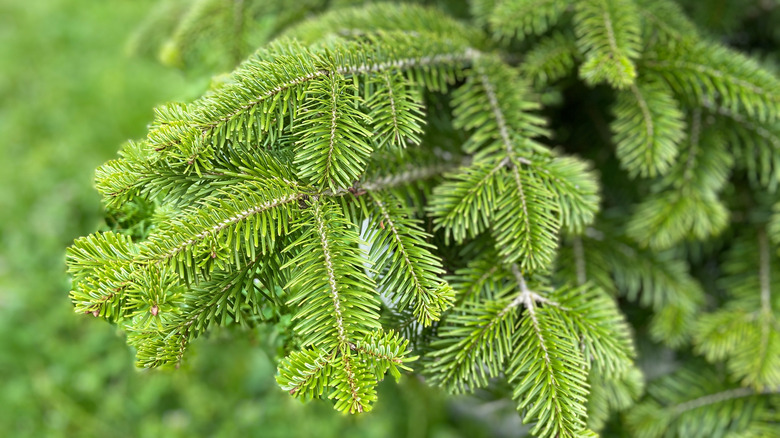
Most fir trees have soft needles with rounded edges, making them easy and pleasant to work with. Like other conifers, they also have an invigorating fresh scent and attractive cones. The balsam fir (Abies balsamea) is a well-shaped, fragrant tree that's a popular Christmas tree because it has excellent needle retention (i.e., less likely to drop needles). The new growth appears light green against the dark green boughs.
Yew
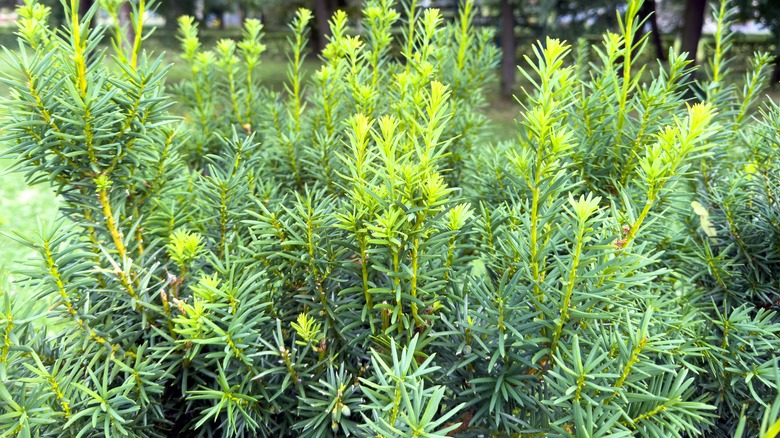
Yews (Taxus spp.) were once commonly planted as shrubs and hedges, especially in the 1950s through the 1970s. They can get quite large and are hard to remove, so having them as a foundation shrub is a commitment. The glossy evergreen needles look wonderful year-round, but are especially vibrant in winter. Some yews have round red berries, but these are toxic if ingested and so not recommended for decor. But the shiny, dark green foliage is an excellent addition to winter displays and wreaths.
Juniper
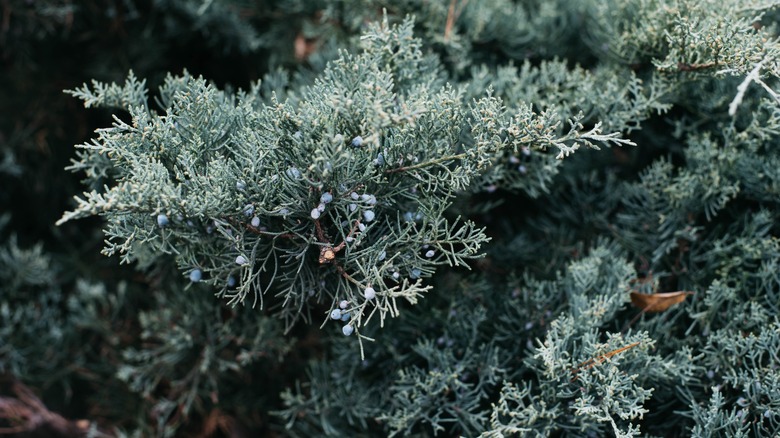
Juniper trees and shrubs (Juniperus) come in a wide variety of shapes and sizes. The needles are quite prickly and should be handled with care, but the gorgeous foliage is worth the effort. Their blue-toned boughs are sought after for decor, and many junipers also produce blue berries that add attractive color and texture (also, they're used to make gin). The dried needles can also be quite prickly, so I tend to use these in outdoor displays to make clean-up easier.
Boxwood
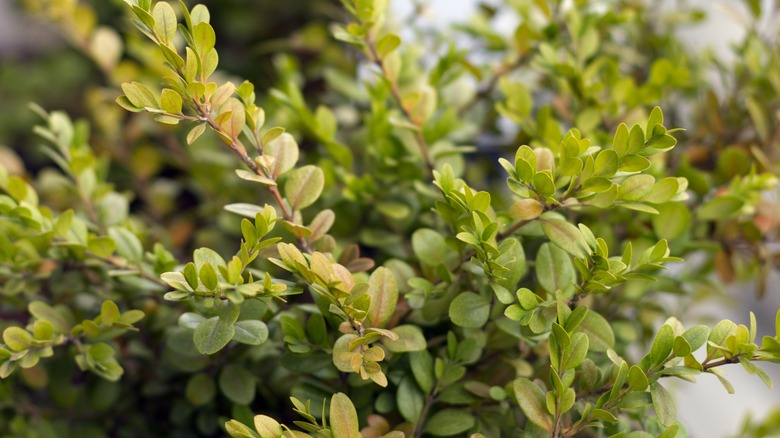
Boxwoods (Buxus) are very popular plants used as hedges, foundation shrubs, or accent plants, depending on their size and shape. The shiny oval leaves stay green all winter and make a nice addition to your winter displays. There are no needles, thorns, or sap to worry about here, but they do tend to dry out and drop their leaves quicker than conifers, so placing them in water or a moist medium helps keep them looking fresh.
Cypress
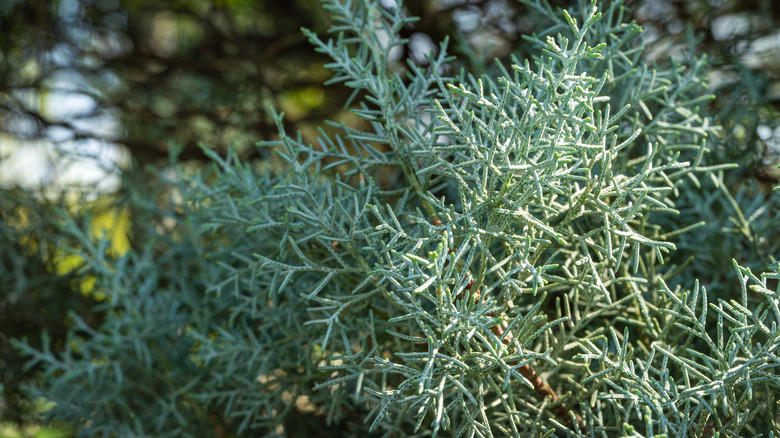
Cypress trees (Cupressus) are an ancient conifer known for their longevity and healing properties. There are a variety of cultivars in varying sizes and shapes that make good landscape specimens. Some shrubs known as "false cypress" (Chamaecparis) have brightly colored foliage in shades of olive green and gold (like 'King's Gold Cypress'), as well as blues and dark greens. All cypress greenery makes beautiful decorations thanks to its lacy, feathery foliage.