

9 Unbeatable Countertop Options For Messy Cooks
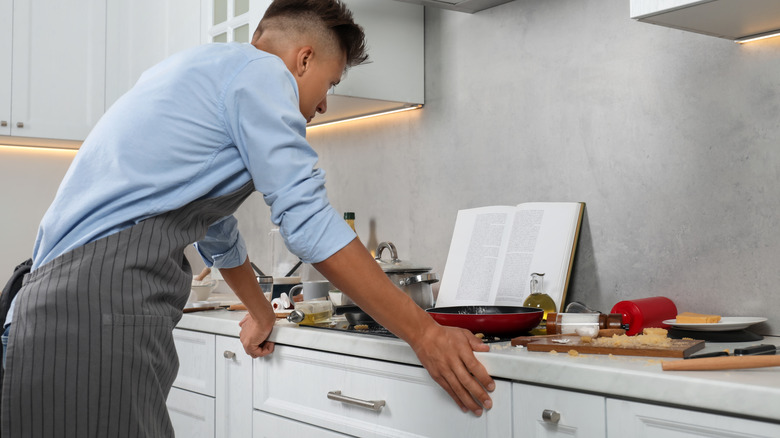
Cooking is as much an art form as it is a practical skill, and it's something that's mastered over a lifetime. Everyone progresses along their cooking journey differently. Some cooks are organized and task-oriented. Others are a creative tornado in the kitchen, leaving drips, drizzles, and dollops as they sear, cut, and whisk. While there's nothing wrong with approaching cooking in your own weird way, cleaning up your kitchen after the cooking is done is essential. That's especially true of messy cooks. Luckily, choosing the right countertop option for mucky home chefs — whether it's granite, butcher block, stainless steel, or recycled glass — can save you a lot of hassle once the food is in the oven.
There are several easy-to-clean countertop options available for different kitchen aesthetics and price ranges. Choosing a countertop color that gives your kitchen the right vibe is an undeniable part of the process. But design and budget aren't the only things to consider. You will also want to weigh these factors against the performance of the countertop. How well will it hold up to your personal style of cooking? Butcher block, quartz, and granite are ideal options for cooks who want to chop or prep bakery items directly on a countertop. On the other hand, easy-clean stainless steel or porcelain are best for cooks who tend to leave trails of oils and sauces across the counter.
Butcher block
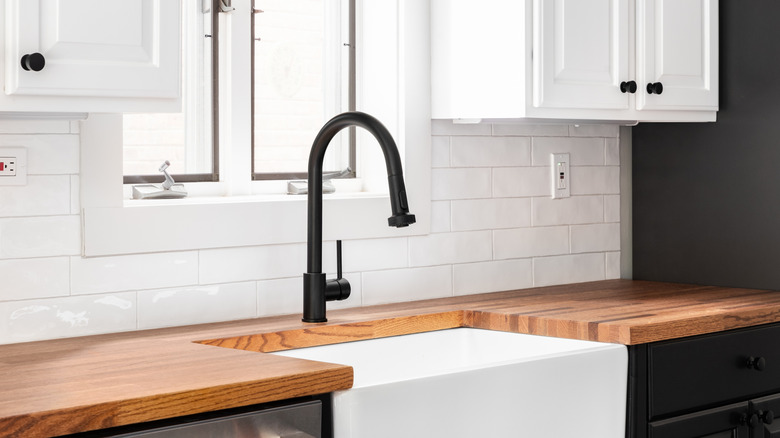
Butcher block countertops are made by gluing together milled wood, cutting and sanding it, and sealing it with a finish suitable for messy kitchens. There are different types of finish, each with its own benefits. All can withstand light cutting. However, it's best to avoid cutting raw meat on a butcher block to prevent the chance of propagating foodborne illnesses. When you are done cooking, simply wipe down the countertop with your favorite wood-safe cleaner. To maintain the best quality finish, wax or oil your butcher block countertop monthly. (The product you choose depends on its original finish.)
Corian
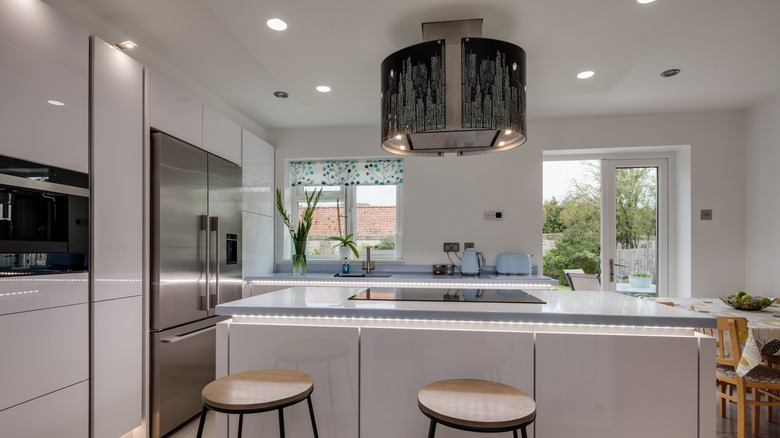
Corian is a solid, non-porous material that naturally prevents bacteria buildup, which is why some people choose it for their kitchen over things like butcher block. This countertop material is expected to make a comeback in the coming years. Corian is easy to clean and stain-resistant, especially if you wipe down the surface with soap and water immediately after cooking. Unfortunately, these countertops don't hold up as well against scratches or burns as other options, but minor damage can be repaired with sanding.
Granite
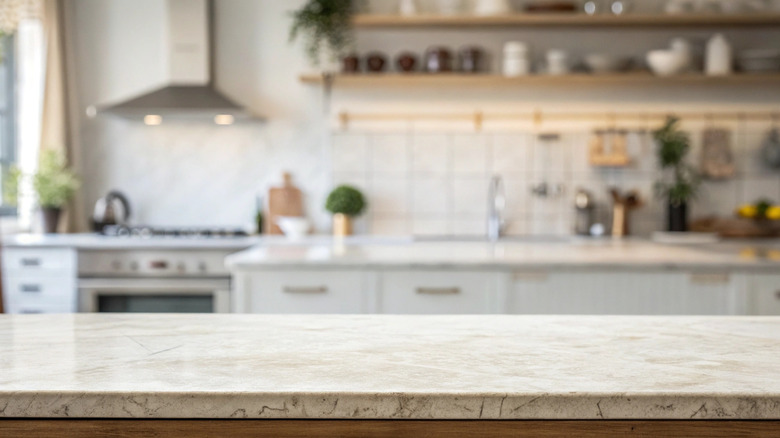
Granite is a dense natural stone that can withstand cutting, heat, and spills. It is one of the most durable materials you can use for a countertop. Importantly, it's also easy to clean. When properly cared for, most granite countertops last up to 15 years before they become dull and need resurfacing. The best way to clean granite countertops is with a natural, homemade solution made of rubbing alcohol, water, and soap. Depending on your finish, you may need to reseal your countertop with a penetrating sealer from time to time.
Laminate
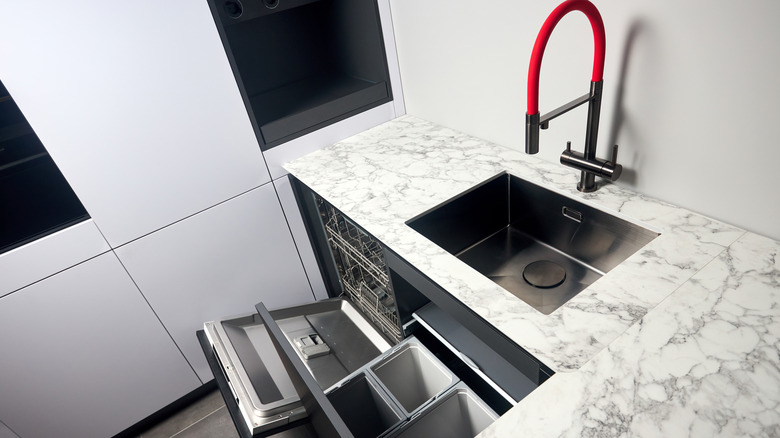
Laminate countertops are an affordable option for messy cooks who need an easy-to-clean surface. This affordable, non-porous material is made from compressed particle board and plastic, and it comes in a plethora of colors and patterns. While laminate is indeed budget-friendly and washable, it is not as durable as tough materials like natural stone or stainless steel. It's relatively resistant to stains, scratches, and scuffs. Knife cuts and heat, on the other hand, can quickly damage laminate countertops.
Porcelain
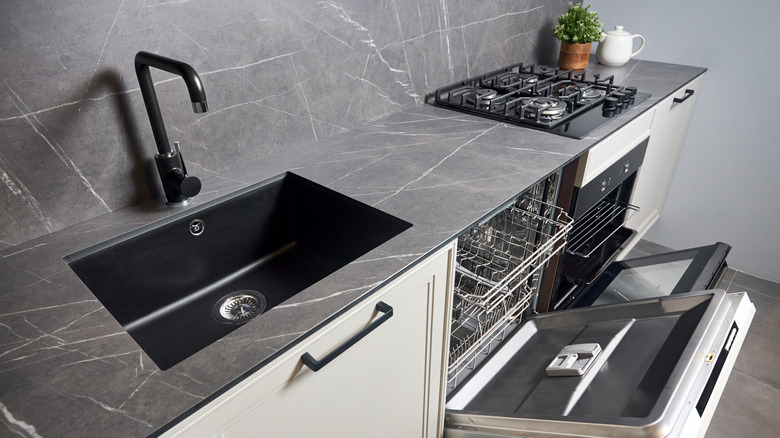
Porcelain is another non-porous countertop material that is easy to clean and doesn't stain. It's far more durable than laminate and stronger than granite, but not quite as hard as quartz. It's naturally heat-resistant, so you don't need to worry as much about using trivets with hot dishes. It's also a sustainable material. Unfortunately, porcelain countertops can be prone to cracking when heavy items are slammed onto them. It's not ideal for cooks who often employ rough-and-tumble techniques like meat tenderizing.
Quartz
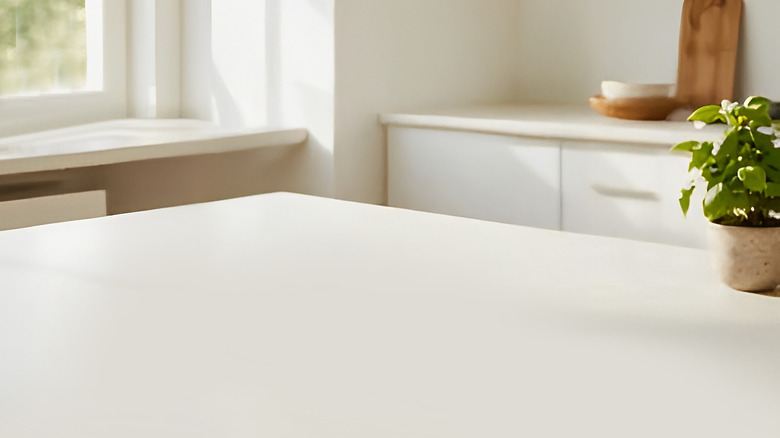
Quartz countertops are one of the most popular options for kitchens today — and for good reason. Quartz is a natural stone that is harder and more durable than granite, but with many of the same benefits. Getting the right quartz countertop that is best for your home's resale value is a smart homeowner move. Cleaning quartz is just as easy as cleaning granite, porcelain, or even stainless steel. You can use gentle cleaning products that say they're safe for quartz on the label, or you can simply wipe the countertop down daily with soap and water.
Recycled glass

This sustainable, durable countertop material makes a statement and is easy to clean. Recycled glass countertops, as their name implies, are made from colorful recycled glass combined with cement, concrete, or resin. The material is comparable to other non-porous countertop options on the market, and it doesn't need any ongoing maintenance. All you need to do is wipe the countertop with soapy water or a gentle household cleaner after you finish cooking. If you're crafty (and ambitious), you can create gorgeous countertops with recycled glass bottles and concrete.
Soapstone
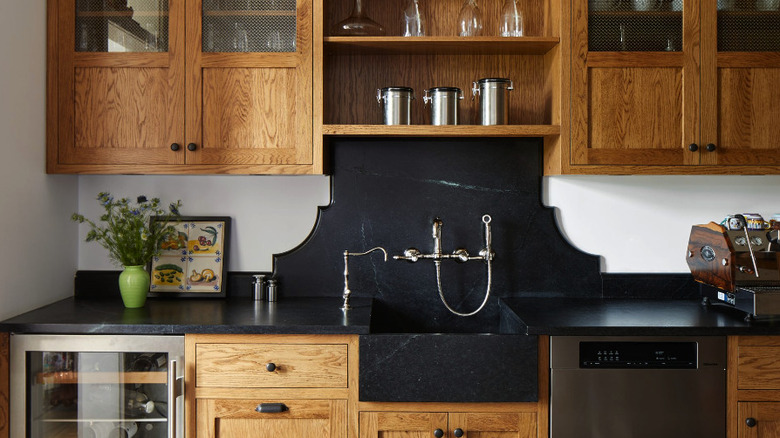
Soapstone is another durable, non-porous natural stone countertop material that is washable. As a matter of fact, it is so easy to clean up spills on soapstone that it is commonly used for school laboratory countertops and factory sinks — proof that it should be a great option for the very messiest of cooks. You don't need to use any special cleaners: soap and water do the job just fine. Soapstone is also more heat-resistant than other countertop materials. It can withstand heat from hot pots placed directly on the surface without cracking.
Stainless steel

Stainless steel is one of the easiest countertops to keep clean and sanitized, even for home cooks who make a mess of their kitchens. The biggest problem with stainless steel is aesthetics. People tend to use stainless steel for their appliances, but steer clear of using the material for countertops. Why? It can give a kitchen more of a cold, commercial feel than a comfortable, homey vibe. That being said, it's one of the most durable, heat-resistant, and easy-to-clean materials. It can, however, be susceptible to scratching, and it is best wiped down with a stainless steel-specific cleaner.