

1940s Kitchen Design Features We Wish Would Comeback
We may receive a commission on purchases made from links.
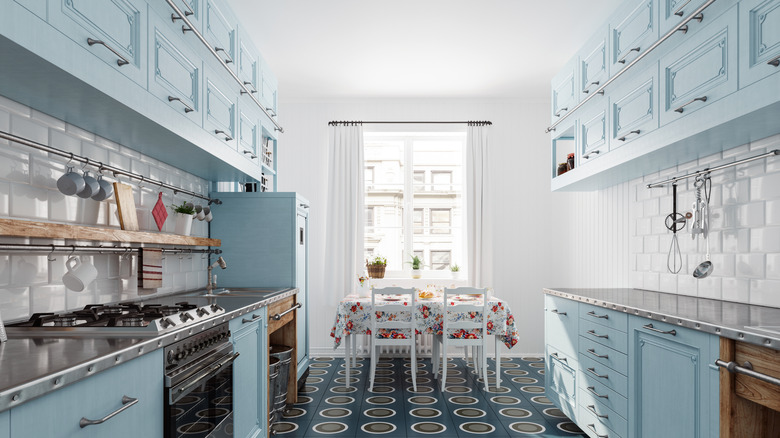
There are certain home designs from the past that deserve a second chance in our modern world. One is a covetable home style from the 1940s. The second is a few of the 1940s kitchen design features. Before open shelving and oversized islands became the trend, kitchen styles from this decade prioritized function, comfort, and convenience. These kitchens weren't trying to show off. They were built for busy families with busy lives. Minimalist kitchens dominate today's home designs. But have you ever noticed that, as new looks replace the last trend, some of the practical features quietly disappear? This is definitely true of the useful features the '40s are known for. Smart, efficient layouts kept common items accessible, and features like built-in cabinet bins and utility cabinets made smaller kitchens feel bigger and more functional.
Most importantly, kitchens in the 1940s were made for real-life living, not just to increase their visual appearance — though it did that too. Small kitchen dinette tables made it convenient to eat meals together, as the day continued to unfold between the sink and stove. Wood trim that evenly matched the cabinets gave windows a softer look while keeping the aesthetic seamlessly flowing. Looking back at these retro design features and hoping they make a comeback isn't about wanting things to be like they used to. It's about revisiting good ideas that are still beneficial today. These '40s kitchen designs bring freshness that is worth bringing back.
Breakfast nooks
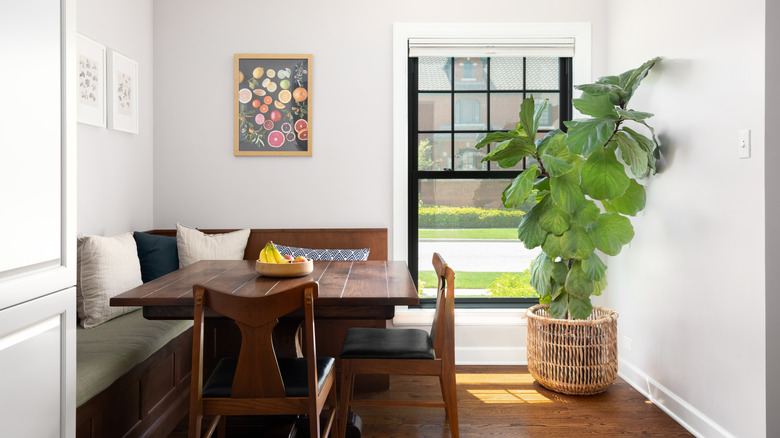
Breakfast nooks were a low-key win for kitchens in the 1940s. They made the best use of corner spaces, creating a built-in spot that was cozy and open. Unlike today's common kitchen islands, nooks made it easier for sitting down and taking your time to have conversations — whether over coffee, a meal, or homework. More than anything, the nook made kitchens feel less like a factory, combining togetherness and function we all crave.
Wooden valances
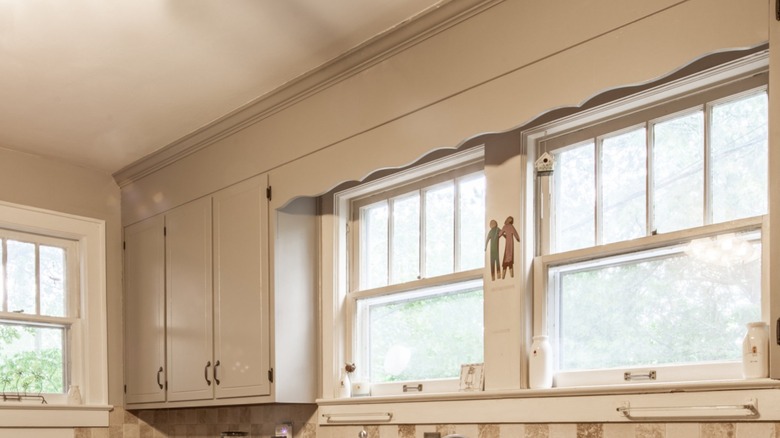
In the 1940s, kitchens had wood valances adorning windows as a major design feature, adding coziness and a handcrafted feel. Most had simple shapes with curves or scalloped edges that helped soften the room without blocking out sunshine. These valances would usually frame sinks by subtly tying together the cabinets and trim. Wood valances were simple, strong, and timeless architectural pieces. Bringing them back could show how even minor details make a kitchen stand out.
Built-in cabinet bins
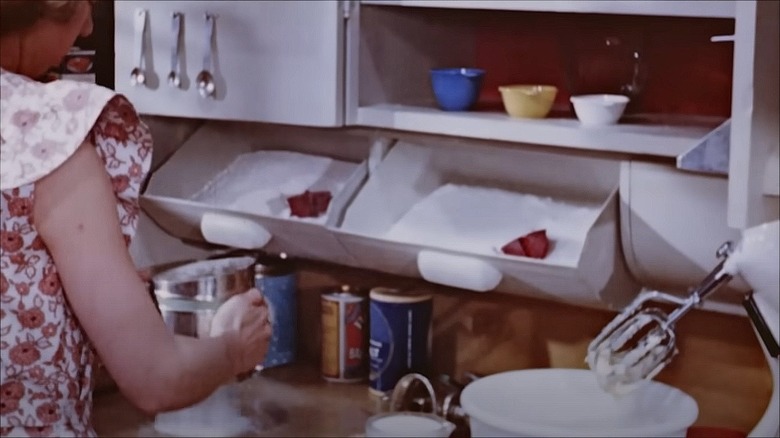
Probably our favorite 1940s kitchen feature is the built-in bin. People would typically store flour, sugar, and potatoes, but really, you could put almost any non-perishable item inside. These bins were attached underneath the cabinets and easily accessible from the counter. They were meant to eliminate the need for canisters that would clutter countertops and take up precious real estate for cooks who need the space to do their thing.
Metal cabinets
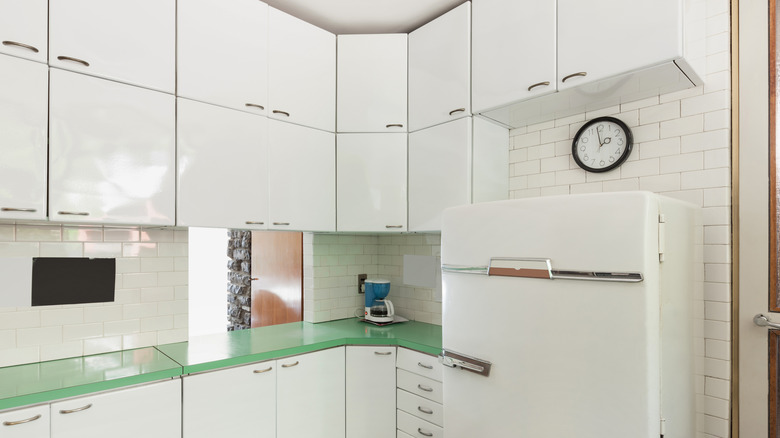
Often made of steel, metal cabinets were popular in the 1940s thanks to their functionality and low maintenance. They were easy to wipe down and weren't prone to getting warped by water like wood cabinets. Metal cabinets had a sleek design and hardware that gave them a super modern aesthetic back then. Usually painted in lighter hues, metal cabinets brightened up kitchens without being overly showy. Their retro appearance could easily fit in with today's modern looks.
Dinette kitchen table and chairs
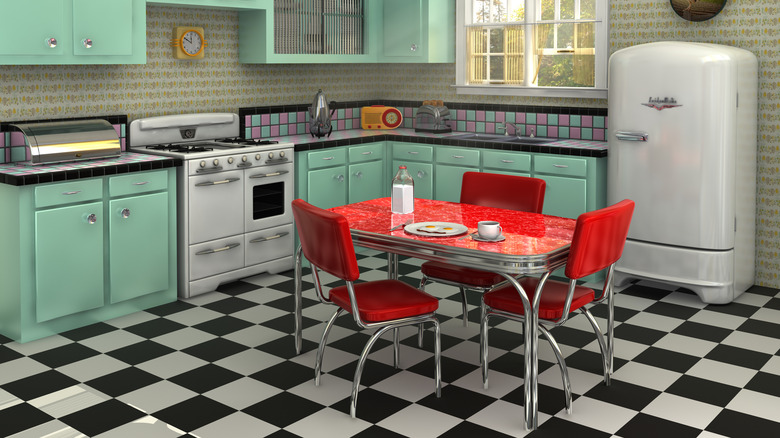
Dinette kitchen tables were uber popular in the '40s and '50s, providing a small, informal spot for family meals. These cute tables came with chairs with chrome legs and laminate tops, which made them super easy to clean. Dinette sets were the perfect size for smaller kitchens, without the need for a separate dining space for a quick breakfast or midnight snack. If you're looking for ways to create a retro-style kitchen, a metal dinette table and chairs are the best place to start.
Utility cabinets
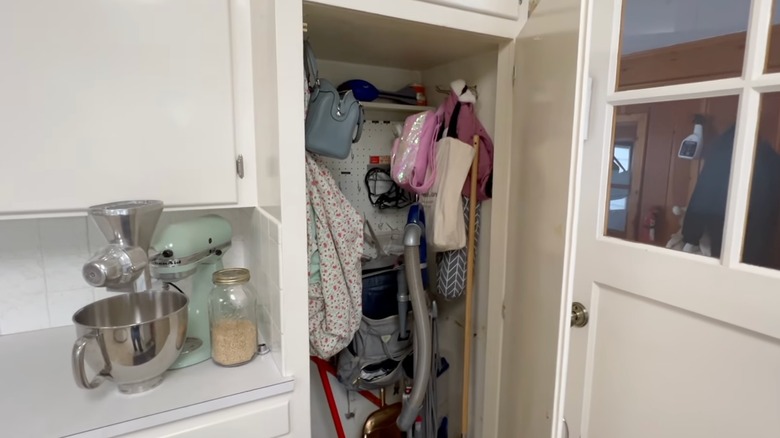
A nifty kitchen design feature from the 1940s was the utility closet. It was meant to keep tall tools close by but out of the way, with hooks and shelves. Usually tall and narrow, utility closets held brooms, mops, irons, cleaning supplies, or an ironing board in one spot. This kept kitchens less cluttered and made cleaning up even quicker and easier when everything is within arm's reach.
Countertop garbage hatch
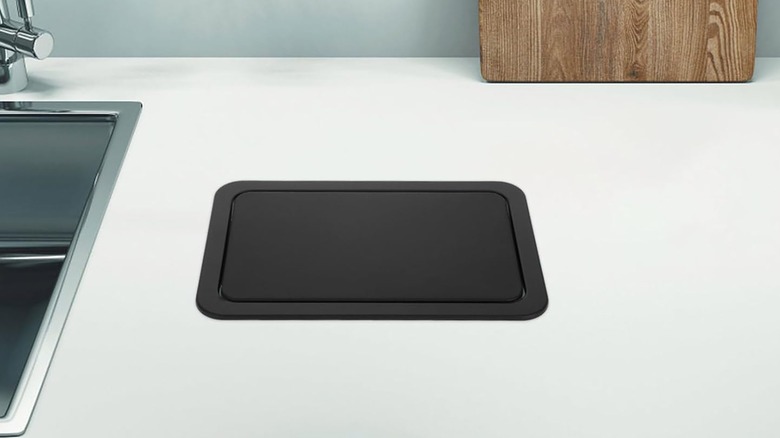
Back in the 1940s, some kitchens came complete with a clever feature: a garbage hatch built into the countertop. While you might not think it could be a game-changer, all you'd have to do is sweep scraps into the bin beneath it, which eliminates the need to carry things from the counter over to the trash can on the other side of the kitchen. It was a simple setup that didn't need electricity, making the cleanup process virtually hidden away.
Revolving cupboards
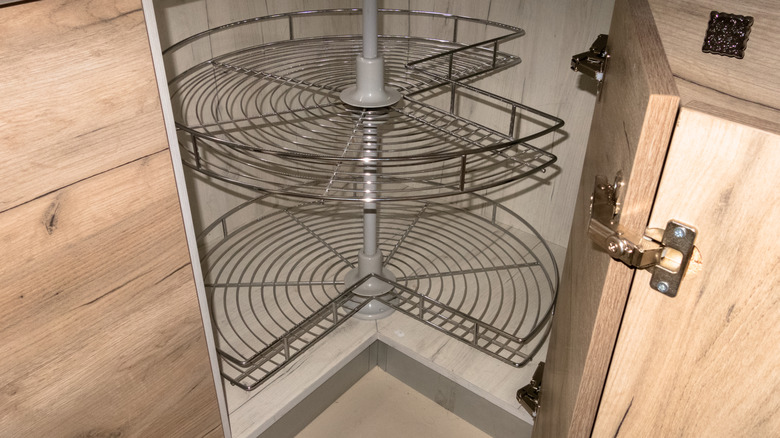
Rotating cabinets aren't a new invention. They were actually a clever way to save space in 1940s kitchens. Typically found inside corner cabinets and made from wood, cooks didn't have to spend time digging through cluttered shelves, thanks to its turntable design. It made good use of space, putting every inch of cabinet space to use. If you want to turn a regular cabinet into a functional one, find out whether a blind corner cabinet or a lazy Susan saves the most space.
Pull-out lap boards
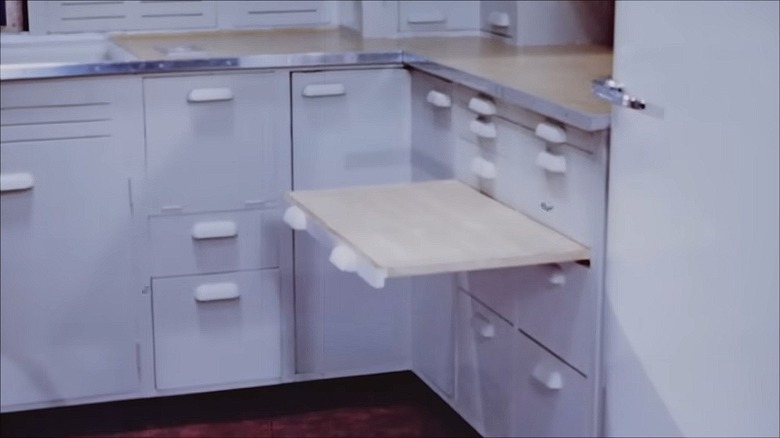
Pull-out lap boards were a cool '40s invention that helped with food prep. Built right into cabinets or counters, you could slide them out when you need more space, and tuck them neatly away when you don't. They were usually a comfortable height for sitting down when chopping, rolling dough, or just taking a break. Different from today's cutting boards, the pull-out lap boards were integrated into the kitchen's design.
Pull-out towel racks
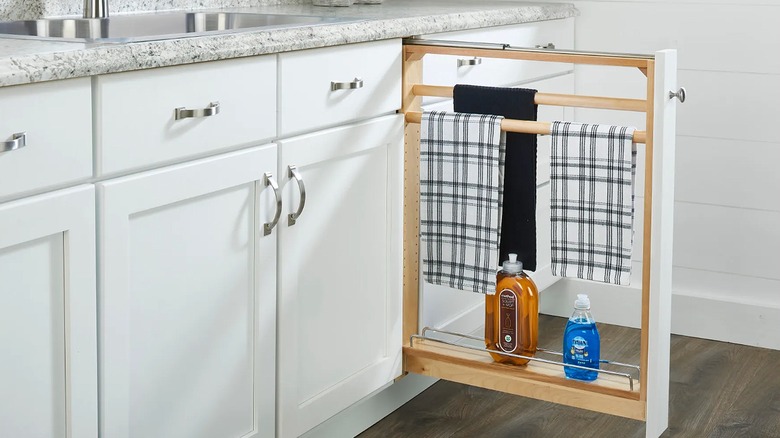
The pull-out towel rack has reappeared in recent years, but we really wish it would become a common kitchen staple that's part of every new home. In the 1940s, these pull-out conveniences were put next to cabinets or drawers that gave you a space for drying wet kitchen towels or just for storing them. It keeps towels handy but completely out of sight.