

A Fast-Growing Tree May Transform Your Yard, But It Carries Downsides
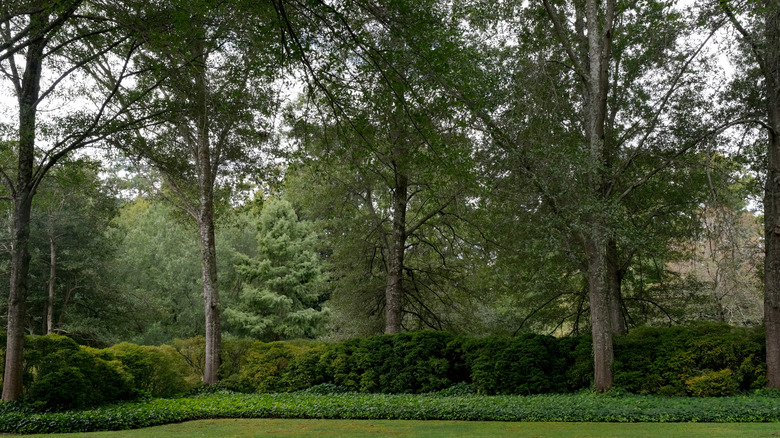
Today, many Americans wholeheartedly embrace instant gratification. Technology — from the quick hits of dopamine our smartphones feed us to unlimited internet access — is making us less patient. This I-want-it-now attitude is seeping into every aspect of our lives. For example, growing numbers of home gardeners are seeking out fast-growing trees for their yards. They don't have the patience to wait years for a Southern magnolia or gold thread cypress to reach maturity. Short-lived trees versus long-lived trees: Which should you plant in your yard? It turns out that fast-growing (and typically short-lived) trees are often weaker, more vulnerable to pests and disease, need more inputs, and negatively impact the ecosystems or infrastructure they inhabit.
There's no denying that trees that grow quickly can be a real asset in a garden. Maybe you lost a tree that provided privacy, shade, or soil improvements in a storm and need a replacement right away. However, despite their ability to quickly transform a yard, fast-growing trees have some distinct downsides, too. A study published in Nature Communications in 2020 reveals that, globally, fast-growing trees live shorter lives than their slow-growing counterparts. What's more, they often demand more resources, including fertilizer, water, and chemical controls and ongoing maintenance, and are more vulnerable to pests and disease. They can damage the built environments in which they grow. Understanding these short-lived tree issues helps you make informed decisions about your landscape before you head to the plant nursery.
Weakness is an issue with fast-growing trees
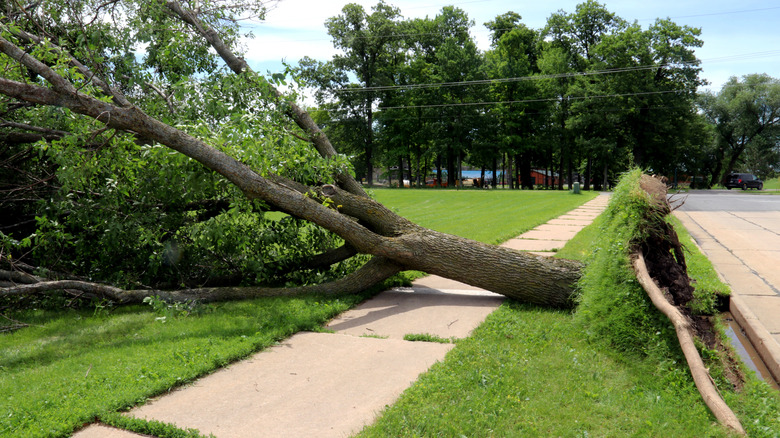
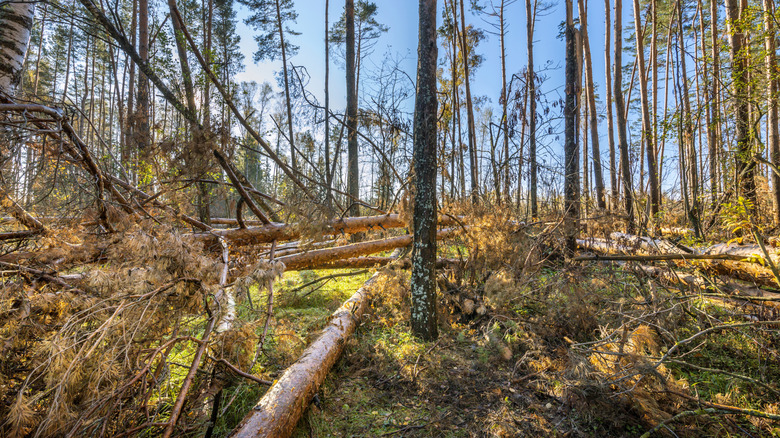
A significant issue with fast-growing trees is that their wood tends to be weaker and more brittle than that of slower-growing trees. This means they are more vulnerable to the elements — severe wind, snow, and ice can damage the tree, sometimes dangerously or irreparably. To stand strong, trees need a sturdy central trunk that supports a good number (though not too many) horizontal branches. Fast-growing trees reach their mature height quickly, so they are also more likely to have structural problems, such as suboptimal stem and branch development. The junctions where branches meet the trunk may also be too fragile, breaking frequently.
What's more, wounds take longer to close on fast-growing trees than they do on slow-growing trees, leaving the former at greater risk of insect pest infestation and disease infections. Depending on the depth of the wound, it can even block the transport of nutrients. The weak growth isn't limited to above-ground plant tissue. Fast-growing trees typically have shallow root systems that anchor poorly into the soil. These trees are far more likely than deeply rooted, slow-growth trees to blow over in a storm, taking any surrounding lawn, garden, or built infrastructure with them. These snaking shallow roots can also interfere with underground pipes and sewage systems. If they stick out of the ground even a little, they can make lawn mowing challenging.
Fast-growing trees are more vulnerable to pests, disease, and drought
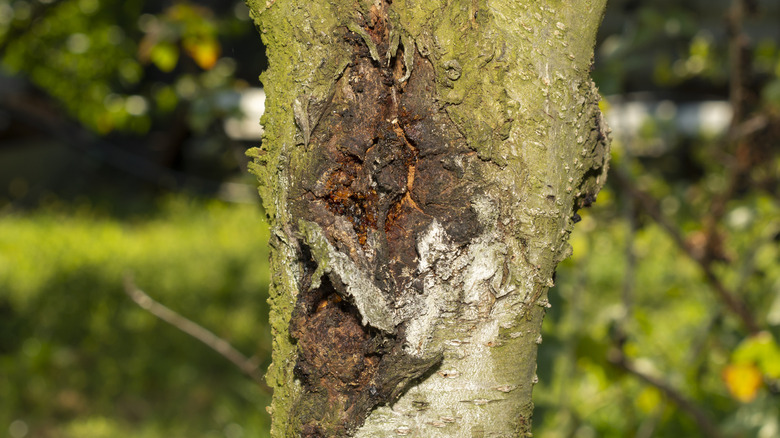
Fast-growing trees are more susceptible to disease and pests than their slow-growing counterparts. Generally, they have fewer internal resources to fight ailments because they use all their energy for growth. Some quick-sprouting tree species are, for example, particularly vulnerable to fungal canker, which can stress the tree, make it more prone to other illnesses, or even kill it. Other insect pest threats depend on the tree species. For example, emerald ash borer larvae destroy ash trees, while the elm leaf beetle skeletonizes the leaves of elm trees. Poplars are an example of a fast-growing tree species with limited resistance to just about everything (or so it seems), despite being a popular garden ornamental.
A tree's growth rate also plays an important role in its ability to tolerate and recover from periods of drought. A study published in Proceedings of the Royal Society B in 2024 found lower drought resistance in trees with fast growth rates. Fast-growing trees do, however, appear to have a greater capacity for drought recovery than slow-growth trees. If you garden in a dry climate, you may want to prioritize drought-resistance over fast growth. There are, for example, a long list of drought-resistant trees you should grow in your yard, including (but far from limited to) Persian ironwood, ginkgo, and Scotch pine.
Fast-growing trees need more of everything
Your fast-growing tree will demand more of your time and, possibly, your gardening budget than a slow-growing tree will. The rapid growth of these tree species ramps up their watering requirements. Let's look at the silver maple, a quick-sprouting large shade tree, as an example. It craves so much water that its roots often seek out and infiltrate plumbing lines, destroying them in the process. Fast-growing trees reach their mature height and width rapidly. As a gardener, you'll need to make sure you accommodate their breadth far sooner than you would have to a slow-growth species. This is the case both in and above the ground. If you don't, the tree will likely grow weak and even die.
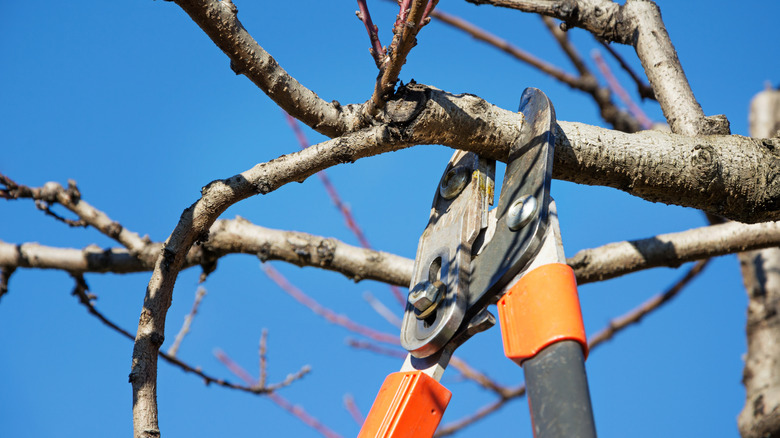
It's in the name: Fast-growing trees grow quickly — sometimes very quickly. And because of this, they need more maintenance more often than a slow-growing tree. Expect to spend a lot of time removing weak or broken branches and pruning often to improve the tree's structure. Shallow roots are more vulnerable to climate conditions, like fluctuations in temperature and humidity, and human interference. Depending on the tree species, you might need to spend more money and time on mulching and possibly protective barriers. You need to be careful not to give a fast-growing tree too much fertilizer. Fertilizer boosts growth, which may weaken the wood of the tree — even more than its typical fast growth does. You need to keep a much closer eye on fast-growing trees for signs of pests and diseases. Also, do deeper research into what may affect them.
The effects of fast-growing trees on other plants and the environment
Fast-growing trees only a loosely defined term — some species can take 20 or 30 years to reach their mature height and width. Still, the bottom line is that you need to weigh the benefits of adoring your yard with a large tree fast against the potential downsides. For example, fast-growing trees can do a lot of harm to other plants — especially endemic species — and the environment. Planting introduced fast-growing trees with the tendency to become invasive — or worse, that are already listed as noxious — can lead to ecological problems, such as a decline in native species in the area. Fast-growing invasives don't just crowd out other trees; they also create shade that may limit habitats for sun-loving plants.
You can plant fast-growing shade trees to cool off a hot backyard, but they aren't doing such a great job at cooling our planet. Broadly speaking, planting more trees has helped slow climate change. Large trees absorb significantly more carbon dioxide from the air than any other plant. However, in our eagerness to grow lots of trees fast, we're replacing slow-growth forests or planting disused land with trees that grow quickly but don't live as long. These fast growers die sooner and their soft timber breaks down quicker. They release all that stored carbon dioxide back into the atmosphere instead of holding onto it for centuries like a slow-growing tree would.