

Simple Tips For Successful Long-Term Shoe Storage
We may receive a commission on purchases made from links.
Retiring your summer sandals for your thick boots as the temperatures dip and vice versa is necessary to master seasonal closet swapping to prevent clutter. However, don't cram your shoes willy-nilly, or you'll unknowingly shorten their lifespan. Follow a few simple tips to ensure they come out of storage looking as good as when you put them away. For instance, always clean them before you put them away for a long period of time. This will keep pests from hunkering down and chewing through your footwear. A dirty and sweaty sole will also attract bacteria, making your sneakers smell rancid when you finally pull them out of storage. Moisture will encourage mold and mildew growth, too. So, allowing your sandals and boots to dry sufficiently is important.
Moreover, storing them carelessly will make them susceptible to unsightly scratches and scuff marks, dating your shoes faster than you'd like. Your bedazzled heels and cute bow-strapped sandals might lose their embellishments, too. Your footwear will also gather dirt and dust, preventing you from donning them as soon as you pull them out of storage. They might even lose their inherent shape and look funny. In the best-case scenario, your sneakers will bounce back with regular use. In the worst case, you'll be left with an unwearable pair. In case the change is irreversible, or you're dealing with a stiff base, it might hurt your feet as well if you force them on. So, although it'll take a little more time and energy than you'd expected to keep your summer sandals neat and tidy, follow a couple of best practices when packing away your footwear for a long while.
Tips to follow when storing your shoes for a long period
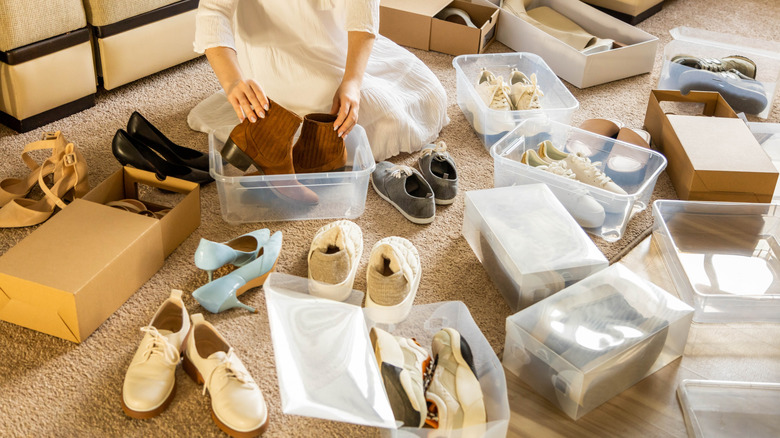
Start by decluttering your shoes. Empty your racks, the shelf within your wardrobe, and bring out the pairs hiding beneath your bed. When every single piece is accounted for, edit your collection. Determine whether you'll still wear those sandals come summer, do the winter boots still give you shoe bites, can you get rid of the mysterious stain on your white heels, or can your warm running shoes survive another cold season. Only keep pieces you're certain you'll wear again and put the others in piles to sell, donate, or throw away. The next step is to decide which pairs you'll put in storage and which ones will be going back to the racks.
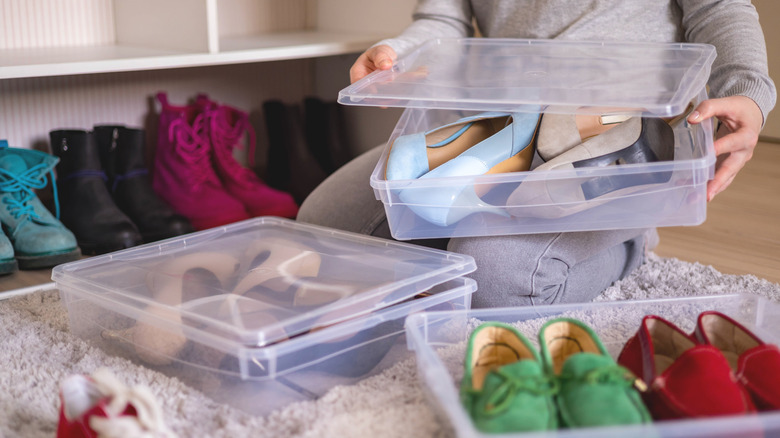
For all the pieces you want to store for the next season, clean them based on the material. For example, leather and suede will require a soft-bristled brush, whereas nylon, canvas, polyester, and cotton can brave your washing machine. That being said, always follow the manufacturer's instructions to find the best way to clean your shoes. Then, stuff your footwear with appropriate items, such as a muslin cloth, acid-tree tissue paper, or old socks, to help them retain their shape and prevent fine lines. You can even use shoe trees, like EchoDone's Adjustable Length Boot Shapers. However, steer clear of newspapers since there's a chance the ink might leak into your soles. Now, tuck away your footwear in their original box before putting them in large plastic containers or packing cubes. In case you go with the latter, don't forget to label each bag to make retrieval painless.
Common mistakes to avoid when storing your shoes for a long period
The primary mistake people make when storing their shoes is stowing away wet or damp pairs, thinking they'd dry on their own. Alas, it doesn't work that way, and the lingering moisture will only invite mold, mildew, and bacteria to attack your footwear. So, let them dry completely before packing them away. In case you live in a humid region, add a few packets of silica gel, such as Dry & Dry's pack of 50 Packets, to each box. The lack of moisture will also eliminate smelly shoe odors.
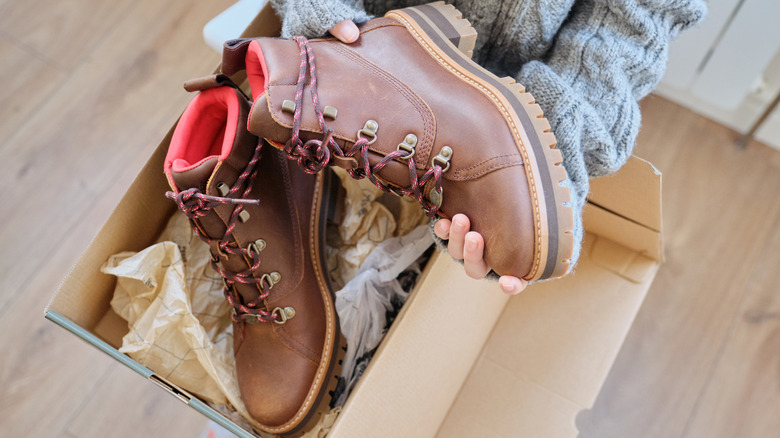
Another mistake you want to avoid is thinking cardboard boxes are sufficient for storing your shoes. Not only are they not climate-controlled but they also attract rodents and other insects, especially when they're looking for a warm nest during the cold winter months. If you're lucky, they'll only attack the box and leave your shoes alone. But keep in mind that they can cause irreparable damage, too. This is why you should always put each pair in a dust bag or box before arranging them neatly in a plastic box with a tight lid. Brownie points if they're stackable (but don't stack your shoes without a protective case in between them). If space is premium or you own a lot of pairs, racks, tiered shelves, over-the-door organizers, and makeshift holders work, too. Finally, pack your footwear away in a dark, dry, and cool spot to protect it from the sun's harsh UV rays. Otherwise, they'll fade soon, turn brittle, the glue holding them together might melt, or they may sustain other damages.