

12 Things That Attract Mice To Your Home (And How To Keep Them Away)
We may receive a commission on purchases made from links.
I'm a master gardener who has lived in old rural properties most of my life, and I also have two very "helpful" cats who love to bring me live, mousy gifts. When they do, they sit back and watch the chaos ensue, as the humans and the dogs all scamper to try and catch the poor, shell-shocked mice. So it's safe to say that I'm used to mice and their habits. And I've learned a thing or two about what attracts them in cold months.
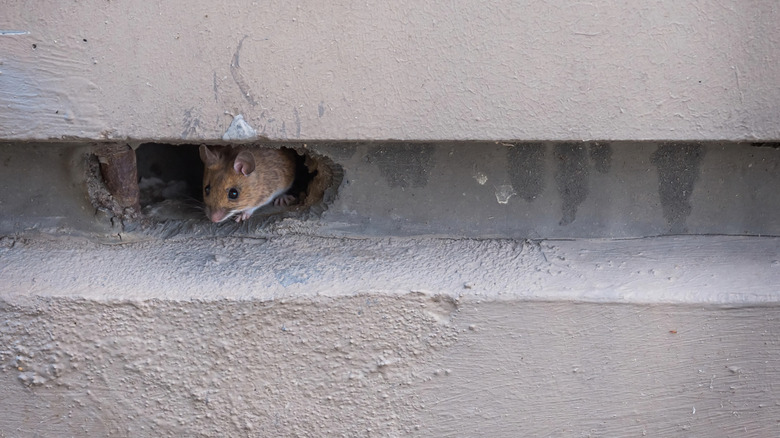
Once temperatures drop, the hedgerows thin out, and the fields freeze, mice start looking for somewhere warm and cozy — with a plentiful supply of food, nesting material, and quiet. Understandably, your warm, easily accessible home — with plenty of tasty food — looks like a luxury resort compared to the barren frozen winter landscape. Lucky for them, house mice, field mice, and other small rodents can fit through ridiculously tiny gaps. The determined little critters can climb rough surfaces, follow scent trails, and even squeeze through the spaces between pipes and seals. By closing up these entry points and taking other preventative measures, you can keep mice from making your home their winter retreat. Negotiating with your villainous cats, however, does not work.
Gaps under exterior doors and worn weatherstripping
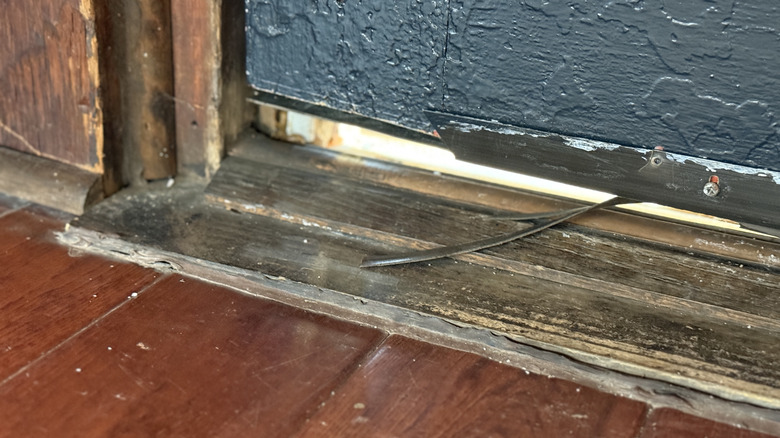
Exterior doors, especially back doors and garage doors are classic entry points and always the first places I'd check if I had an unexplained mouse incursion. A gap as thick as a pencil is big enough for a small mouse to squeeze through. Especially if they're enticed by warm, food-scented air that leaks out and acts as a scent trail. To stop this, be proactive. It's important to seal door gaps in winter in order to keep the mice at bay (and it will lower your heating bills as nice bonus).
You may have weatherstripping on your doors, but it can degrade over time — flattening and cracking, especially in older homes. And anywhere that gets a lot of heavy human foot traffic, door bottoms warp. So on cold days, if you stand by the door, you might feel a draft around your ankles.If you take a good look from inside behind the closed door and you see daylight around the bottom of the door and corners, there's a good chance an industrious mouse can make its way inside.
To fix the issue, try installing a sturdy door sweep made from rubber. Or go with something like Randall Manufacturing and Co. aluminum and brush door sweeps with close-fitting bristles, ensuring that it actually touches the threshold. This is a quick, easy fix for doors where the bottom has warped slightly, but not enough to warrant a bigger repair. Don't neglect your weatherstripping, either — it needs refreshing every few years. The exact timeframe depends on how well it's been maintained, your climate, and the type of weatherstripping, but making sure its in tact is a good way to keep the critters from getting in.
Unsealed cutouts around pipes, cables, and vents

It's not easy to keep mice out of your home. Even though the gaps are tiny, mice can make their way inside your home where heating pipes, cable lines, and dryer vents come through walls or foundations. Builders, plumbers, and electricians can end up leaving rough holes at these junctures, and don't always think about sealing them. Those gaps leak scented air, just like the space around your doors. So while out scouting, a lucky mouse who happens to catch a sniff of that fragrant air can follow it back to the source and sneak in through the unsealed gap.
These spots are easy to miss because they're often behind appliances or under a sink. And in some cases, they're outside, hidden behind hedges or shrubs. If you notice an elusive draft, you could have an unsealed cutout. If mice are getting in, you'll find droppings, discolored insulation, and maybe gnaw marks. And eventually you'll smell their urine, which is distinctive and potent.
For small gaps, pack them tightly with steel wool, like this 2-pack of mouse control steel wool. Then seal over that plug with exterior-grade caulk. You can also use expanding foam, but only if it's rated for pest exclusion. Something like Great Stuff Pestblock will do the job. Avoid using just foam on its own, without steel wool, be sure to leave the cheap stuff not rated for pest exclusion on the shelf. The mice will just chew through it and climb back inside. If you've got larger gaps, use copper or steel wire wool filling overlaid with wire mesh, securely fix the mesh to the wall, and then caulk around the edges. You can also use escutcheon plates or chew-proof rigid sleeves.
Warm basements and crawlspaces near heating equipment

Once you turn your heating on in the main part of the house, your basement and crawl space stay several degrees warmer than your garden. This is especially true if you've got a furnace, boiler, or water heater in the basement, as they radiate heat, even if you keep them well-insulated. Unfortunately, this warm setting is the perfect nesting environment for mice. Not only do they have heat, but they are typically quieter than other parts of the home and rife with nesting material laying around. Basement fodder like, holiday decor, cardboard boxes, or old curtains, are all excellent candidates for a mouse's new home.
If you identify mouse damage if your home, like cracks along rim joists and foundations in your crawlspace or basement, you'll want to address them as quickly as possible. You should also screen off any foundation vents with hardware cloth, like this ¼-inch reel from Hihaduum. This would also be a good time to take inventory of what you have in the space: Annex any food sources or nesting material by sealing them in plastic totes — all the better if they can be stored on off the floor on an elevated surface like a racks or shelves.
Attics and lofts warmed by rising heat
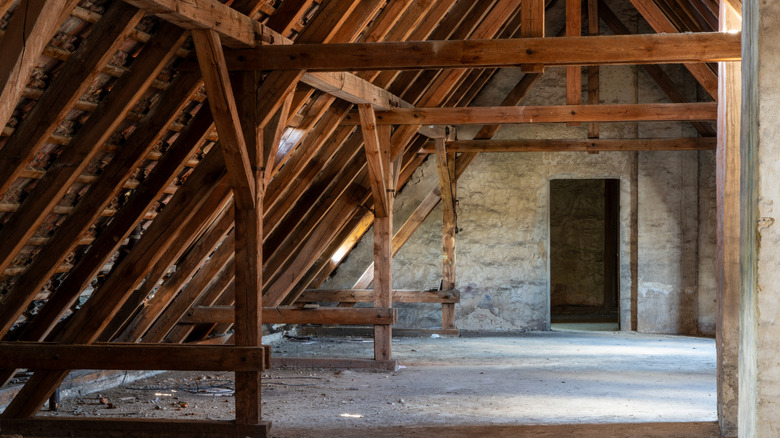
Because hot air rises, it makes sense that your attic would be a lovely, warm space for mice to retreat. And even when the roof outside has ice on it, inside, the attic stays pretty toasty thanks to insulating materials. Plus, the radiant heat from warm ductwork, recessed light cans, and chimneys all contribute to raising the temperature of the attic space. Mice are tenacious little climbers, inclined to follow that heat upward through wall cavities. And once they're in, they've got an endless supply of nesting material in the form of insulation. As they tunnel through, they compress and contaminate the insulation, reducing its effectiveness. There's also a good chance they'll chew on wires, creating a fire hazard.
To prevent mice from taking up residence in your attic, check that your soffit and roof vents are covered. They shouldn't be entirely sealed, because they allow a house to breathe, but they should be covered or capped with something like hardware cloth that mice can't get through. Make sure gaps around flues and cables are sealed, just like you do with unsealed cutouts at the ground-level. Like in crawlspaces or basements, be sure to store any potential nesting materials in sealed plastic containers. And as a precaution, check your attic a couple of times a year and stop the mouse takeover by being aware of home invasion signs.
Firewood stored too close to the house

I made this mistake once. I'd worked to get my firewood ready for winter, and there it was, all stacked neatly against the house. I gave myself a big old pat on the back for a job well done. It'd save us time and we'd barely have to go outside to grab some logs for the fire. That convenience became less important when I realized I had also created a mouse-tastic environment that gave the creatures an easy way into the house.
The wood pile was sheltered by my home, and kept a few degrees warmer by the heat given off by the walls, so I'd given the mice somewhere nice, warm, and protected from predators — even my most persistent cat can't clamber deep inside the log pile. From there, the mice can go undetected and comfortable while checking for weak spots around your doors and windows, sill plate, or foundation to try and find a way in.
If you are dealing with the same issue, do what I now do, and keep the wood a good 30 feet or more from your home. While mice may still congregate in the log pile, it will be less hospitable than it is when it's warm. And since it's not right against the house, they have less opportunity to try and find a way inside. When you're ready to bring logs inside, make plenty of noise and knock the logs together to dislodge and repel rodents and bugs before bringing the wood inside. And make sure to only bring in a couple of days worth of logs at a time to minimize possible intruders.
Indoor log baskets and kindling crates by the stove

Mice are tricky little beasties. If one does make it into the log basket by a lovely warm fire, it's probably not going to be in a hurry to leave. This isn't much of a concern for me, with four predators living here. But for those without pet-shaped pest control, it's a potential issue. If they can hitchhike their way inside, they'll tuck up by the lovely warm hearth, where they're also likely to find the odd crumb.
If they're disturbed too often, they'll scout the rest of the room and find an even better hiding spot, like in the walls, under furniture, or behind baseboards. Be like me and take the same precautions you would bringing in wood from a log pile near your home: Make lots of noise when you go out to gather the logs and take the time to knock each piece against one another to make sure you don't inadvertently bring a mouse back in with you. Once inside, it's also a good idea to use a smooth-sided metal container for kindling that mice struggle to climb. And of course, keep your hearth clean and free of crumbs that can be a tempting food source.
Voids beneath decks and porches provide mice shelter

The dark space under your deck or porch might be cold, but it's a little warmer than the great outdoors — especially once snow or skirting blocks the wind and provides a little insulation. Plus, it often holds leaf litter, stored timber, and assorted forgotten junk — all of which create nooks and provide nesting materials mice can use to stay warm and safe all winter. And moreover, it puts them close enough to your house to climb up the siding and test entryways, wall cavities, and floor voids to see if they can get inside to the even warmer areas.
To prevent mice from making their home under a deck, your first step should be to clear out those spaces. Don't store wood or unused items under there, and clean out the leaves and general debris that accumulates to make it inhospitable to the small rodents. Then close off access with hardware cloth that extends at least a couple of inches below the ground to stop them digging under.
Snow piled against foundations, steps, and bulkheads
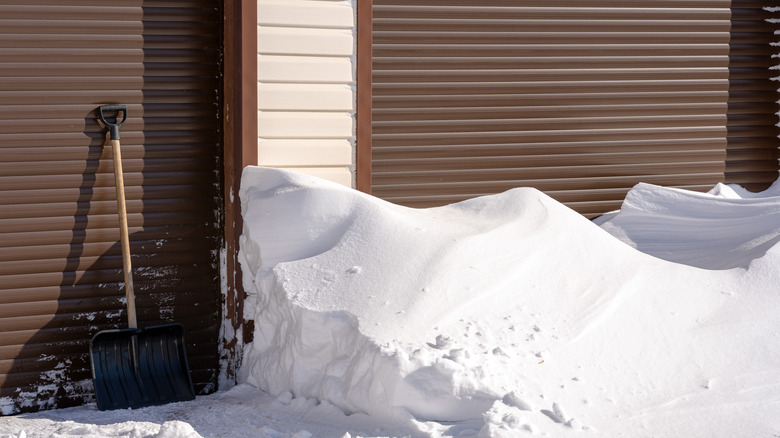
You might not have heard of the subnivean zone, but this small air pocket that forms between the ground and the bottom of a snowpack is where small critters like mice and voles can travel in insulated tunnels, protected from weather and predators. If you've got snow piled up against foundations, steps, or walls, you're providing a protected, slightly insulated travel corridor for rodents. And because it's right against the wall, the subnivean corridor lets mice explore the exterior of your home uninterrupted. And if there are any weaknesses, they'll find them and let themselves in.
If you can, avoid keeping long, continuous snow banks butted up against the exterior of your home. Break up banks into shorter sections or, better yet, clear a space between the walls and the snow. This is especially important around vulnerable areas like basement windows and other obvious potential entry points.
Unsealed garages that stay warmer than outdoors
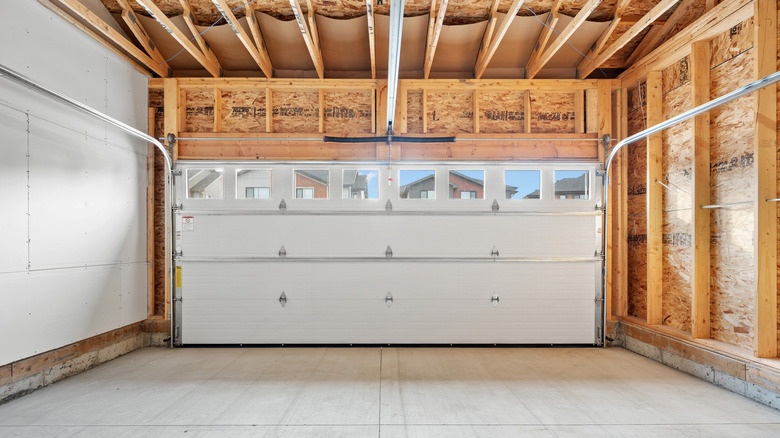
Even when unheated, garages stay warmer than the outdoors — usually remaining just enough above freezing to make them appealing to mice with no better option. Garages tend to have the same problems as your house, but more so because you pay them less attention. Loose door seals, gaps at the sides, a weak window seal, or an unsealed cutout are all give way to mice invasion. And garages are usually full of fantastic nesting material like cardboard boxes.
I also keep all of the spare produce I've harvested — like pumpkins, onions, and winter squashes — in my garage to store them somewhere cool and out of the way. You might do the same, or perhaps you keep pet food, spare pantry items, and bird seed out there. If any of these food sources are not stored properly and a mouse gets in, it's party time for them and disaster for you. And if your garage is attached to your home and there are any gaps in the adjoining door, the mice can just waltz right in.
Firstly, check for telltale signs that mice are lurking in your garage. Then, replace brittle bottom seals and look for gaps around windows and doors, remembering mice can get through the smallest of holes. Seal up any gaps, including unsealed cutouts, just as you would do with your house. Additionally, it's a good idea to lift produce off the floor and store dry goods in glass or plastic food-safe containers, just in case a mouse still manages to sneak in.
Warm zones with debris behind large kitchen appliances
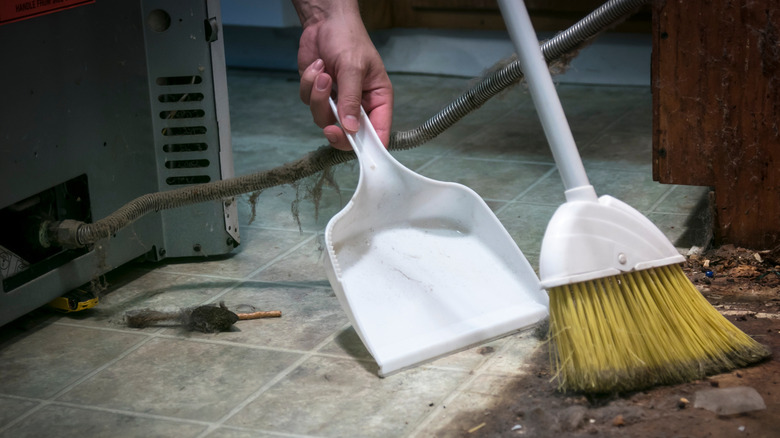
Rodents love living behind appliances. All of your big kitchen appliances give off heat — even the refrigerator, ironically. And depending on the appliance and your home's set up, many appliances have gas lines, water hoses, ducts, or electrical cables running to them through the walls. The scent of your food travels on the warm air through those gaps and tempts the mice inside. And even if you keep a scrupulously clean home, there's bound to be crumbs that escape the vacuum, as well as grease and sauce dribbles that provide an absolute feast for an over-wintering mouse. Like many rodents, mice like to run along walls, so if you have several appliances clustered together, you end up with a mouse highway, or sometimes, they get behind the baseboard and use that as their long run to access more of your kitchen and home.
Having mice lurking behind your oven is dangerous, as they can chew through the wires and cause malfunctions. The same goes for other appliances. Because it's hard to spot early signs of a winter mouse invasion under your appliances, it's a good idea to pull them all out and deep clean behind them once or twice a year. This lets you clean up food debris and look for signs of mice. And you can find where the gaps are and seal them up with sealant, escutcheon plates, or whatever other method best fits your particular situation.
Indoor compost crocks and food scrap bins

Indoor compost buckets are havens for mice. Even just a temporary compost caddy you keep because it's too cold to venture to the compost pile can attract the crawling creatures. Unless you keep it tightly sealed or empty it regularly, mice can quickly make themselves at home in a compost container. The act of composting itself creates heat, the food scraps you discard become an easily accessible source of sustenance, and the composting material makes for a soft, warm nest, perfect for a burrowing mouse.
Whether you've got an actual indoor composter or you're keeping a scrap pail outside the kitchen door, make sure it's sealed tightly. A loose or flimsy lid will do nothing to stop a determined mouse. If you have a pail outdoors, use a smooth-sided metal one and keep it raised off the floor, so mice have a tougher time climbing up and wiggling their way inside.
Houseplants and seed-starting trays with damp soil

This one might seem odd, but it's all too real. Your house plants, or at least the soil they're sitting in, is fair game for mice looking for somewhere snug to overwinter. The same applies to seeds you're trying to get started during the colder months, especially if they're in a greenhouse or on a sunny windowsill with a loose propagator lid on top.
Consistently damp, organic material in a warm spot is perfect mouse habitat. They'll also dig through seed trays in search of juicy seeds or search through soil to find insect larvae and other tasty things to snack on. And the shelves and sills where you tend to put houseplants and seeds are often quiet, tucked away, and warm, so the little rodents can hide away peacefully during the day. If you've left seed packets around, they'll chew right through those too and eat the contents.
If you have an indoor green thumb, make your planting area mouse-proof. Clean regularly by moving the plants and thoroughly wiping the surface. If you're starting seeds, keep them covered with a robust propagator lid and do your best to keep them on an elevated surface away from the floor. Keep seed packets in a sealed container and hang any bulbs and tubers with a pantyhose gardening hack to keep them out of reach from eager mice.