

The Common Wood-Burning Fireplace Mistake That's Making It Harder To Clean

While wood-burning fireplaces may not be the most efficient way to stay warm, there's no denying that they do wonders for a home's ambiance. Few things spark more joy during the freezing-cold winter months than lighting a fire and cozying up indoors. But just as important as knowing the mistakes to avoid when starting a fire in your wood-burning fireplace is being aware of the errors to avoid when you're ready to put a fire out; and one common mistake that owners of wood-burning fireplaces can make when their fireside session is finished is trying to extinguish the fire with water.
You may think that pouring water over the fire is the safest, most efficient option. After all, you don't want to leave the remnants of a fire simmering unattended, right? But using water to smother the flames can actually become a hazard, sending potentially dangerous pops of steam and embers everywhere. What's more, the water makes your fireplace a huge pain to clean. Rather than embers and ash remaining confined to the inside of your fireplace, the water can send it streaming beyond your hearth and onto floors, carpets, and rugs.
Inside your fireplace, the water and ash can combine to form a sticky substance that clings to surfaces and is difficult to remove, while metal structures like fireplace grates and screens can become more susceptible to rust and corrosion when wet. And in the longer term, the shock of cold water on your fireplace's burning hot stone and brick masonry can cause cracks and damage to the hearth that can be costly to repair.
Water-free ways to extinguish a fire that are easier to clean
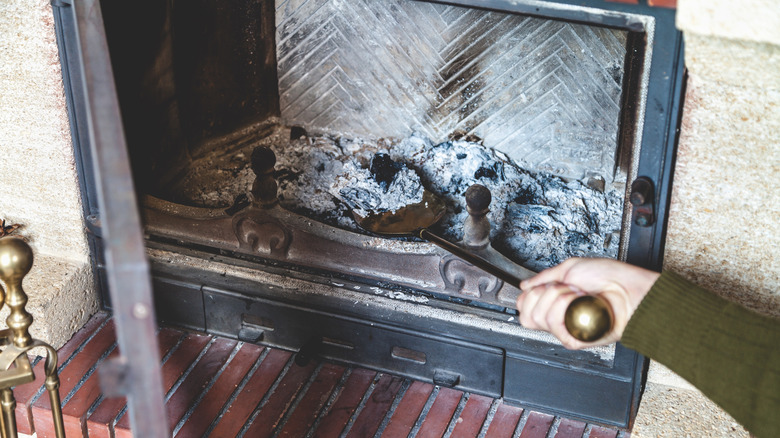
Of course, while you don't want to use water because it's a messy solution, extinguishing the flames in your wood-burning fireplace rather than leaving it unattended when you go to bed or head out of the house is essential. Fires should always be monitored and extinguished completely when you're not there, as they can cause house fires, chimney fires, and even carbon monoxide poisoning. Fortunately, there are a few safe ways to put out any lingering flames that are easier to clean than dousing them with water.
The tidiest way is to let the fire die out naturally. Even when there are no more flames, the smoldering embers left on the floor of the fireplace can still be a safety hazard, so finish off by using a poker or small shovel to spread the embers around evenly so that they can cool faster. You can also extinguish any fire remnants by smothering embers with a layer of sand or baking soda, which deprives the fire of oxygen, causing it to go out quicker. (One handy bonus to extinguishing with baking soda? It's also an ingredient you can use to properly clean your fireplace later!)
And while water is definitely a messy solution that you should generally avoid, it's important to note that you, of course, shouldn't hesitate to use it if you're concerned that a fire is getting out of control and becoming dangerous. If you have a wood-burning fireplace in your home, it's also important to have a fire extinguisher nearby as a safety precaution; while fire extinguishers are another hard-to-clean way to put out a fire, they are also literal lifesavers in an emergency.