

Whatever You Do, Don't Ignore These Brand Names On Thrift Store Plates
We may receive a commission on purchases made from links.
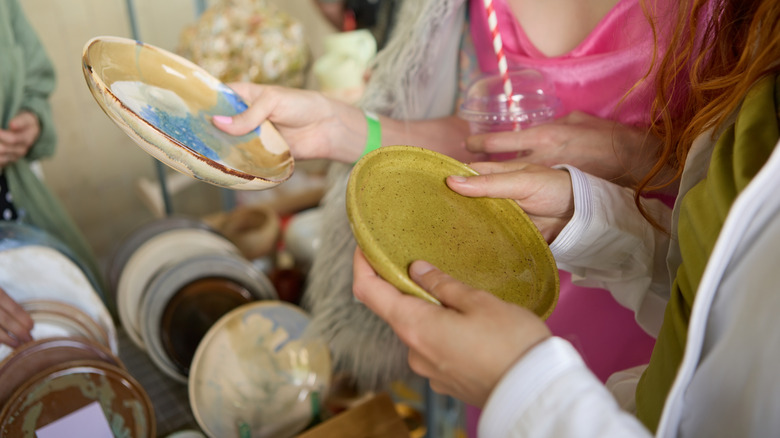
Finding valuable things at the thrift store can feel like a lottery win. It's no wonder so many people like to spend an afternoon on the hunt for second-hand items. While some like to search for designer vintage bags, others like searching for designer clothing at a great price. But for many people, vintage dishware is where the treasure is. And it's no wonder, because there are quite a few valuable vintage dishware items to find at the thrift store. But how do you know if the vintage plate you've found is treasure instead of just another plate? Well, one great indicator is the brand. If you find a plate with the name Meissen, Royal Copenhagen, Spode, or Wedgwood (just to name a few), you are most likely looking at a treasure.
While it is true some patterns of dishware from specific brands hold more value than others, some brands, as a whole, are more likely to produce consistently amazing finds. The truth is there are many brands that are always worth buying at the thrift store, but there are also those that aren't worth your time. Generally, what determines a worthwhile vintage plate is quality, craftsmanship, collectability, and sometimes, even historical significance.
When looking for great plates to collect, it's important to take note of the condition, and the price the store is selling them for. But if you want an easy way to know that you're getting a quality piece, it comes down checking the maker's mark to look for respected and beloved brands.
Meissen
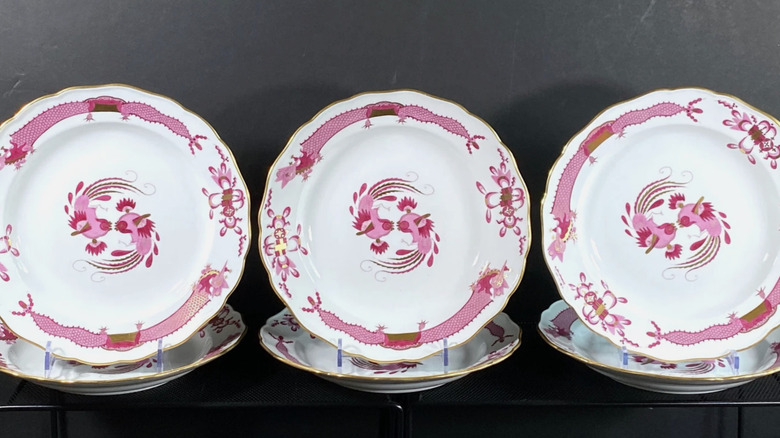
Meissen is a manufacturer from Germany that first produced a hard paste porcelain in the 1700s known for its strength and durability. Their beautiful designs are hand-painted and were extremely popular. Today, they are considered extremely valuable and are very desirable collectibles. The plates could even go for over $1000 on eBay. A particular Meissen plate pattern, "Blue Onion," is even among high-demand dishware patterns to be found at the thrift store. If you think you have found a Meissen, you can check the back for a maker's mark of two blue crossed swords.
Royal Copenhagen
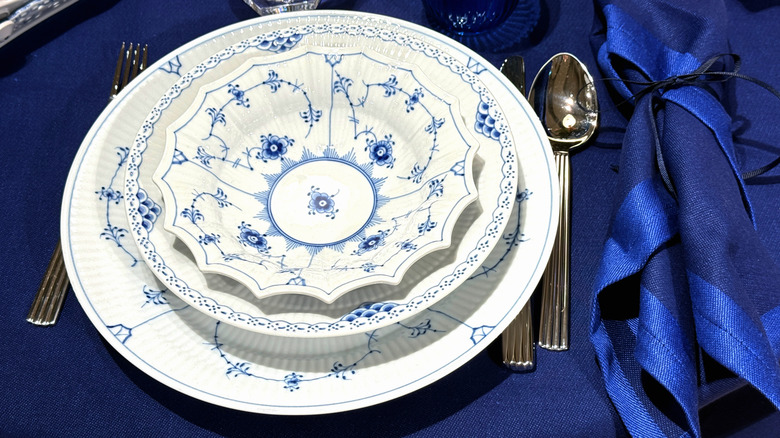
Founded in the late 1700s, Royal Copenhagen was commissioned by the queen of Denmark. The plates are known for their signature blue and white patterns with fluted designs. You will know you have an authentic Royal Copenhagen plate if on the back you spot the royal crown of Denmark with three hand-painted waves. Keep an eye out at your local thrift store for this delicate china as they are very valuable, thanks to their historical connections. Beautiful and classic Royal Copenhagen plates are timeless and work well with almost any design style.
Sèvres
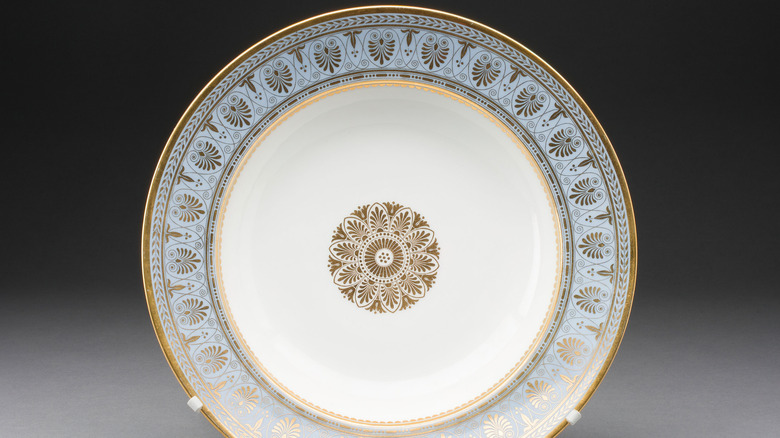
If you're lucky enough to find an authentic Sèvres plate, you better go out and buy a lotto ticket. Sèvres was a fine china manufacturer in France and a direct competitor of Meissen. They distinguished themselves in the late 18th century with unique and colorful designs and delicate, hand-painted gold gilding. You can identify the Sèvres' maker's mark by its two interlaced, mirrored, blue script "L"s, often with a letter in the center that marks the manufacturing year. These are truly high-quality plates that are prized by collectors for their beauty, craftsmanship, and historical significance.
Limoges
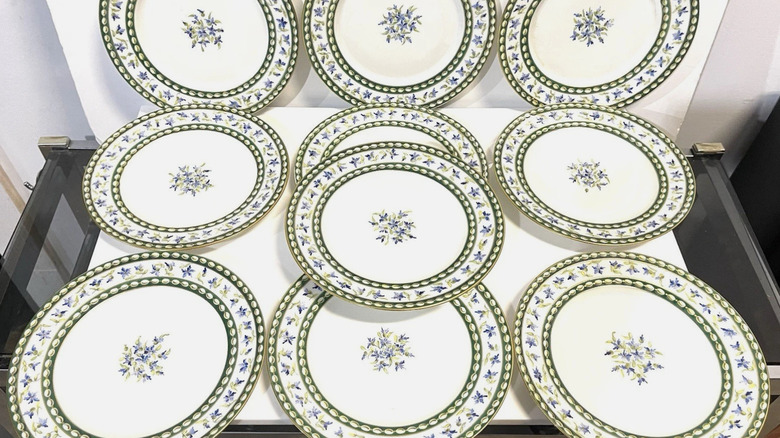
Limoges is not so much a brand but a collection of brands that produce porcelain in the Limoges region of France. Like Meissen, Limoges' porcelain is created using the hard-paste method which makes it very durable. Authentic Limoges porcelain created after 2017 will be marked with "Porcelaine de Limoges". Two well-known manufacturers are Haviland and Bernardaud. The dinnerware created in Limoges is highly prized by collectors for its unsurpassed quality due to the excellent clay found in the area. The most sought-after pieces contain markings indicating they were hand-painted in the factory or by professional decorating companies.
Piero Fornasetti
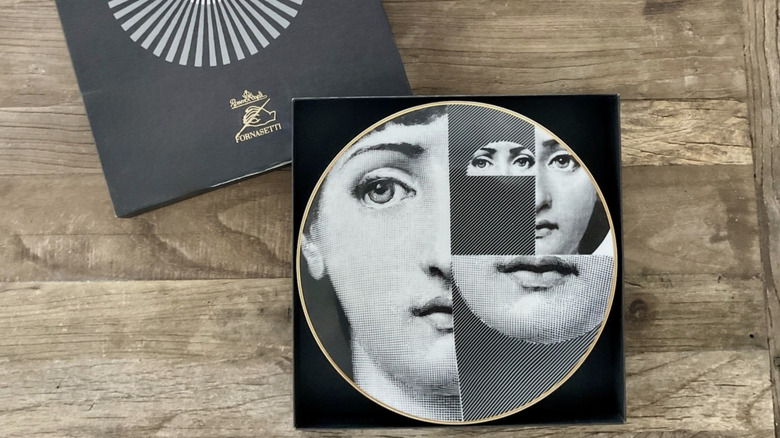
Most likely one of the easiest brands to spot on this list, Fornasetti was an Italian artist who produced a series of plates with the image of Italian opera singer Lina Cavalieri. These plates are considered more as collectable art than traditional dinnerware. There are also many designs he created in the mid-century that featured animals, recipes, and even famous Italian architecture. Besides the whimsical designs, you should look for the stamp,"Fornasetti Milano Made in Italy" with an image of a hand holding a paintbrush. Fornasetti plates are considered highly collectible art and can sell for hundreds of dollars.
Wedgwood
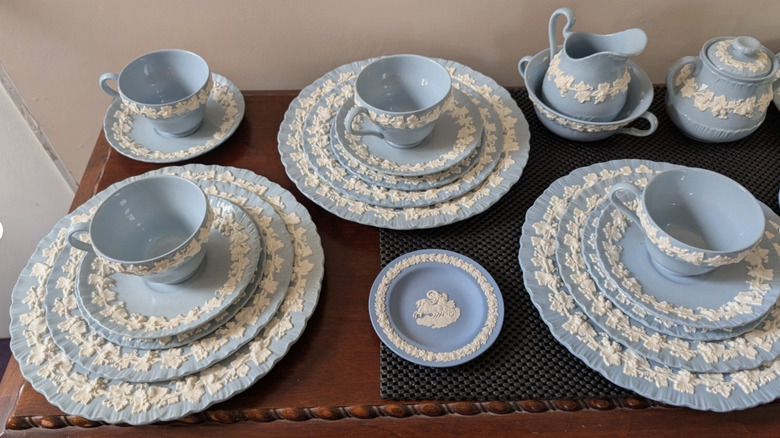
Wedgwood, started in 1759 by Josiah Wedgwood, is a well-known English ceramics manufacturer mostly known for its fine bone china and Jasperware (unglazed, colorful stoneware). Renowned for artistry and high-quality craftsmanship, this brand of ceramics has even been adored by the royal family of England. Queen Charlotte herself commissioned a set of cream-colored earthenware for the royal household, later named "Queen's Ware." Finding a "Wedgwood" stamp on the bottom is only the beginning; a quick internet search will reveal exactly how old and rare your piece is based on which mark was used.
Spode
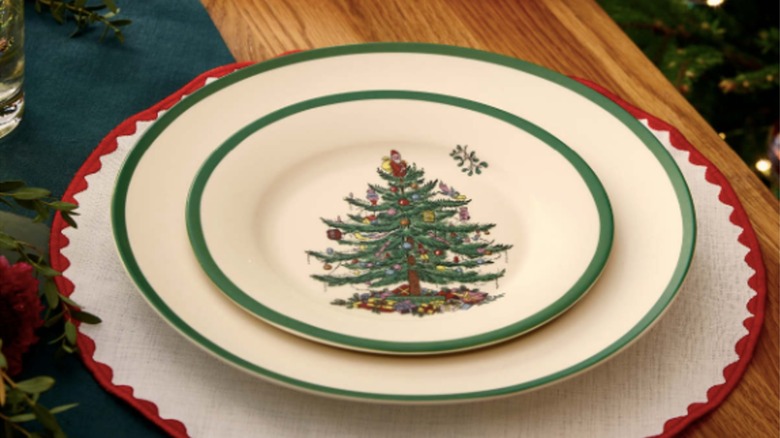
Another English manufacturer of porcelain was established by a man named Josiah Spode. Spode is most known for perfecting the technology of blue transferware and bone china. Its most popular and collectible designs are the Blue Italian and Christmas Tree patterns. Although the Christmas Tree pattern has been consistently in production since 1938 and is hardly rare, it is well-loved for its nostalgia, and always sought-after by those wishing to complete their collections or replace broken items.
Royal Doulton
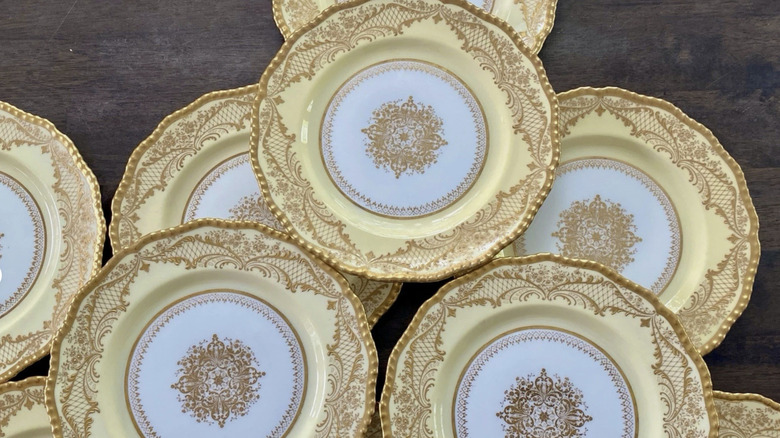
Royal Doulton is an iconic British ceramics manufacturer, best known for their collectible plates and figurines. It was established in 1815 in England, known for its salt-glaze technique and stoneware ceramics. The patterns you should keep an eye out for are the hand-painted rose bouquet designs by Charles Hart or any patterns with gilding. If you're lucky enough to find a cobalt blue and gold plate design made in association with Tiffany & Co., you've found something really valuable. Look for a maker's mark with the Royal Doulton name and an image of a crown or lion.
Herend
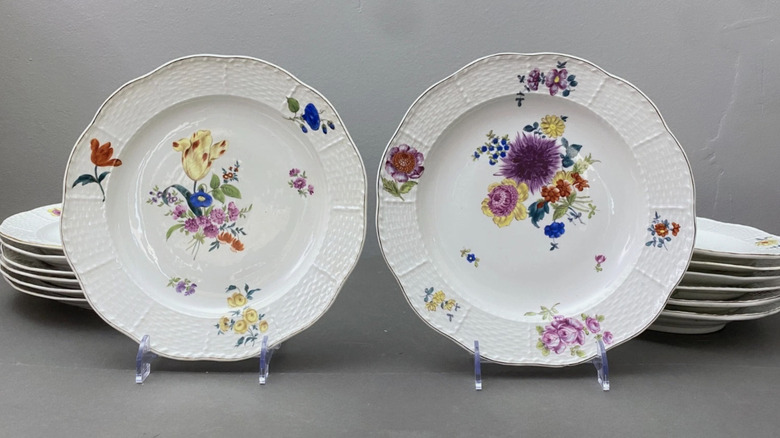
Herend is one of the best-known porcelain manufacturers in Europe. Established in Hungary in 1826, they quickly became popular with many European royals. Their dinnerware is created through the hard-paste method which makes it extremely durable. Because each design is hand-painted, they are each one-of-a-kind. Be on the lookout for their "Queen Victoria" or "Rothschild Bird" patterns. Look for a maker's mark with any combination of the words, "Herend," "Hungary," or "Hand-painted," a coat of arms, and two crossed swords in blue.
Pyrex

While Pyrex is best-known for its bakeware in many collectible patterns, they also created a dinnerware collection. These plates should not be confused with Corelle or CorningWare. Although these lines were all produced by the same parent company, Pyrex dinnerware is distinct from the other two lines. Pyrex plates were made by the same process as the bakeware with borosilicate glass, noticeably thicker in design than either Corelle or CorningWare. The pattern above was possibly used commercially or as a promotion because it did not have a regular run and is extremely collectible and valuable due to its rarity.
Fire-King (Anchor Hocking)
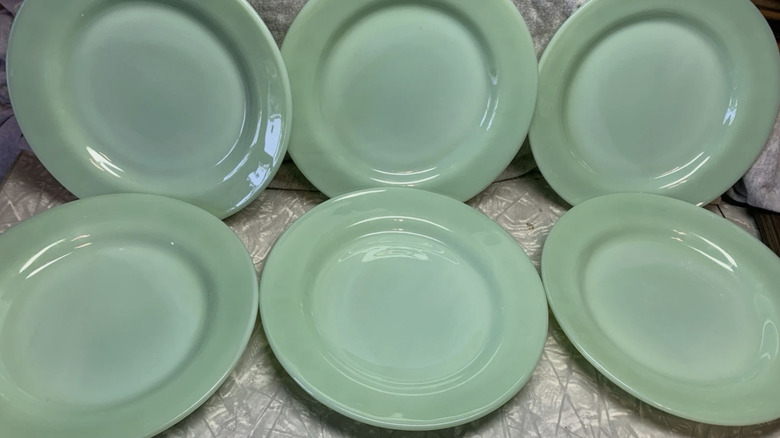
Perhaps seeing Pyrex's success with its oven-safe products, Anchor Hocking introduced its own line of durable dinnerware with the Fire-King line in 1942. The most recognized color/pattern for the Fire-King line is "Jade-ite," which is easily identifiable by its milky, green color. While Jade-ite is highly sought after by the average collector, the pattern "Sheaves of Wheat" is actually rarer and more valuable. The Fire-King line went out of production in 1972, so whether you are collecting for re-sale or for yourself, this line of dinnerware is still a beautiful find.
Franciscan
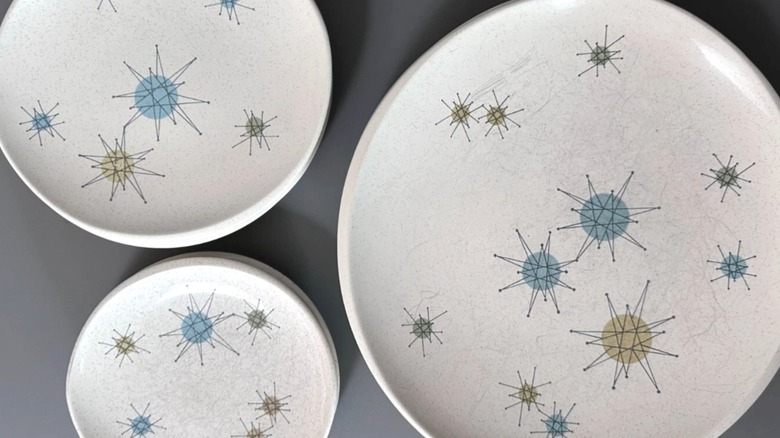
Gladden, McBean & Co. began dinnerware production in 1933, which would become known as Franciscan Ware. Many people know Franciscan because of its most popular designs, "Desert Rose" or "Apple," which were created in the early 1940s. These patterns are extremely collectible, and product runs of the 1940s are the most valuable since they marked the first of the embossed hand-painted patterns. If you collect early Franciscan dinnerware, you should consider only using it for display, as the glaze from this period can contain high amounts of lead. Because there were multiple maker's marks for Franciscan, you can cross-check your finds at the Franciscan Archives website.
Rosenthal
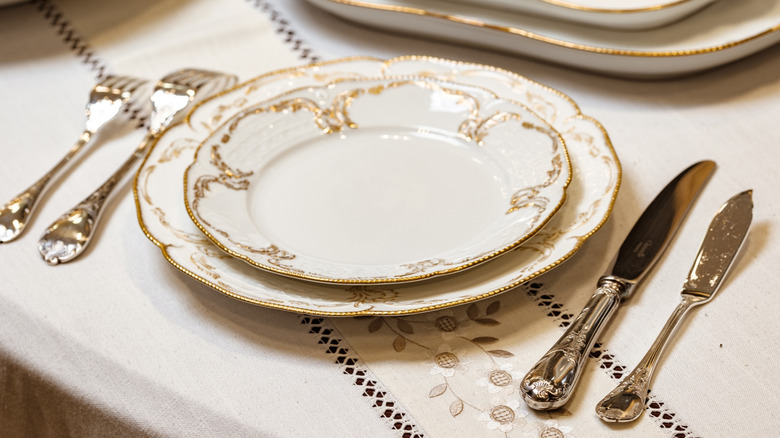
Founded in 1879 by Phillip Rosenthal, this Bavarian ceramics manufacturer produced its most successful dinnerware lines in the early 1900s. The "Donatello," "Darmstadt," and "Isolde" were extremely popular patterns at the time. Rosenthal worked with over 100 artists to create beautiful pieces of contemporary art, most notably, Salvador Dalí, Andy Warhol, Sandro Chia, and even famous designers Gianni and Donatella Versace. If you are looking for an authentic plate at the thrift store, keep an eye out for the maker's mark with the name Rosenthal that includes a crown and crossed rods.
Minton
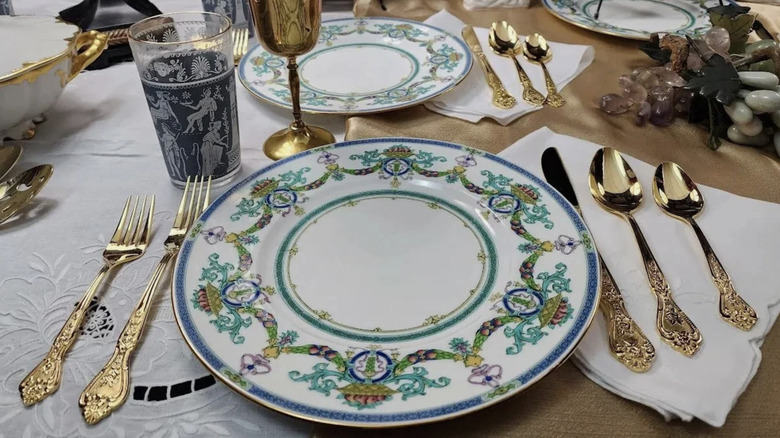
Minton is a well-known English pottery company established by Thomas Minton in 1793. The company's pieces became prized for their high-quality glazes, beautiful hand-painted porcelain and bone china, and the durability of its products. Minton dinnerware is known for its intricate and detailed patterns. Checking for a maker's mark can be a little tricky, considering they have changed their mark many times over the years. One notable thing to check for is the name "Minton" or "Mintons" accompanied by a globe.
MacKenzie-Childs
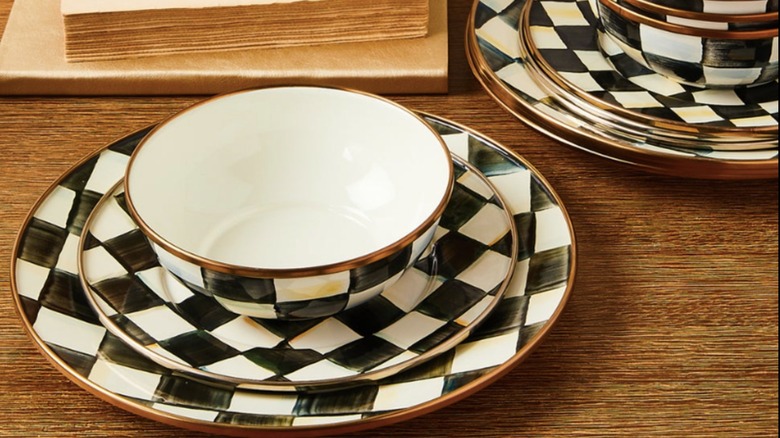
Probably the youngest brand on our list, MacKenzie-Childs was founded in 1983 by Victoria and Richard MacKenzie-Childs in New York. This is another easy-to-identify brand because of their bold, whimsical themes and hand-painted designs. The iconic Courtly Check pattern is their most popular design. This pattern features a hand-painted black and white check with obvious brush strokes, ensuring each piece is one-of-a-kind. The brand created many different colorful dinnerware patterns throughout the years, but the Courtly Check remains the most collectible. The maker's mark for MacKenzie-Childs can vary. Look for the name MacKenzie-Childs or a two-letter initial of the specific artist of the design.