

Pine Straw Vs Pine Bark Mulch: Which Is Best For Your Garden?
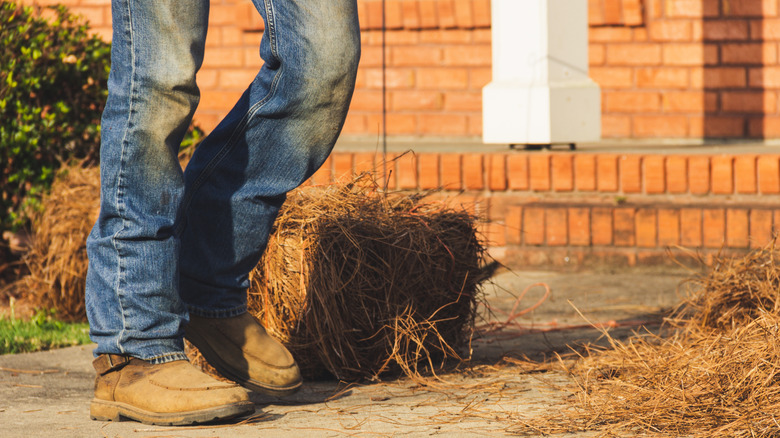
When it's time to freshen up the mulch in your garden or flower beds, you might find yourself second-guessing your usual choice. When pine straw and pine bark mulch are your two main options, you should know that the best one to use really depends on your situation, as they both have pros and cons. However, if you're wondering which is the best for your vegetable garden, there's a clear winner — pine needles. Depending on your location, it might be the better choice for your ornamental plantings as well.
Also known as pine straw, pine needles come from naturally shed and baled needles collected from pine tree forests. On the other hand, pine bark mulch is a byproduct of the wood processing industry. Felled trees are debarked, and the removed product is transported and bagged for sale as a landscaping product. Beyond any concerns you might have about the source of the two products, when you try to decide on the best type of mulch for your garden, you'll also need to know the benefits and disadvantages of both types.
The pros and cons of mulching with pine bark in the garden
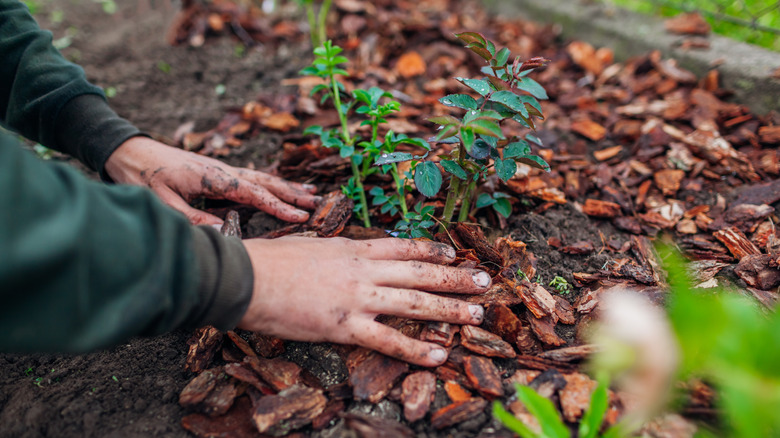
There are both pros and cons of using pine bark mulch in the garden. On the plus side, this product is long-lasting, tends to be inexpensive, and is relatively easy to get. The darker color of the mulch can either be a help or a hindrance, depending on your climate and what you're growing, since it will absorb heat. Some growers like to cultivate tomatoes using darkly colored mulches for this purpose.
Compared to pine straw, pine bark does have some disadvantages. It tends to wash or blow away easily, making it less useful on slopes. And you shouldn't use pine bark mulch in vegetable plots, because the pieces borrow nitrogen from the soil as they break down. Similarly, the soil coverage can be a bit sketchy, often allowing weeds to pop through the gaps in the mulch. It can also be a fire hazard that gardeners in fire-prone areas need to be aware of — but then, so are pine needles.
The advantages and drawbacks of mulching with pine needles
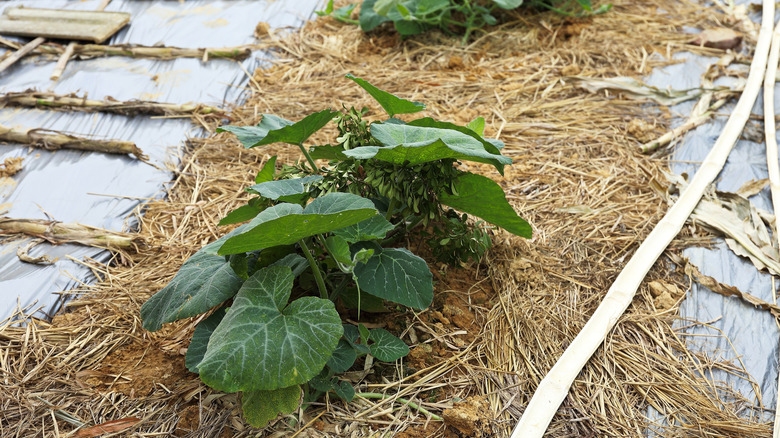
Pine straw is also a long-lasting mulch, but it is lighter in weight than pine bark, and it doesn't get compacted. This option doesn't hold much moisture, allowing the water to penetrate into the soil below more easily, so it helps protect crops from soil-borne diseases. It's more effective at weed suppression than the alternative, since weed seeds that fall on top of the mulch don't have any moist substrate to sink their roots into. Also, since pine straw is baled, it doesn't require plastic bags, which is an advantage for sustainably-minded gardeners.
Of course, mulching with pine needles also has some drawbacks. This type of ground covering may not be available in your area — it's more common in the southeastern U.S. Some landscapers find this mulch difficult to spread, though not everyone agrees on that point. However, since pine needles have numerous advantages, making them a great mulch for vegetable gardens as well as ornamental plantings, pine straw comes out ahead as the best option for those who can buy it easily.