

The Evergreen Plant That Feeds & Houses Birds All Winter Long
We may receive a commission on purchases made from links.
Birds are frequent guests to our backyards and gardens in the spring and summer. But where do they go in the winter? While some bird species migrate to hotter climes in fall, some stay put and tough out the cold right where they are, amongst mostly dormant plants and snow. If you haven't planted shrubs or trees that provide these birds with food or shelter from the elements and predators, they may meet these needs somewhere other than your garden. The bird-friendliness of your yard shouldn't be limited to the warmest months. Evergreen shrubs and trees are essential for the survival of overwintering birds. The Oakland holly (Ilex Oakland 'Magland') is one such plant.
Many shrubs in the holly (Aquifoliaceae) family are fast-growing privacy trees that birds won't be able to resist in your yard. However, the Oakland holly is a particularly disease and pest-free hybrid cultivar that offers birds shelter (through its tightly packed foliage) and food (in the form of small fruit) throughout the colder months. This perennial shrub grows best in USDA Hardiness Zones 6 to 9, where it forms a dense, narrow pyramid-like shape. Oakland holly produces red and orange berries that ripen in the fall and winter. While these berries are mildly toxic to humans, they provide a smorgasbord of nutrients to hungry songbirds.
The many benefits of planting an Oakland holly for overwintering birds
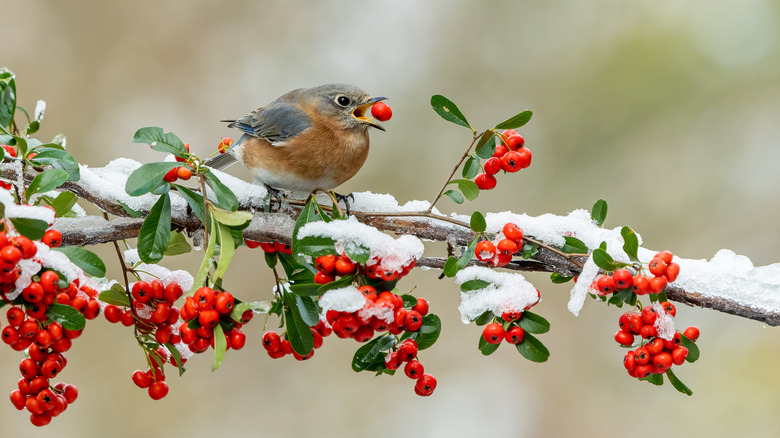
Oakland holly is chief among the many shrubs and trees to plant in your yard for bird-friendly winter habitat, providing a plethora of benefits for your avian visitors. The most obvious plus is the fact that the berries ripen through winter — though the same can be said of most holly species and cultivars. These nutrient-rich berries are a reliable source of winter food for songbirds when other options, like insects or summer and fall fruit, are scarce to non-existent. Birds generally prefer holly berries once they have frozen and thawed, which makes them softer and easier to eat. They tend to avoid eating them until mid-winter, though they will snack on them any time if they're hungry enough.
Oakland holly also grows tight clumps of evergreen leaves on closely packed stems, which provide much-needed shelter for small to medium songbirds. Depending on where in the U.S. you live, these pyramidal shrubs could attract everything from mockingbirds, cedar waxwings, and Eastern bluebirds to hermit thrushes, Northern flickers, and Northern cardinals into your winter garden. Bonus: Your backyard won't be bombarded by medium to large nuisance birds, like European starlings, blackbirds, crows, and grackles (among others) seeking cover. Big birds typically prefer large, old trees over shrubs.
How to prepare your Oakland holly for winter
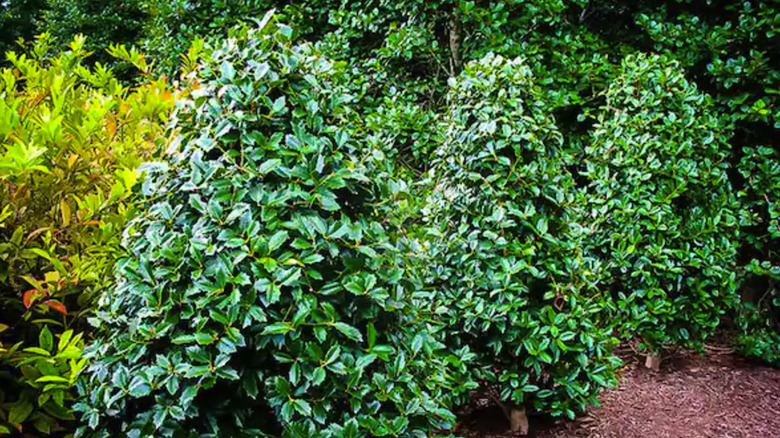
If you want to attract birds to your yard during the winter season, planting an Oakland holly is just the first step. If you want your shrub to grow lots of berries, you need to provide year-round care to maintain its health. Once your holly is established, which takes about two growing seasons, you can start pruning damaged or dead branches as needed. Late winter or early spring is the best time for this chore. The plant flowers on old wood (last year's growth), so prune lightly or your feathered friends won't have any berries to eat. Oakland holly is hardy, but severe temperature fluctuations or unseasonal cold snaps can damage the plant. You can help prevent wind damage to young shrubs by wrapping the trunk in burlap.
In the fall, it's time to prepare the soil with all the moisture and nutrients your Oakland holly will need to make it through winter. Mix about 3 inches of compost or rotted manure into the topsoil around the base of the plant. Then cover the area with 2 to 3 inches of mulch and wet it thoroughly. Leave a few inches between the trunk and the start of the mulch — crowding can lead to rot. Continue monitoring the shrub's water needs throughout fall and into winter to insulate the roots and protect them from hard frosts. Oakland holly has been bred for pest- and disease-resistance, but it's not completely immune. Watch for signs of pest infestations or disease infection throughout the year and treat them promptly.