

How To Prune A Peach Tree In Winter For A Stronger Plant In Spring
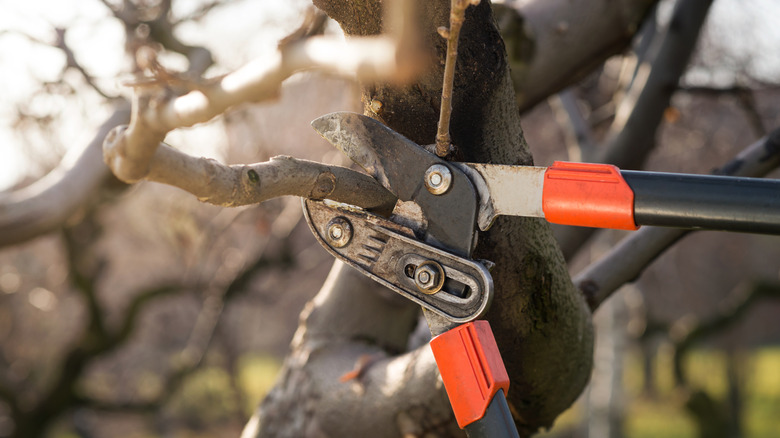
Because peach trees are deciduous versus coniferous, they can look barren in winter. There's no fruit to harvest, no flowers to tend to. However, while it may seem like your work is finished for the year, until the warmer spring days return and bring a cloak of green for your prized fruit tree, that's not entirely true. In fact, winter is the perfect time to prune your peach tree, especially if you want a stronger, healthier plant come spring.
Trees lose their leaves to conserve energy as they enter dormancy, a period with no visible growth but active life beneath the bark. As a result, winter can be a good time to prune your peach tree, as dormancy means less sap loss and fewer opportunities for diseases or other issues to pop up. While pruning, in the winter or not, may seem like just a necessity to lower the risk of structural damage around your yard, it can also be quite beneficial for your peach tree itself, helping remove problem areas while boosting growth.
If you want to prune your peach tree for a stronger plant during the spring, it's important to have the right tools on hand, as well as familiarize yourself with the process. As far as supplies go, you'll want to have either hand shears or loppers on hand, depending on the thickness of the branch. It's essential to sanitize your tools to reduce the likelihood of spreading disease.
Tips for pruning peach trees in the winter
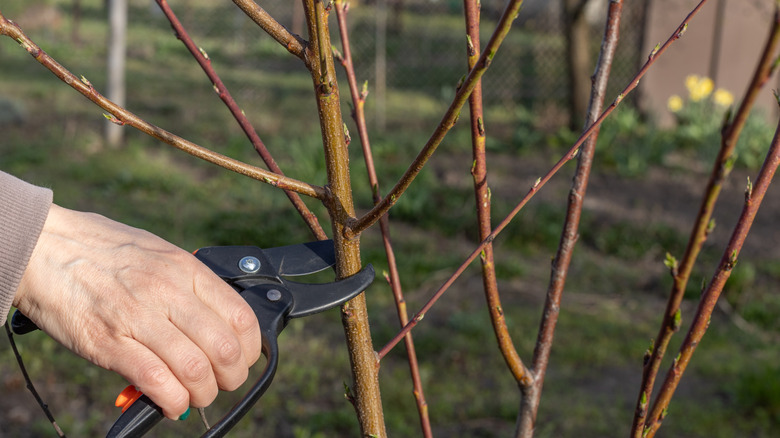
Once you start pruning your peach trees, there are two main areas you want to focus on. The first focuses on overall tree health by remembering the "three D" rule of pruning: removing branches that are dead, diseased, or damaged. If left alone, diseases can spread from a single branch to other parts of the tree, causing a full-blown infection that could lead to greater problems or even the death of the tree. As a result, you'll want to ensure you stay on top of removing these concerns. You can also target branches that could lead to disease or damage in the future by pruning any branches that are touching each other. Over time, this contact can create open wounds where pests and disease thrive.
After you've handled the pruning that focuses on the health of your peach tree, you can start pruning for visual appeal and overall management. This means using your tools to create an eye-catching, neat silhouette while also considering any areas of your tree that may be difficult to care for or hang over structures in your yard. While pruning is typically an easy once-a-year DIY task, consulting an arborist can provide added guidance if needed