

Don't Leave Your Hummingbird Feeders Out All Winter Without Knowing These Things
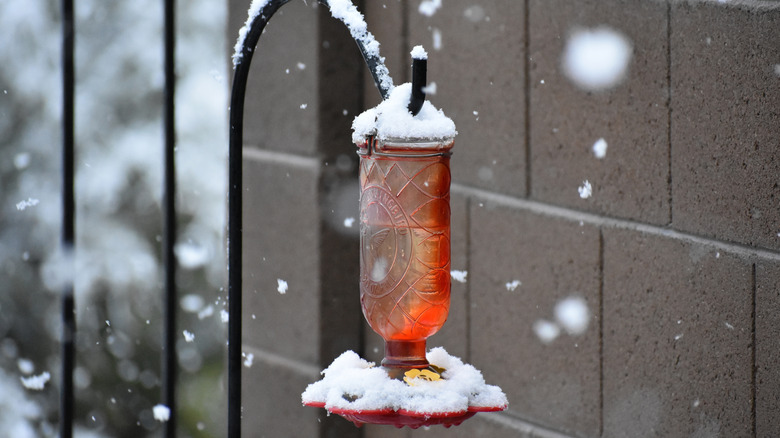
If you're wondering about what to do with your hummingbird feeder in the winter, don't rush to take it down just yet, as there's a few things to know. Hummers can and will eat from your feeder if available, even in the winter. It requires special care, however, including cleaning the feeder, moving it to a safe spot, and ensuring the nectar doesn't freeze. Even if you don't live in an area with year-round hummers, there are other birds you might find visiting your hummingbird feeder, such as orioles, so these actions will help them too.
While hummingbirds are known for migrating, some may stick around in winter. One species, Anna's hummingbird, sticks around even in the most frigid of temperatures. Keeping out your hummingbird feeder can help sustain hummers when their primary food sources -– insects and flower nectar –- are scarce. Hummingbirds can fly at incredible speeds, sometimes more than 33 miles per hour. Using their wings at such a high capacity consumes a lot of energy, so they require more than their body weight in sustenance. They feed consistently during the day, gathering as much nectar as they can to sustain their needs. Leaving your feeder out all winter is very beneficial for birds, however, if you aren't willing to put in the extra effort of cleaning and thawing your feeders, the best course of action is to bring it inside until spring. A dirty feeder can cause disease, while a frozen feeding tube can injure a hummingbird's beak.
Making your feeder safe in winter for hummingbirds and other nectar lovers
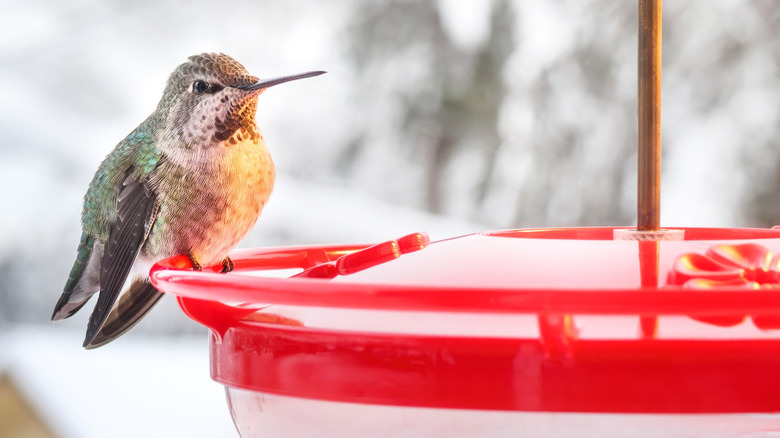
First, you should identify the best spot to hang a hummingbird feeder if leaving it out this winter. Look for an area sheltered from snow and wind, such as near the side of your home. Set it 10 to 15 feet from cover (such as a tree), and at a height of 4 to 6 feet from the ground. This ensures visibility for the hummingbirds while still giving them some distance from ground predators. Once you have your feeder in a secure, safe place for hummingbirds, it's important you keep the nectar from freezing. Regularly check for signs of ice crystals, and bring it inside in after dusk, returning it at dawn. You can also buy a heated feeder, or make DIY insulation by placing a wool sock over the feeder tube. Some bird-supply stores will also sell a separate heater, so you can continue using your existing feeder. If you have a tube-style feeder, you might consider swapping it out for a shallow, dish-style feeder in the winter. According to The British Columbia Society for the Prevention of Cruelty to Animals (BC SPCA), dish feeders are easier to keep thawed.
Finally, you should clean your hummingbird feeder every couple of days. Change out the nectar to avoid mold, bacteria, and disease, especially with multiple hummers visiting. Mold can cause the disease candidiasis, where a hummingbird's tongue swells so much they can't eat. Take apart the feeder, wash individual parts with hot water and dish soap, and let dry. You can also soak it in a solution of one part vinegar and two parts water for an hour. Keeping nectar fresh and unfrozen will help your winged friends survive the winter.