

The Type Of Furniture You Should Never Put A Humidifier On (& Where To Put It Instead)
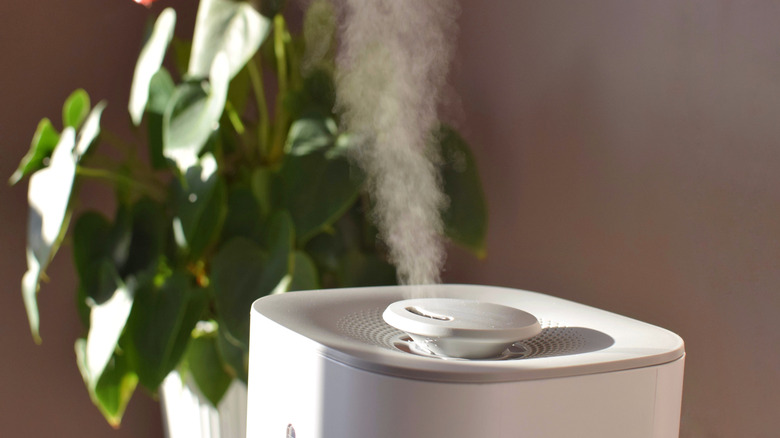
Humidifiers are, for many people, a must-have appliance for winter. They turn the ultra-dry air in a room into something more comfortably breathable. You followed all the easy tips for choosing the perfect room humidifier. Then you set it up on your coffee table and turned it on. Not so fast! It's all too easy to accidentally damage your furniture, floors, and walls with this nifty appliance. In fact, here are certain surfaces on which you should never place a humidifier — namely any furniture made from solid wood or wood veneer. Wooden furniture is more than sturdy enough to take the weight of the appliance, so that's not the problem. It is, however, a porous, organic material that reacts to humidity in the air. Placing a device that constantly emits a plume of moisture on a wooden nightstand or dresser is a recipe for disaster.
This is a challenging problem to address because the damage almost always begins invisibly. As the humidifier runs, a concentrated mist settles on the surface of whatever the device is placed on. If the surface is porous, the moisture seeps in. This leads to those dreaded white stains, which are caused by moisture trapped beneath the wooden surface. They're notoriously hard to remove. Over time, the structural integrity of furniture is compromised, too. Solid wood can warp or crack as the wood fibers swell; likewise, veneers can bubble or peel as the adhesive breaks down, a reaction to the constant dampness. Even if your wood furniture is sealed, the continued exposure to high humidity can cause a cloudy finish, dulling the timber's natural color.
Which pieces of furniture are safe around a humidifier?
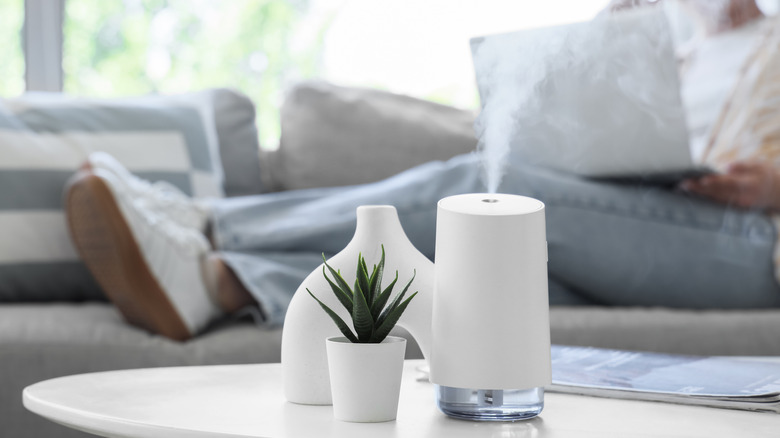
Have you ever been told to treat wood like skin? This strange advice can save your wood furniture, whether it's a vintage headboard, a table passed down from your grandma, or a brand new entryway console. And just like our skin, high humidity can cause problems for wood. The best approach is to place your humidifier on a non-porous, water-resistant surface in an area with good airflow. A glass-topped side table or a dedicated metal plant stand are both ideal options. However, if space is limited and you have to use wood, you're not out of luck. You can add a protective buffer. A waterproof silicone mat or even a plastic tray with a lip will catch drips and mist before it settles on the surface. Just make sure the spray head of the humidifier is pointed away from wooden headboards, cabinetry, and even your drywall, where it can lead to mold and mildew.
The distance of the humidifier from furniture and its height also plays a big role in moisture safety. Place the appliance at least two to three feet off the ground to provide plenty of space for the moisture to dissipate into the air. That way, it won't settle on your furniture — or your wooden floor. Keep the device about the same distance away from walls, floors, and furniture for similar reasons: to avoid concentrated mist accumulating in one area or onto one object. Don't make this huge mistake with your wood furniture. By finding the ideal place to set up your humidifier, you'll keep your belongings safe while you (quite literally) breathe a little easier.