

How To Care For Your Potted Hydrangeas During The Winter Months
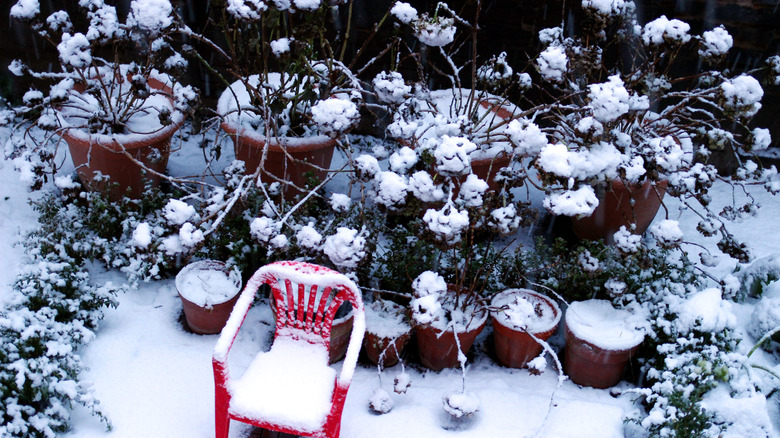
The cold of winter can be very challenging for plants in pots. Unlike plants that are directly in the ground, container plants don't have any natural insulation against falling temperatures. While cold weather can weaken unprotected roots over time, freezing temperatures will damage them, sometimes severely. You need to winterize your patio plants so they last all year. The practice, along with specialist care and maintenance, helps to reduce the stress that freezing temperatures generate in container plants. When it comes to hydrangeas, winter care means protecting the plants' roots by shielding the containers from extreme cold and adjusting your watering routine until the next growing season.
Caring for container plants in winter involves a different focus than spring or summer care. During the colder months, growth slows significantly, with plants like hydrangeas entering dormancy. There are no new leaves or flowers, so your goal is protecting stems, buds, and roots from frost, ice, and snow. Seeing little growth during winter is perfectly normal for container hydrangeas and isn't an indication that something's wrong with your plant. In fact, supporting this rest sets your shrubs up for healthy growth in spring. However, this slow winter growth does change the type and amount of care potted hydrangeas need. For example, you should use common items to keep your outdoor plants insulated during winter, from bubble wrap to burlap to mulch. Bigleaf, mountain hydrangeas always need winter protection; oakleaf and climbing, only sometimes; and smooth and panicle hydrangeas, rarely. They'll also need less water.
Wrap potted hydrangeas and reduce their water intake in winter
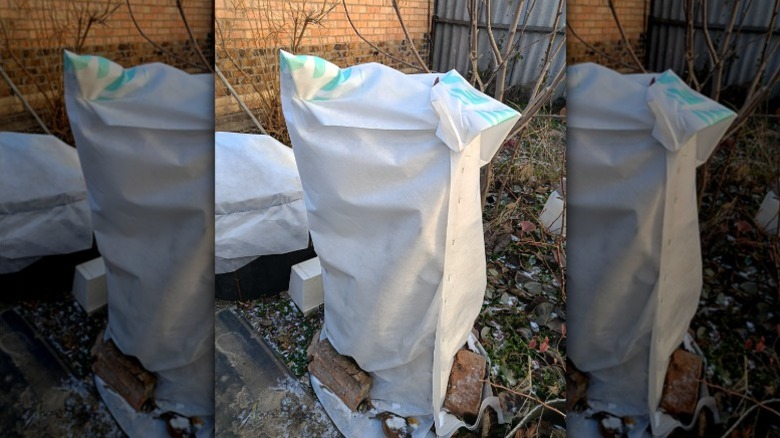
Where potted hydrangeas are situated in your backyard can affect what temperatures they're exposed to and how well they endure that exposure. Sudden swings in temperature stress container-grown hydrangeas far more than winter conditions that are relatively stable. If your potted plant isn't too big, move it to an area that offers it protection from the wind. Unheated garages, garden sheds, greenhouses, and sheltered corners of porches or patios are all good spots for overwintering a hydrangea in a container. Most decorative planters offer very little insulation, exposing the roots to freezing outdoor temperatures. Adding a layer of burlap or bubble wrap around the container and mulching the soil — or, in the coldest climates, wrapping the entire plant — can reduce the chance of cold-related stress.
Winter conditions also affect how potted hydrangeas take up and use water. Your shrub drinks slowly in cold temperatures, so it typically requires less water than it does during the growing season. Watering in abundance, or even following your spring and summer schedule, may negatively impact the plants' roots. Reduce the risk of overwatering by feeling the soil with your bare hand. If it feels dry, give your plant half a cup to a cup of water. Or try this affordable, eco-friendly hack to never overwater your garden plants again: stick a toothpick in the soil. If it changes color, your hydrangea has enough water. In dry climates, watering every two to four weeks should suffice. Get snow? If your potted plants are outdoors, you might be able to skip watering altogether. Generally, pay close attention to how your container-grown hydrangeas respond to cold weather and make adjustments to their care as needed.