

The Once-Dated Kitchen Countertop Trend That's Making A Low-Key Comeback In 2026
We may receive a commission on purchases made from links.
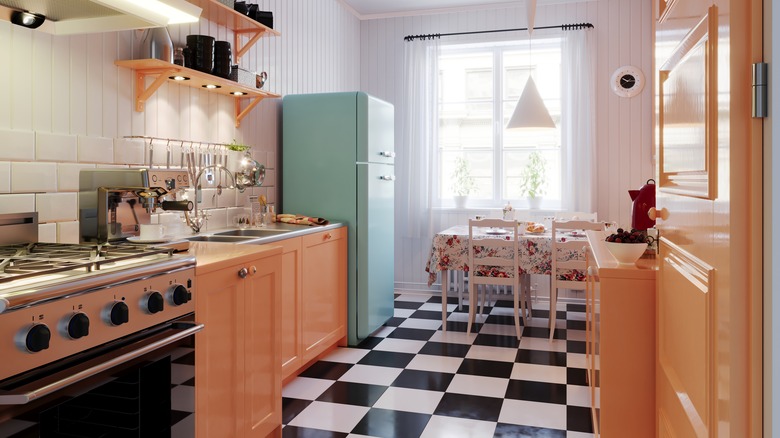
Like many kitchen design elements, countertop trends are constantly cycling in and out of style. And nine times out of 10, they'll eventually find their way back to the spotlight. The tile countertop trend isn't the only once-dated kitchen countertop trend you'll start seeing everywhere in 2026, but it's making a low-key comeback. Originally popular in the 1920s and 1930s, tile countertops experienced a major resurgence in the 1970s and 1980s. But since then, they've taken a backseat to more modern styles like marble, quartz, granite, concrete, and wood countertops — until now, that is. There are now plenty of gorgeous tile countertop ideas to transform your space.
Their return may surprise some, as tile hasn't always been considered the most practical choice for kitchen countertops. The uneven surface can make rolling out dough difficult, while grout lines act as a magnet for food crumbs and spills, making them harder to clean and easier to stain. With that being said, though, tile countertops have come a long way since the last time they were popular.
"Tile countertops, which have long been abandoned for being dated and hard to care for, also are making a comeback in places," Jacob Naig — owner and real estate agent at We Buy Houses In Des Moines — previously told House Digest. "Improvements to grout technology have resolved many of these old problems." Modern acrylic-based grout, for example, is stain-resistant and mold- and mildew-resistant, making tile a more practical option for today's kitchens.
More reasons to consider tile countertops in your kitchen
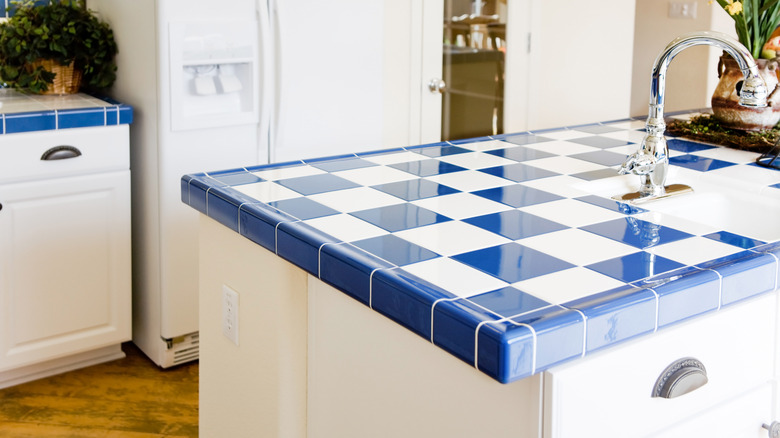
In addition to recent improvements that make grout easier to maintain, tile countertops offer several benefits — durability being one of the most impactful. Ceramic tiles, which were commonly used for countertops in the past, are known for being extremely durable, scratch- and stain-resistant, and easy to clean, making them a strong option for kitchen surfaces. Ceramic is also heat-resistant, meaning you can place hot dishes directly on the countertop without worrying about burns or marks on the surface. Another major bonus is cost. Ceramic tiles can be significantly cheaper than many stone countertops — for example, ceramic can cost between $1 and $15 per square foot, while marble can reach up to $190 per square foot.
From a design standpoint, the wide range of color and pattern options available make tile countertops an intriguing choice, especially if you're looking to give your contemporary kitchen more personality. If you're aiming for a retro look, a checkered pattern in old-school colors like burnt orange and ochre yellow would bring a touch of nostalgia. Meanwhile, for a more European-inspired aesthetic, you could opt for hand-painted tiles. These Dyari hand-painted artisan kitchen tiles, for example, would suit a Mediterranean-style space, while a soft floral pattern, like The Tile Life dahlia porcelain encaustic tiles, would look be lovely in a home with an English or French cottage-style kitchen.