

No Garden Needed: 15 Leafy Vegetable Plants You Can Grow In Hanging Pots
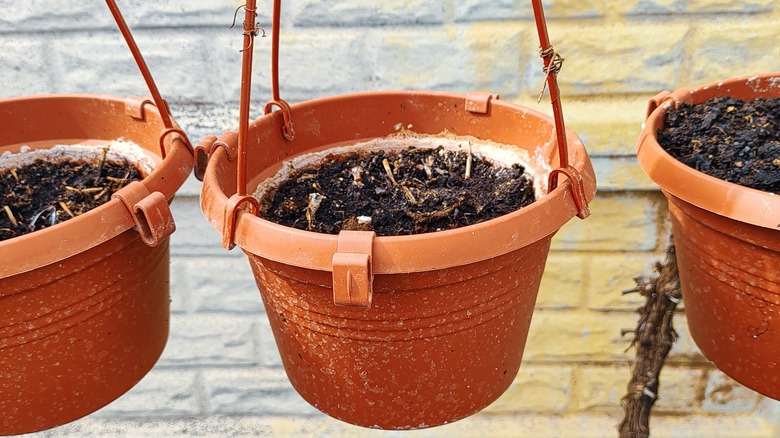
When you plan your garden, do you picture everything from a bird's eye view? Many of us do, and while it's often easier to draw your garden on paper as a two-dimensional construct, real plants live in the 3D. Many vegetables do well in containers, so even if you don't have a garden, you can take advantage of the third dimension with hanging pots. Whether you're a newbie gardener looking for a place to start or an experienced one looking for ways to maximize every inch of vertical space, this list of 15 leafy vegetable plants that are perfect for hanging baskets will help get you growing.
Cultivating vegetables in hanging baskets opens the door to an entirely new way of gardening. Since leafy greens are fast and easy to grow, many gardeners use succession planting techniques to ensure a steady supply throughout the season. With hanging baskets, succession planting is simple to maintain by planting seeds in a new hanging basket every two to three weeks. When one basket is spent, simply replace it with a new one to ensure leafy greens all season.
Additionally, if you want to create a patio vegetable garden, hanging baskets are an ideal solution that lets you both maximize your space and keep plants within easy reach. Although most won't do well in extreme midsummer heat, you can grow these plants almost anywhere in USDA Hardiness Zones 2 to 11 unless otherwise indicated.
Lettuce
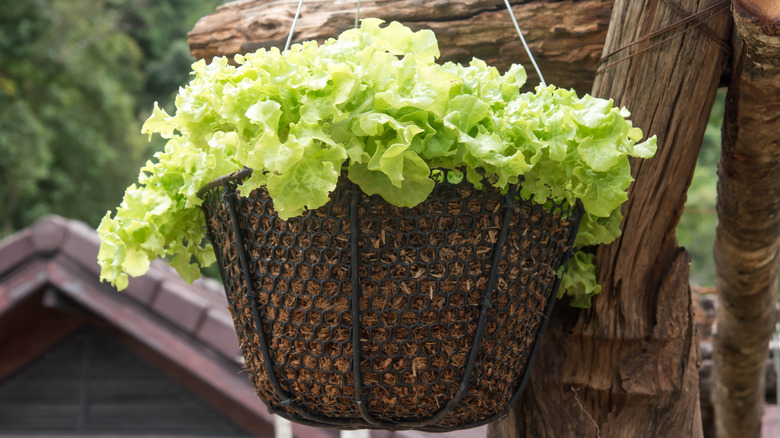
Lettuce (Lactuca sativa) may seem rather obvious for this list, but it's a favorite that can't be ignored. One of the best edible plants for small spaces, lettuce includes four main types: crisphead, butterhead, romaine, and loose leaf, with the latter being widely regarded as the easiest to grow. Popular varieties like 'Black Seeded Simpson' can be harvested multiple times using the cut-and-come-again method, in which only the outer leaves are harvested each time. For more color, choose a red variety like 'Red Sails' or 'Ruby Gem'. If head lettuce is more your thing, try an easy-to-grow variety of butterhead lettuce, such as 'Buttercrunch'.
Spinach
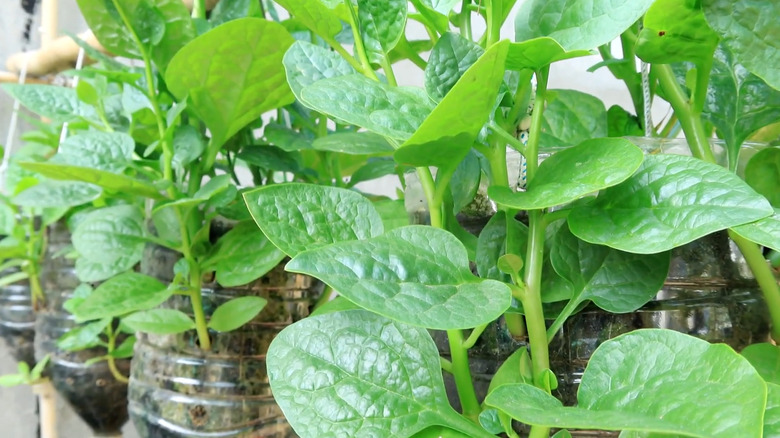
Spinach (Spinacia oleracea) is another common leafy green vegetable that can be successfully grown in hanging baskets. Known for being a cold-hardy vegetable that can extend your gardening season on either end, spinach is easy to include in a variety of recipes or can be eaten fresh straight from the hanging basket. A popular savoy (or crinkled-leaf) variety like 'Bloomsdale' will be ready to harvest in just 30 days from seed.
Arugula
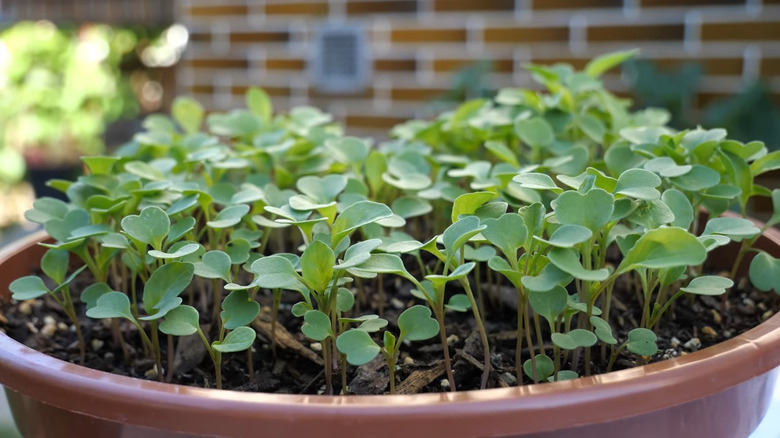
A fast-growing annual, arugula (Eruca vesicaria) is easily grown from seed. It can even be grown indoors on a windowsill or in a hanging basket. The wild types are spiciest, but they are actually a different species known as perennial wall-rocket (Diplotaxis tenuifolia). The standard type has a milder flavor and is ready to harvest in just a few weeks. Since Eruca vesicaria plants grow and mature so quickly, succession planting is the best way to stay stocked. Using hanging baskets both indoors and outdoors will allow you to have fresh arugula all year.
Swiss chard
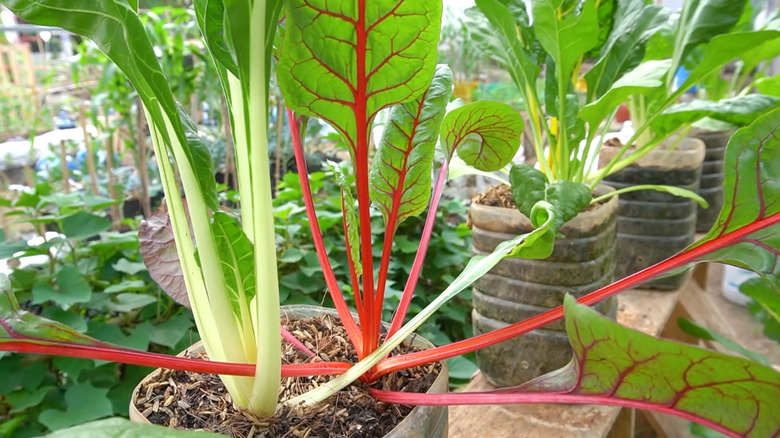
Swiss chard is part of the Beta vulgaris leaf beet group and is closely related to beets. However, it doesn't get a swollen root and can be successfully grown in small containers like hanging pots. This makes it a top choice for gardeners who have limited space on balconies, patios, and rooftops. To grow Swiss chard in a hanging basket, use a container with a volume of at least 2 quarts and a depth of at least 8 inches.
Mustard greens
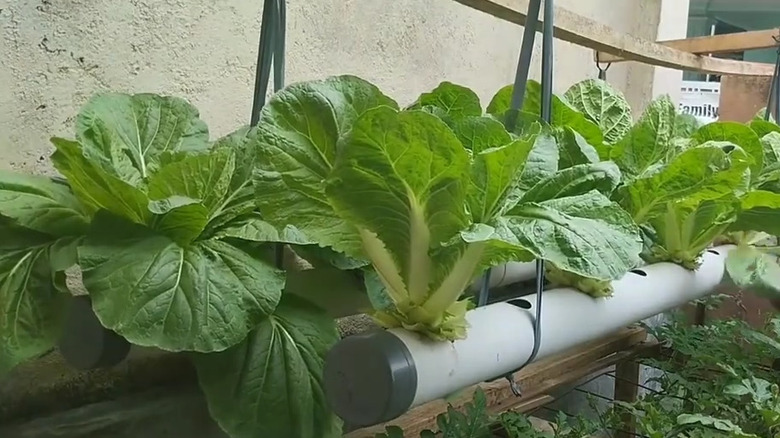
Many members of the mustard family (Brassicaceae) are food staples, including mustard greens (Brassica juncea), another leafy green that can be grown in hanging pots. This plant does best in the cooler temperatures of fall and spring. For a fall harvest, plant it a few weeks before your last frost, then again every few weeks until it gets too cold to germinate. If you have a sunny window, you can also grow mustard greens indoors in spacious hanging pots to easily access fresh greens for cooking or salads.
Kale
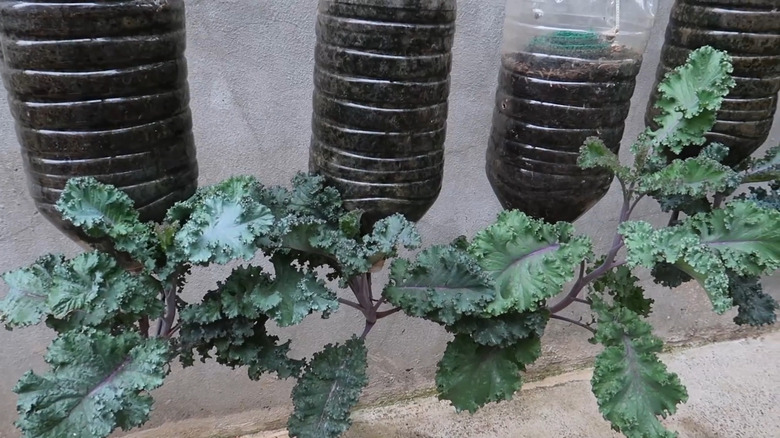
Having achieved something of a celebrity status, kale (Brassica oleracea) is one of the more popular members of the mustard family. It was touted on television by famous people like Gwyneth Paltrow and Dr. Oz, and these days, it can be easily found in most grocery stores in the United States. It's also cold-hardy and easy to grow, and can even be planted upside down in hanging baskets. Kale can tolerate cold temperatures so well that it's often harvested even after it freezes. Start kale seeds in spring for an early summer crop and in midsummer for a fall crop.
Bok choy
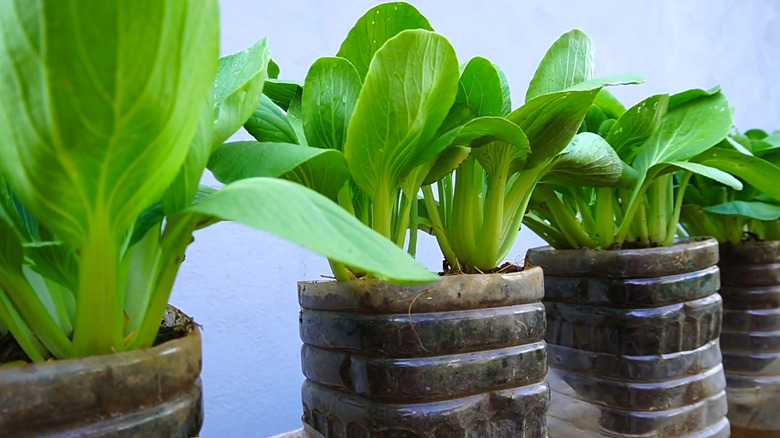
Bok choy (Brassica rapa) is closely related to kale, mustard greens, and collards. Like many plants in this family, bok choy is a biennial, so it won't go to seed the first year. It's a rapidly expanding crop in the United States because of its health benefits and popularity. You can enjoy growing this plant at home in many different types of containers, including hanging baskets, even if you don't have a garden. It takes about 60 days to mature from seed.
Pea shoots
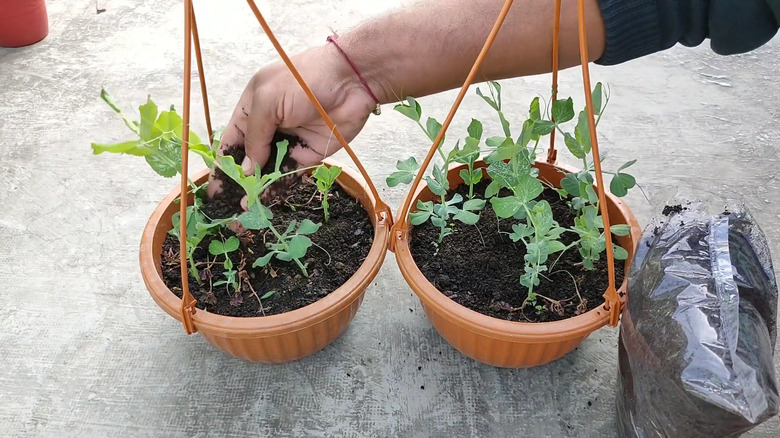
Have you ever thought of growing your sugar snap peas (Lathyrus oleraceus) in a hanging basket? While peas aren't technically a leafy green, pea shoots are, and you can grow them in just a few weeks from seed in a hanging pot in your backyard. Pea tendrils are typically harvested when the plants are about 4 to 8 inches tall, and are best used immediately to add a sweet, delicate flavor to your salads and stir-fries. Use the succession planting method so you have a steady supply, and let any plants that get too tall grow to make peas.
Amaranth
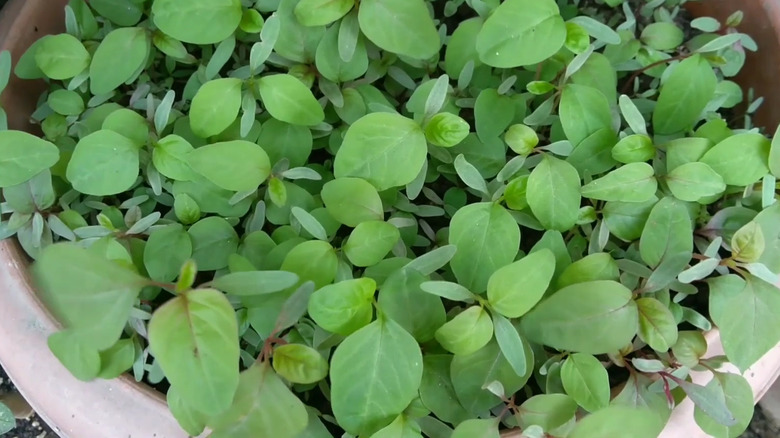
When you're planning and mapping out your vegetable garden, you may come across amaranth (Amaranthus caudatus), which comes in a variety of bold colors from greens to reds and burgundies. Amaranth is delightfully easy to grow and is often consumed as a microgreen, making this an ideal candidate for succession plantings in an organized hanging basket system. After you nibble on the young greens (and reds) of cultivars like 'Red Garnet' and 'Coral Fountain', you can put the plants in your pollinator garden, where they can get up to 5 feet tall and produce beautiful cut flowers.
Sorrel
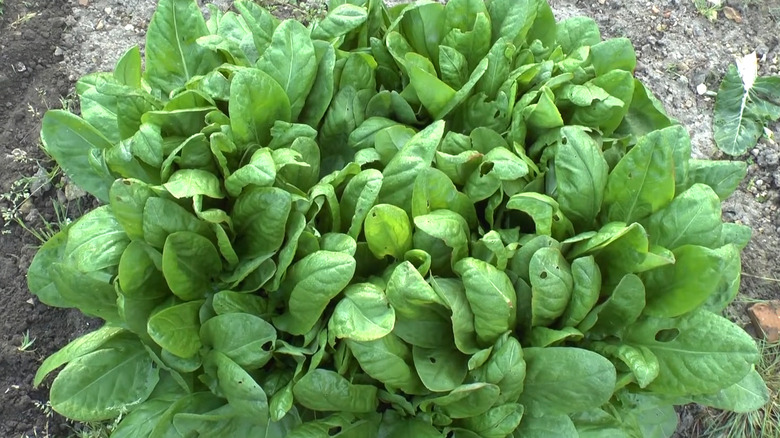
There are about 200 species in the dock or sorrel genus, Rumex. For vegetable gardeners, two commonly cultivated species that you can grow in hanging baskets are English sorrel (Rumex acetosa) and French sorrel (Rumex scutatus). These sorrels have a citrusy taste that's ideal for both salads and cooked dishes. A couple of other varieties are widely distributed as weeds, including sheep's sorrel (Rumex acetosella), and they are also edible. For hanging pots, garden cultivars are ready in 40 days. For more color, choose a variety with red veins.
Watercress
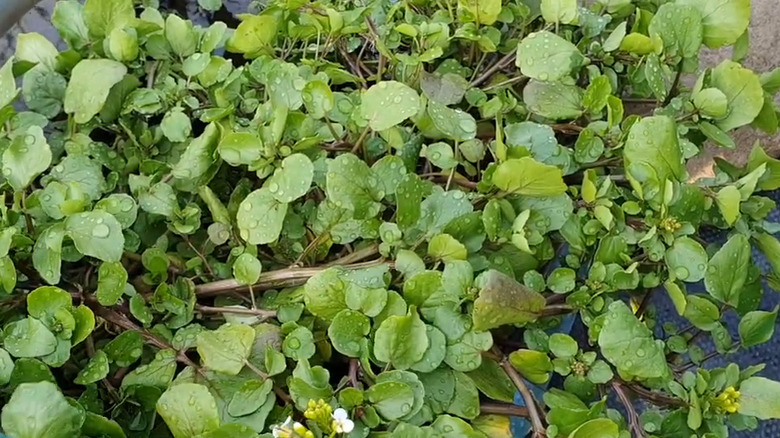
Watercress (Nasturtium officinale) is not to be confused with the garden nasturtium (Tropaeolum majus), which, incidentally, is another edible plant that would do well in a hanging basket. Watercress is a species from Europe and Asia that has naturalized in parts of North America and is listed as invasive in several states, including Connecticut and Georgia. In addition to being used as a leafy vegetable, watercress is also consumed as an herbal remedy. Easy to grow from seed, it takes about eight to 15 days to germinate, and you can start harvesting fresh microgreens within just a couple of weeks.
Purslane
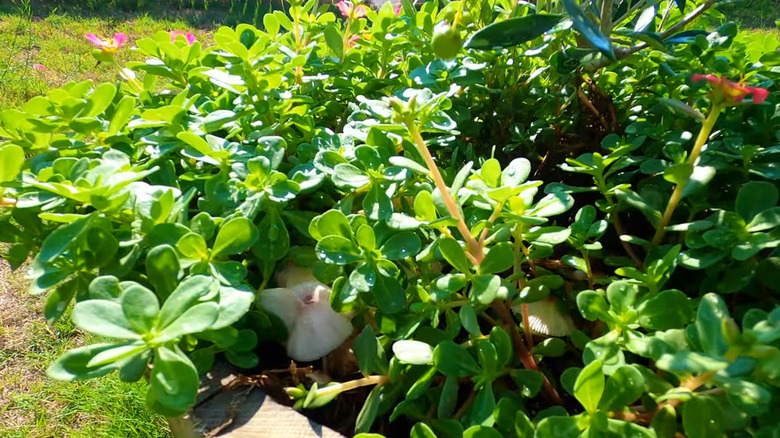
Many gardeners consider purslane (Portulaca oleracea) a weed, but it's frequently eaten in many parts of the world. Although it can be a problem for foraging animals because it contains oxalates that can be toxic when ingested in large quantities, purslane is a rich source of food for wildlife and makes an excellent groundcover. As a leafy green veggie, it's well-suited to small containers and hanging baskets. However, don't confuse it with its close relative, Portulaca grandiflora, a popular flowering plant also known as moss rose. While both plants are edible, moss rose is usually grown as an ornamental.
Endive
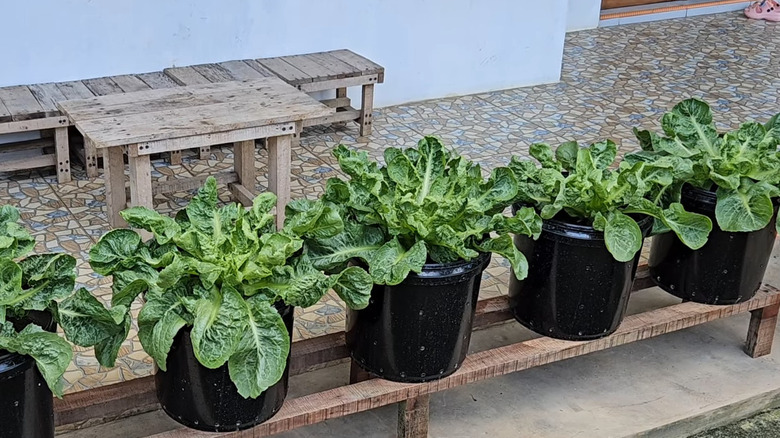
Another leafy vegetable that is ideal for hanging baskets is endive (Cichorium endivia). Cold-hardy in zones 4 to 9, endive comes in three main types, including escarole (which is similar to loose-leaf lettuce), a curly leaf form called frisée, and Belgian endive, which is a root crop that is more complicated to grow and may not be well-suited to a hanging basket.
Radicchio
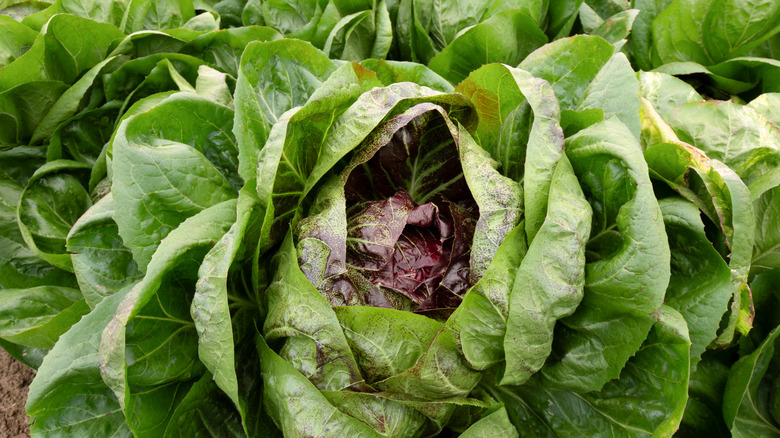
Closely related to endive, radicchio (Cichorium intybus var. foliosum) is an old Italian leafy vegetable known by many names, including red chicory, Italian chicory, and red endive. Like endive, it can be grown in containers, so a hanging basket is a good way to use up some vertical space if you want to try growing radicchio. In zones 3 to 8, you can try one of the modern cultivars like 'Leonardo' for more uniform, slow-bolting heads.
Mâche (corn salad)
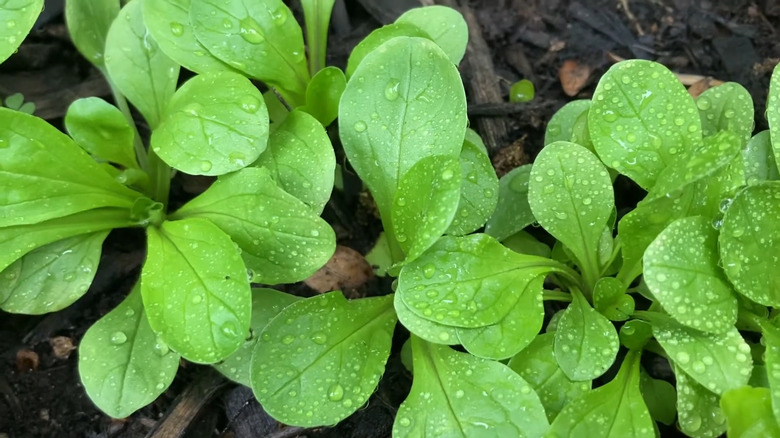
Corn salad sounds like something that might turn up at a potluck, but it's really just another leafy green vegetable also known as lamb's lettuce or mâche (Valerianella locusta). It's called corn salad because it grows as a weed under rows of grain crops, and it became a popular plant for humble kitchen gardens in Europe centuries ago. Easy to grow in zones 4 to 8, you can enjoy a leaf at a time from your hanging baskets as soon as the plant is big enough, but once it starts to bolt, it's best to harvest the whole plant.