

15 Succulents That Grow Beautifully Indoors Throughout Winter
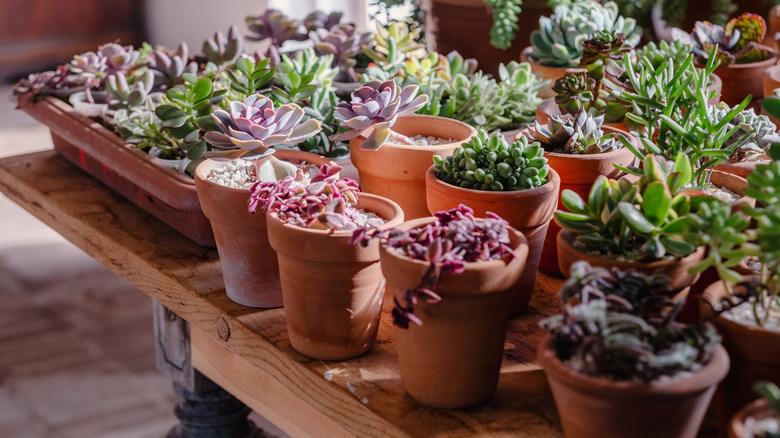
Choosing a houseplant that can thrive indoors through winter isn't exactly easy. With the heat running all day and night, indoor air becomes dry. Many plants simply cannot cope in such an environment. Succulents, however, are built for growing in a home's dry winter climate. In fact, it is unlikely indoor conditions could ever become so dry as to bother these plants. Some succulents that are particularly well-suited to indoor life throughout the cold season include Christmas cacti, ponytail palms, living stones, ice plants, tiger jaws, burro's tail, century plant, and haworthia — among many others.
While typical home temperatures are usually perfect for succulents in winter, the real challenge is the lack of sunlight. Most succulents need about six to eight hours of bright, indirect light every day, though a few varieties can survive in dimmer spots. Without it, they can get leggy and lose their color. A bright, sunny windowsill is usually the best place for succulents indoors. Just don't let their fleshy leaves touch the icy window glass. If, however, you want to grow succulents somewhere dim or even — at times — dark, consider investing in grow lights for indoor plants. Lastly, plant winter-grown succulents in a fast-draining medium and slow down on the watering. Too much water can kill these hardy plants.
Christmas cactus
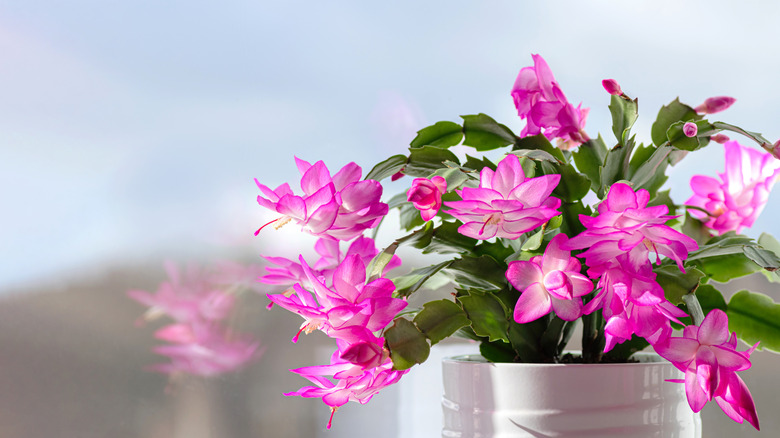
If you want to grow a succulent that will complement your festive décor, a Christmas cactus (Schlumbergera × buckleyi) is the perfect choice. It puts on a dazzling display of flowers in winter. Even after the holiday season, you can keep growing it indoors as a potted plant. The best part? Despite their name, these plants are succulents, and therefore have no spines. You don't have to worry about pets or kids getting injured. Also, once winter ends and the weather warms sufficiently, you can move them outdoors.
Ponytail palm
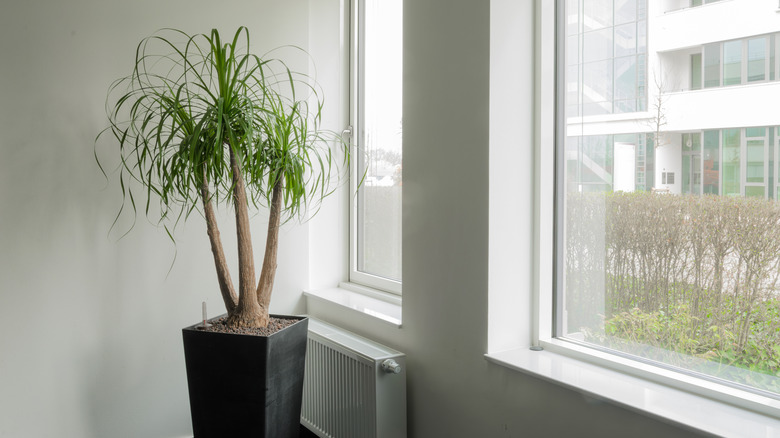
Similar to the Christmas cactus, this plant has a misleading name. Even though it is called a palm, it is, in fact, a succulent. The plant gets its name from its single unbranched trunk with a bunch of leaves at the top — they can grow as long as 3 feet indoors. Nevertheless, ponytail palms (Beaucarnea recurvata) are very popular houseplants, although they might never flower when grown indoors. Luckily, though, they have quirky foliage and are quite easy to grow. Just don't overwater them.
Living stones
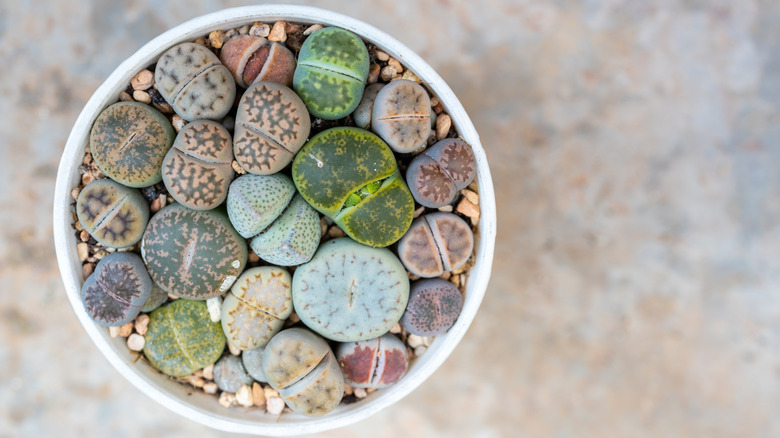
Living stones (Lithops spp.) are intriguing plants that thrive indoors with minimal effort. These compact plants fit perfectly on a windowsill or tabletop and bring charm to any room with their daisy-like flowers in light yellow, white, and orange, which appear during fall and early winter. Just don't water them too frequently in winter. Too much moisture splits the fleshy leaves, which looks unsightly, and can lead to root rot. When properly cared for, living stones can survive for several decades, sometimes up to 50 years.
Hardy ice plant
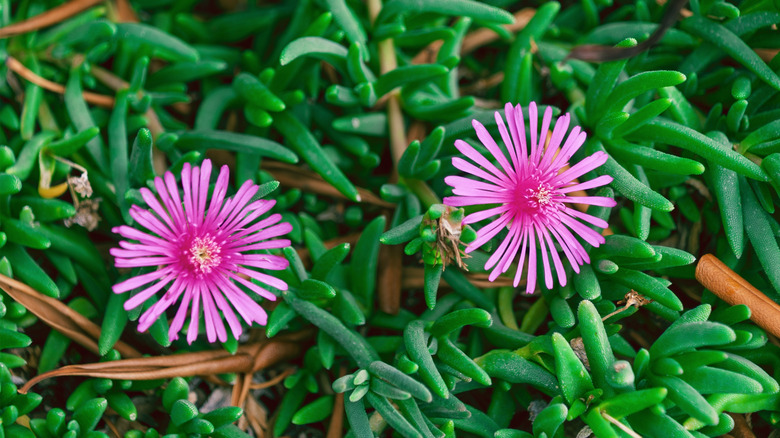
The hardy ice plant (Delosperma spp.) is another great succulent to grow indoors during winter. They have glossy, linear leaves that form a bright green carpet over the soil surface. The leaves are less than 1 inch long, making these succulents perfect for compact indoor spaces. Even better, hardy ice plants are low-maintenance and boast vibrant white, pink, yellow, and purple flowers, depending on the species. The leaves of this succulent shimmer in sunlight, so they're sure to capture everyone's attention wherever they're placed in a room.
Tiger jaws
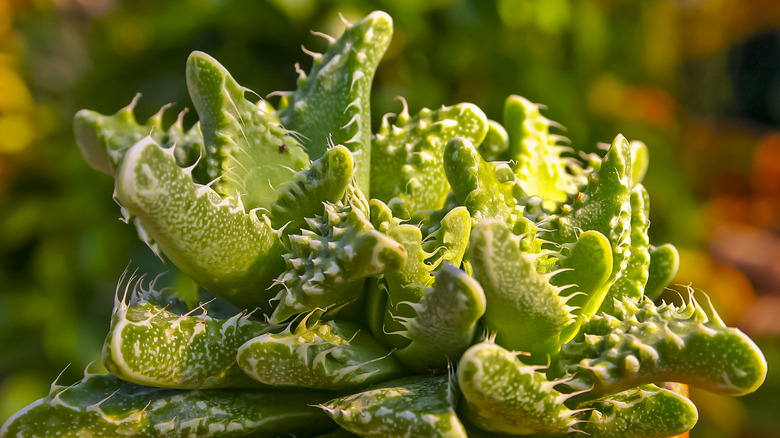
Tiger jaws (Faucaria tigrina) is another succulent on this list that resembles an animal's body part. It also makes an excellent winter houseplant. Tiger jaws have thick, triangular, teethed leaves that look like an open jaw — hence the name. They make an unusual addition to an indoor succulent collection, not least because they also boast large yellow flowers that bloom in fall and sometimes into early winter. You can grow them in standard cactus compost, so long as you fertilize them every two weeks in late spring and summer.
Mini desert rose
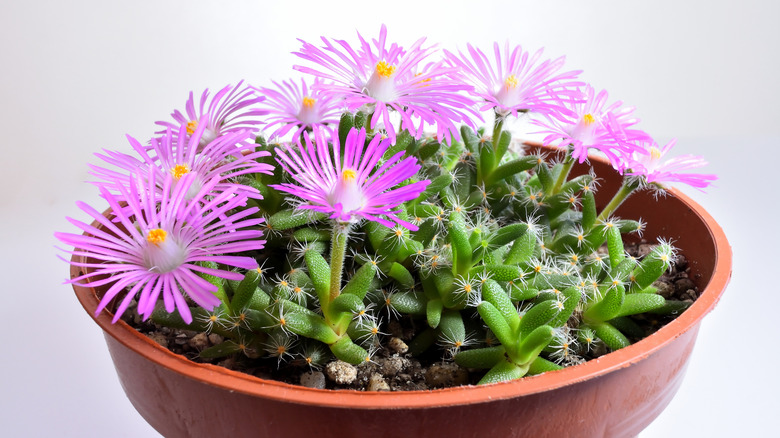
Despite its diminutive size, the mini desert rose (Trichodiadema densum) is a tough succulent. When grown as a houseplant, it evolves more like an indoor bonsai than a standard succulent. Mini desert roses will grow happily in a bright window over the colder months. Just make sure to regularly remove damaged or dead leaves to promote healthy growth. Given proper care, your plant will produce vibrant magenta flowers during winter. The flowers open in the morning and close by the afternoon.
Blue finger
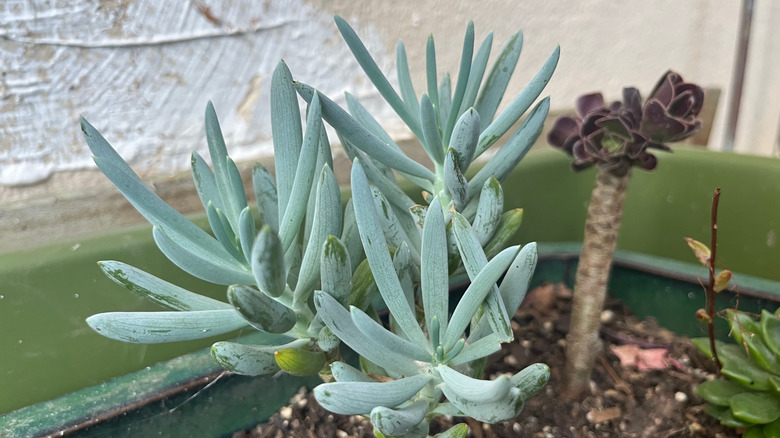
If you love weird succulents, blue finger (Curio talinoides) will suit you. The plant has long, thin leaves and grows well indoors in winter. The great thing about blue finger is that it comes in two vastly different sizes. There's the small Curio talinoides var. mandraliscae, which grows only a few inches tall, and the giant Curio talinoides subsp. cylindricus, which can reach about 18 to 24 inches tall. Pick the variety that will best fit into your indoor space. Blue finger is a very low-maintenance succulent; you don't need to prune it to maintain its unique shape.
String of pearls
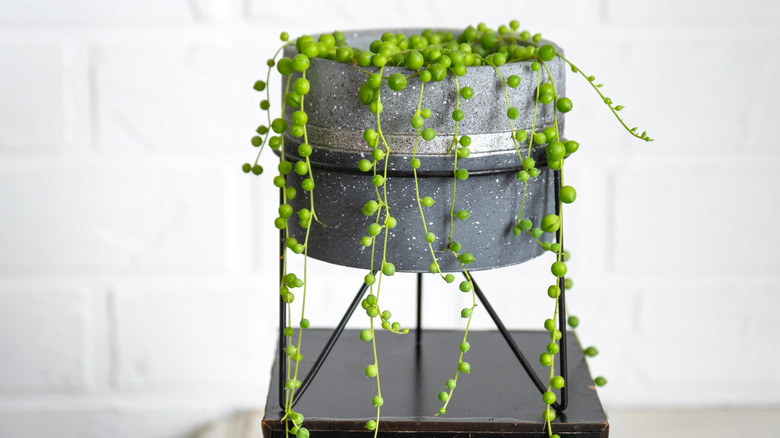
For those who would rather skip long, finger-shaped leaves and want a succulent with a delicate, bead-like look, string of pearls (Curio rowleyanus) is an excellent choice. In winter, these plants grow best in a spot with bright, indirect sunlight and temperatures of around 55 to 60 degrees Fahrenheit. Avoid watering your string of pearls too frequently and keep pets and children away. The plant parts are mildly toxic if ingested.
Flapjack
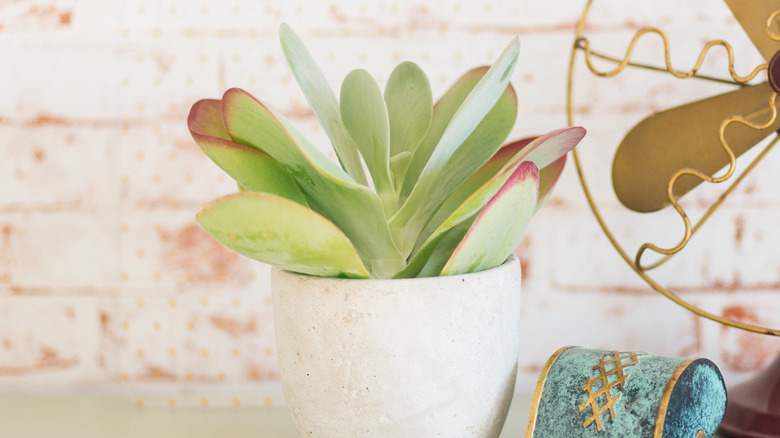
If you favor houseplants that bring the colors of fall indoors, consider growing a few flapjacks (Kalanchoe spp.) indoors. With broad, fleshy leaves shaped like paddles, these striking succulents will bring living structure and texture to your home décor. They thrive in large containers or dish gardens with a mix of houseplant species, or try them in a hanging basket. Just make sure they get lots of light. They are toxic, so put them somewhere pets and children can't reach.
Mexican rosettes
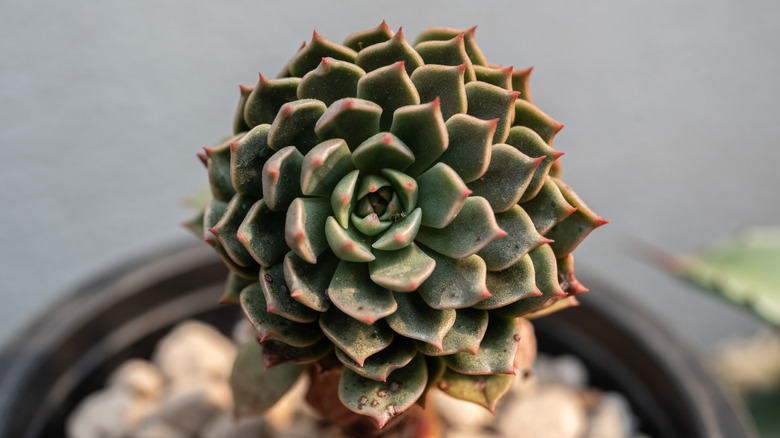
Mexican rosettes (Echeveria spp.) are compact succulents that reach just a few inches wide at maturity. As their common name implies, they grow in tight rosettes that stay close to the ground at first. However, as the plants grow taller, the older leaves at the base of the rosette die and fall off, exposing more of the stem. The leaves boast vivid colors — even when the plant is grown indoors during winter. Mexican rosettes can withstand the occasional cold spell, but for the best results, make sure indoor temperatures stay moderate.
Century plant
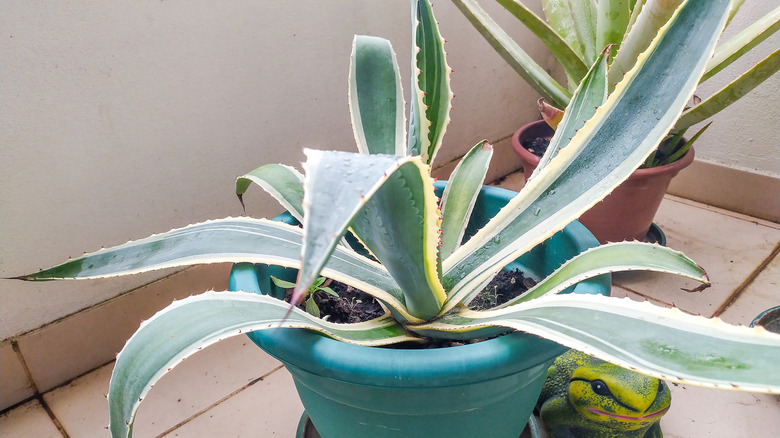
The century plant (Agave americana) is a rather large succulent. It will grow up to 6 feet tall outdoors. However, you can also grow it as a houseplant indoors in winter, where it should stay much smaller. The plant was so named because people once thought it took 100 years to flower. This isn't actually the case, though it does take a long time to bloom. Don't expect flowers for 10 to 25 years. Also, once it blooms, the main plant dies. But don't worry, the century plant's striking leaves keep things visually interesting.
Crown of thorns
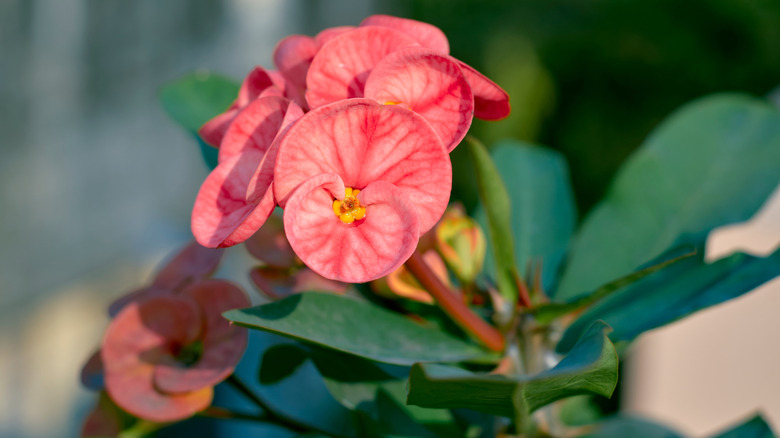
The crown of thorns (Euphorbia milii), sometimes also called the Christ plant, is a cactus-like succulent. It has somewhat fleshy green leaves, bold red or yellow flowers, and prominent thorns. Most importantly, you can grow it indoors in winter. It is relatively easy to care for as long as you plant it in well-draining soil and put it in a sunny spot in your home. There are, however, some hybrid cultivars that do well in partial shade, such as Euphorbia milii 'Dawn' and Euphorbia milii 'Fireworks.'
ZZ plant
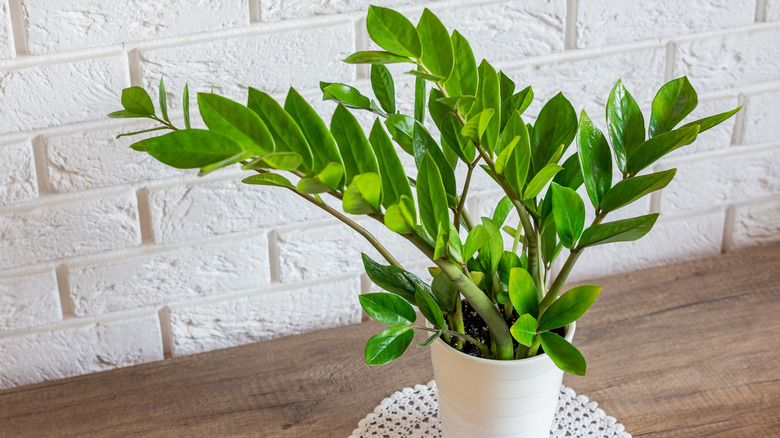
The ZZ plant (Zamioculcas zamiifolia) is another evergreen herbaceous perennial succulent. It has such a unique growth habit and appearance that it's sometimes mistaken for an artificial plant. Grow it as a winter houseplant in a pot filled with well-draining soil. Water it just once a month when it's cold outside; this plant won't tolerate soggy roots. ZZ plants grow to about 3 feet tall and do best in partial sunlight to full shade — for example, a spot in your home that gets morning sun and afternoon shade.
Burro's tail
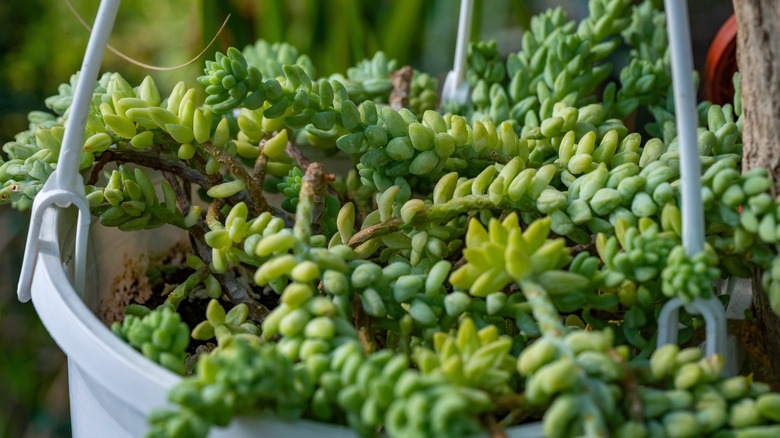
If you are looking for a beautiful trailing plant that will thrive in your indoor hanging pot, you cannot go wrong with burro's tail (Sedum morganianum). Just keep in mind the stems can grow up to four feet long and the water-filled leaves make the plant heavy. Make sure you plant a new burro's tail succulent in a hanging container that will support its weight when mature. The leaves of this odd succulent are delicate and will easily break off if touched too much. Handle your houseplants with care during maintenance and repotting.
Haworthia
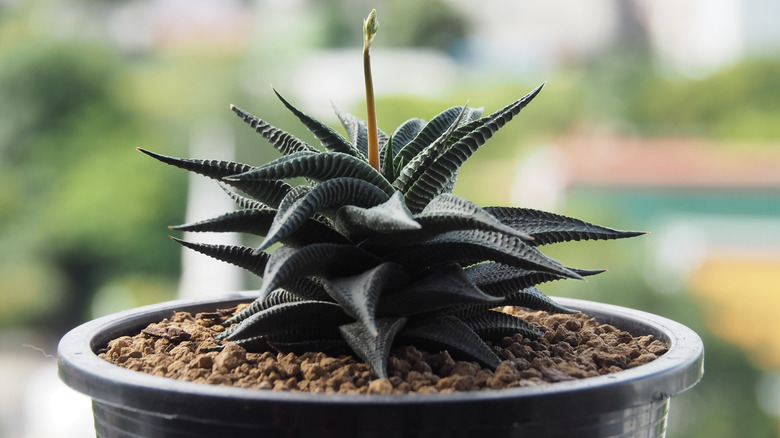
Haworthia (Haworthia limifolia) is arguably one of the easiest succulents to grow indoors in winter. Even beginner gardeners won't have a problem since they thrive in low light and are not fussy. Their compact growth is another reason they work so well as houseplants. The dark green leaves, which boast thick, white-ridged surfaces, form a tightly spiralled rosette. These succulents have a strong architectural vibe that will add a touch of drama to any living space.