

What Are Harmful Algae Blooms & Do They Really Make Water Toxic? Here's What To Know
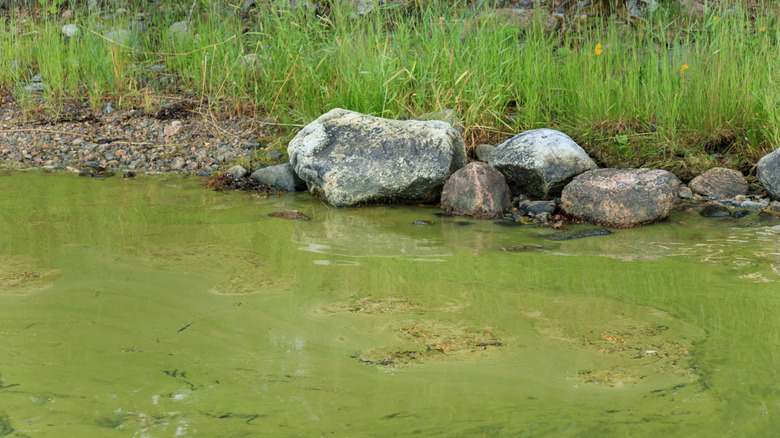
Beautiful lakeside views can quickly take an ugly turn when the water begins to look like a bucket of green paint. This typically signals the arrival of a harmful algal bloom, which happens when colonies of tiny organisms grow at an uncontrollable rate. The organisms aren't actually algae, but cyanobacteria, which use photosynthesis to survive. Because some algae blooms can be toxic and poisonous for people, pets, and local animals, water quality is one of the important things to consider before buying a house on a lake.
Commonly referred to as blue-green algae, these organisms naturally live in many freshwater and saltwater bodies. High levels of phosphorus and nitrogen from various sources act as fuel for these population explosions. If you come across an algae bloom, you might notice discolored water. It can turn different colors of the rainbow, including red, green, blue, or even a milky color. When these colorful blankets of bacteria eventually die and decompose, they can deplete oxygen levels, making the water a place where nothing can survive, including fish and plant life.
Cyanobacteria produce dangerous toxins that threaten pets and people
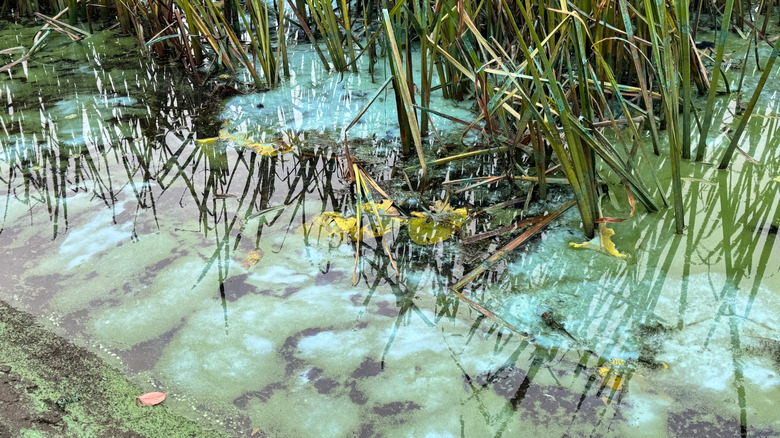
It can be hard to tell whether green water is merely dirty or genuinely dangerous, but some algae blooms can be quite dangerous. Not every colony of blue-green algae is toxic, but those known as harmful algal blooms or HABs are. These bacteria can release cyanotoxins that target the gut or the nervous system of any living thing that swallows the water. Dogs are especially vulnerable because they often drink pond or lake water or lick it off their fur after a swim.
In humans, even contact with the skin can lead to painful rashes, hives, or blisters. Inhaling mist from boats or jet skis moving through a bloom can cause coughing, throat irritation, and watery eyes. If you have a pond on your property and notice some of these signs, knowing how to clean a garden pond can help you find ways to clear out stagnant growth safely. Because you can't tell if a bloom is producing toxins just by the color of the water, staying away from any water with visible scum or discoloration is the safest thing to do.
Identifying a bloom is the best way to stay safe
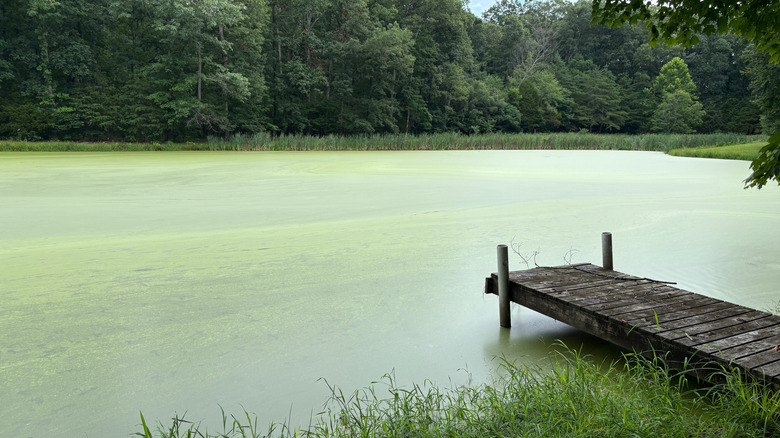
Knowing what an algae bloom looks like can help keep you and your family safe. Floating mats that look like stringy green hair are usually common green algae, but cyanobacteria often present as mats, spots, foam, or large areas of opaque, discolored water. Sometimes these blooms can also produce a strong smell, which is another sign to stay away. If the water looks murky or has a film on the surface, you should keep your children and pets out of it.
Public health officials suggest a simple "jar test" where you collect a water sample (while wearing gloves, of course), and if the green material in the water floats to the top, it's likely cyanobacteria. If you really want to know if the discolored water contains cyanobacteria, the only real way to tell is if the water is tested by professionals. Since cyanotoxins are not removed by boiling or filtering, untreated water should never be used for drinking or cooking. While people often search for how to use water during a boil advisory for certain water issues, those rules don't apply here, since heat can actually increase the amount of toxins from the bacteria. If you're not sure about the safety of the water, the smartest choice is to find a different spot for your afternoon swim.