

12 Ways To Keep Mice Out Of Your Home In The Winter
We may receive a commission on purchases made from links.
As the mercury starts to drop, our homes become increasingly attractive to the animals that circle our yards. This is especially true of mice, and the problem with these particular critters is that, given their size, they are incredibly adept at finding their way in. In fact, while it might seem ridiculous, they can, in fact, squeeze through gaps as small as ¼ inch in size.
The other problem with mice is that, once they're in, they can reproduce very quickly. In fact, in a single year, one female can produce up to 60 babies. These are born after just three weeks of gestation, and reach reproductive maturity often in under 10 weeks. In other words, once they're in, your infestation is likely to become exponentially worse, leading to damage inside your home and, often, harmful disease-carrying droppings in need of constant cleaning.
With all of this in mind, when the winter winds begin to threaten, it's important to mouse-proof your home. And while you may be tempted to employ certain scent or sound-based deterrents and call it a job well done, as you'll see in this guide, the best way to keep them out is to find and seal their entry points. Don't worry, though — it needn't be as tricky as it sounds. In fact, once you know where to look and how to remedy the issues, it's entirely possible to avoid mice taking over your home in the winter.
Know the signs of mice to prevent a full invasion

Getting to know the telltale signs of a mouse in your house can help you to get ahead of a larger winter invasion. Unfortunately, this can be easier said than done; mice are prone to finding their way into the cavities between your walls, and often the only giveaway that they're there is the occasional sounds of scratching as they scurry around inside them.
Another sign for which you should be on high alert, particularly if you've heard them running around your walls, is mouse droppings. Mice can't usually help where they leave these, and are prone to leaving a trail as they make their way around your home. Their droppings are quite easy to identify; they're pellet-shaped, dark in color, and usually around ⅛ to ¼ of an inch in length. And, since they tend to drop between 50 and 80 of them per day, if mice have found their way into your house and are no longer just hiding in the walls, these trails can be easy to spot.
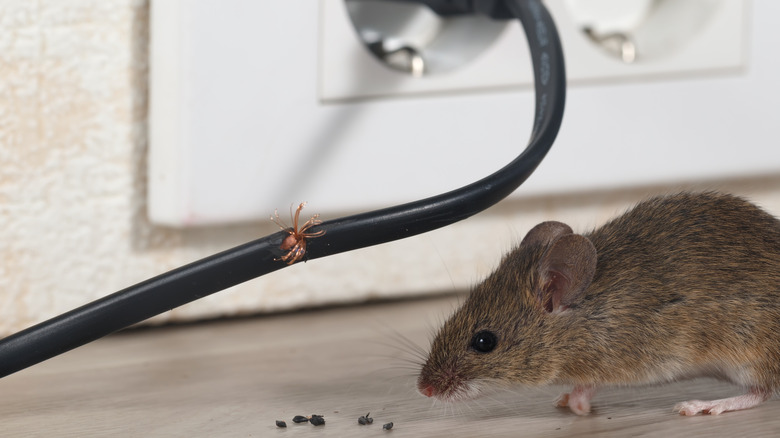
Other signs to look out for include greasy "rub" marks along your walls, since mice tend to stick to the edges of rooms where they feel more secure; a strong smell of ammonia (from urine) is another sign, as are gnaw marks on wood, plastic, and other hard surfaces. Mice gnaw on things constantly to prevent their incisors from overgrowing, which can cause significant damage in the process. This is especially true if they start to chew on your home's wiring.
Use steel wool to block potential access points
Now that you know how to identify the signs of mice in your home, it's time to consider how they may be getting in. More specifically, it's time to stop them from doing it. Unfortunately, as mentioned, mice can squeeze through gaps as small as ¼ inch in width. This means that any minor holes in your walls or home's foundation are likely to provide a useful highway into your house.
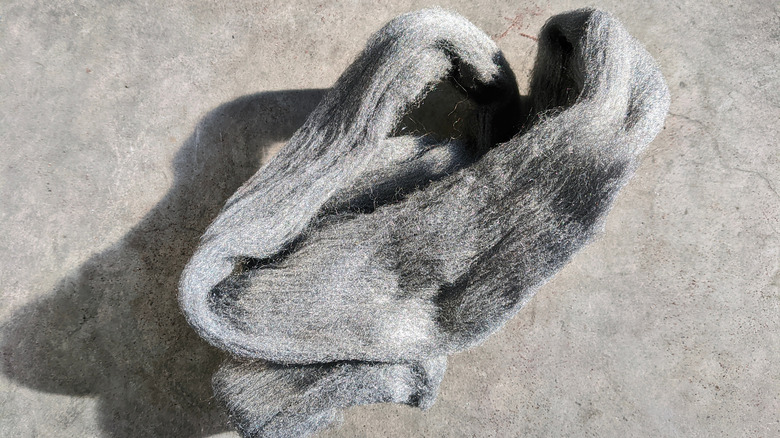
One way to plug these openings is to use steel wool gap filler for mice control. All you need to do is buy some, cut it into wads, and then stuff them into the holes you find around your house. Unlike other commonly used materials, like expanding foam, mice and other rodents are unable to chew through steel wool. You can always use expanding foam to "caulk" around the wool to keep it in place. Just don't be tempted to skip the wool, as foam alone is unlikely to deter rodents for long.
Secure rodent-proof mesh to openings outside your home
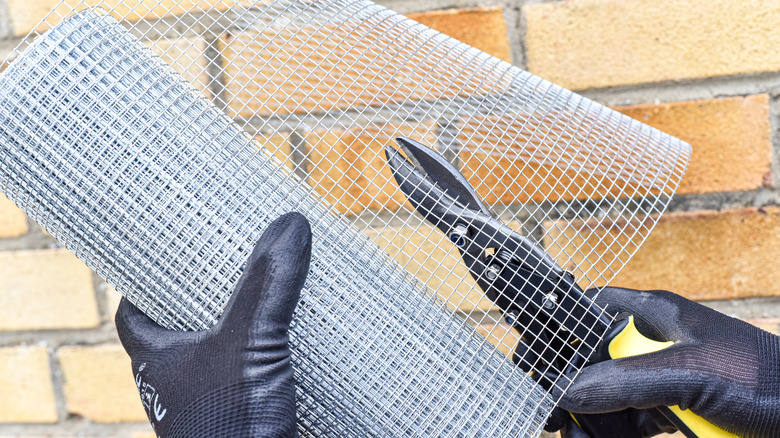
Another way to seal gaps and keep mice out of your home is to use rodent-proof wire mesh. This method is useful for larger holes on flat surfaces. It's especially well-suited to bricks with air holes, as it stops mice from squeezing through them while still allowing your home to breathe. Crucially, just like steel wool, mice are unable to chew through it.
In order for this to be effective, it's important to choose a mesh of the right size. Specifically, the weave of the mesh should have gaps no larger than ¼ inch in diameter. Larger weaves are unlikely to do much good, since mice will easily crawl through them. With your mesh on hand, cut a piece to the right size, then fix it to the wall around the gaps you need to cover. Use outdoor-grade screws to ensure they don't rust, and check the mesh periodically to ensure it remains firmly fastened.
Use concrete to seal cracks and openings in your building's foundation
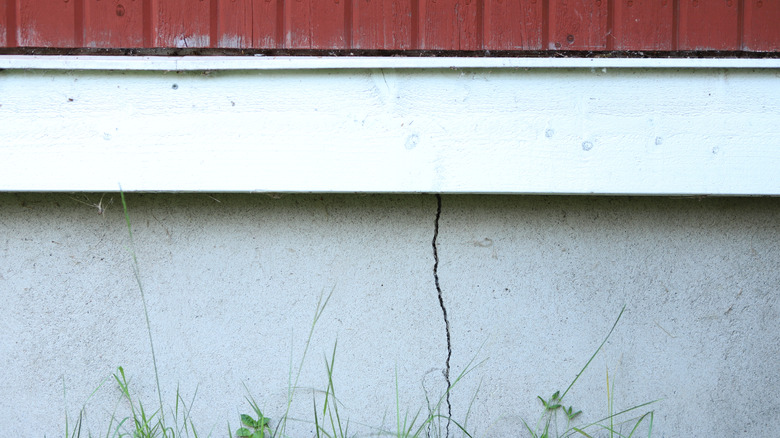
If, when checking your home's exterior for potential access points, you find larger cracks in your foundation, then steel wool or mesh may not be the best solution. Instead, to prevent mice from exploiting the cracks in order to access the warmth of your house, consider using concrete. Like mesh and steel wool, mice are unable to chew through concrete.
Now, unless you're an experienced professional, it's important to tread carefully with this tip. Any cracks larger than ¼ inch wide and visible from both inside and outside your home should ideally be inspected by an expert. Larger faults like these could be indicative of structural damage, and while you certainly want to keep mice out, you also don't want to cover up a serious problem with your home that could potentially get worse. Instead, seek a professional opinion as soon as you're able to, and if necessary, have them rectify the issue (including filling the cracks) as a matter of priority.
Ensure doors and windows close tightly
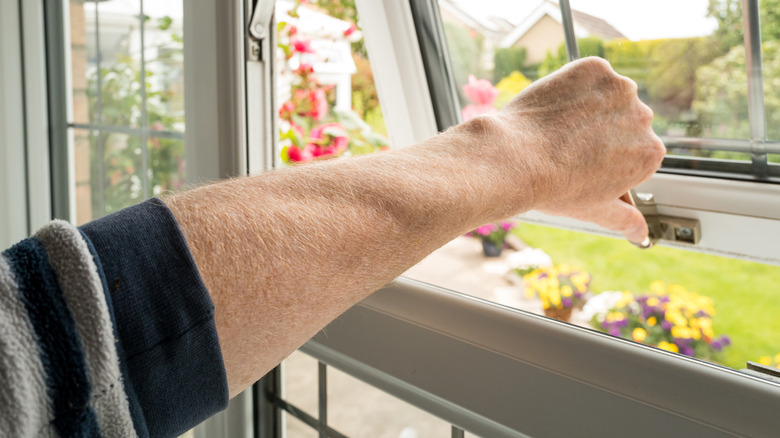
In the winter, drafty doors and windows are quick to make themselves known. And while you may be able to put up with the occasional draft until fairer weather makes it easier to get outdoors and repair them, you may not be quite as forgiving if your doors or windows are allowing mice to get in. With this in mind, it's important to check your home's openings and ensure they fit snugly.
If they don't, or you have a drafty door or window that you've been meaning to fix for a while, then ahead of the winter is a good time to do it. To start, it'll help keep your home warmer. More importantly, winter is when mice are most likely to force their way indoors. If you're unsure whether the gap beneath your doors or around your seals is large enough to admit rodents, then use the pencil test to see if your openings need mouse-proofing. If a pencil slides easily beneath your door or under your seals, then chances are that a mouse will, too.
Eliminate attractants from around your home

One of the most important aspects of mouse-proofing your house is making it as unattractive as possible. We don't mean turning the heating off — you and your family will quickly regret doing that in the winter! What we mean is that there are certain home maintenance tasks that are key to keeping your home rodent-free, like cleaning and reducing clutter.
Now, we should say that good sanitation alone is unlikely to entirely prevent mice from entering. Mice are sporadic feeders, and don't necessarily need an abundance of food in order to transgress the boundaries of your home. However, if you're not fastidious about cleaning up spills, sealing your food, and clearing up bits of household detritus, then they're likely to see this as fair game.
So, to avoid finding a trail of mouse droppings leading to and from your kitchen and pantry, keep your house tidy. Seal food containers, clean up spills whenever they occur, and keep non-food debris swept up or stowed away. Mice are prolific breeders, and will build their nests with myriad different materials. Cotton buds, string, and even pieces of dental floss are all likely to seem useful. Around the holidays, avoid seasonal clutter that could attract mice, like gift-wrapping offcuts and ribbons.
Place humane traps in likely areas to catch invading mice
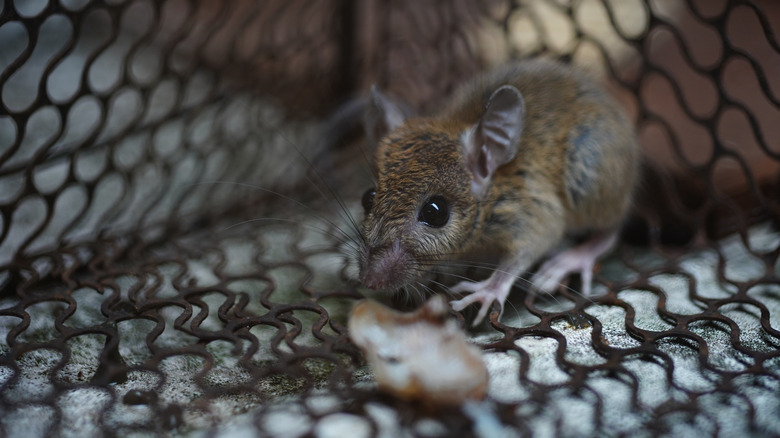
Whether you have work commitments or a period of particularly nasty weather blowing through, you may not yet be able to get outside and remedy those holes and cracks that are letting mice inside. If this is the case, then as a temporary measure, you could lay humane traps in likely areas. Place them around known faults and rodent entry points, and bait them with something to encourage the mice inside.
As for how to bait them, there are a few things you could try. Mice are attracted to far more than just cheese, and will be just as tempted by some peanut butter, chocolate, or even a piece of bacon. You could also add materials to attract nesting mice, like dental floss, cotton balls, and string. Whichever bait you use, if you manage to catch any, make sure to use gloves when handling the trap, and wash your hands thoroughly afterwards. Use catch-and-release traps for the most humane control, and be sure to check them regularly to ensure mice aren't trapped for long periods without food and water.
Use scent-based deterrents while you fix access points to stop mice from entering

Did you know that you can use WD-40 to deter mice and other pests from your yard? In fact, it's one of several scent-based deterrents commonly recommended for those who need to repel rodents. Now, while these certainly have their place in your battle to protect your house against mice, it's important that you rely on them temporarily.
These kinds of deterrents are thought to work by overwhelming rodents' strong sense of smell. Things like essential oils — often heavenly to humans — are thought to be absolutely repugnant to rodents. However, they shouldn't be used as a permanent deterrent, and your priority should be to seal off access points as soon as possible. Of course, you may have to wait for a few days to do this, perhaps due to work or while you wait for materials to arrive. Alternatively, you may be waiting on a visit from your local pest control service. Either way, apply some WD-40 or an essential oil, like lavender, to areas you suspect are prone to mice sneaking through, and be sure to refresh them after rainfall. The stronger the smell you can maintain around those holes and cracks, the greater the chance this method has of succeeding.
Install an ultrasonic device near access points until you've fixed them
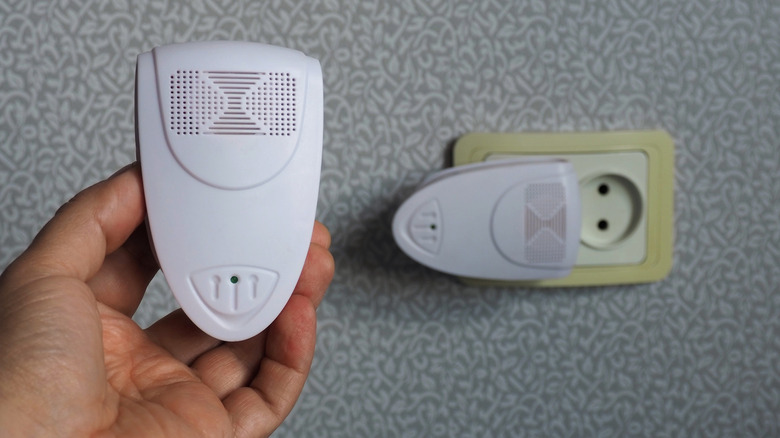
Similar to essential oils and other scent-based rodent repellents, ultrasonic devices can be used as a means of temporary deterrence. These devices are commonly used to keep neighboring cats away from gardens, emitting a high-frequency sound that's supposed to irritate their acute hearing. They're thought to work the same way for rodents, irritating them enough to keep them away. However, while they may be effective in the short term, there are a few reasons why you may want to reconsider using ultrasonic pest repellents around your home for long-term control.
Mice have been shown to display a mild dislike to the sound of such devices, which means that, in the short term at least, it may be enough to keep them away from your house. Unfortunately, mice will quickly get used to the sound, and in the longer term, they'll happily put up with it if it means gaining access to food and shelter. So, like essential oils and WD-40, they are best used as a temporary measure, and only for as long as it takes to seal their entry points.
Remove vines and trellises from the outside of your house

Having plants climb the facade of your house can add serious curb appeal, putting a smile on your face every time you pull up to the drive. Unfortunately, they can also serve as natural climbing frames for rodents, offering an easy means of access to the upper levels of your house, including the eaves of your roof. And if you thought searching your home's foundation for possible access points was tricky, just imagine how much harder it would be to do around your roofline.
Instead, if you believe that mice are finding their way in — and you've struggled to find any potential access points around the base of your house — then you may be better off pulling those plants away from your home. Similarly, if you have any trellises affixed to your walls, these should be moved away, too. It may seem like a drastic measure, but if you've sealed your home elsewhere, you have climbing plants on your house, and you've seen or heard the telltale signs of mice inside your home, then it may be the only way to stop them from getting inside.
Prune away branches from trees near your house

Similar to climbing plants and trellises, branches growing close to your home represent an easy win for rodents in search of a way inside. In fact, even a single branch growing too close to your property could lead to all kinds of rodent trouble. What's more, branches needn't be directly touching the walls of your house. Mice are surprisingly acrobatic and can jump up to 12 inches high if leaping onto a flat spot. This, translated, means that your window ledges are a prime target. So, too, is your roofline (and therefore your loft), depending on the height of your trees.
So, sharpen your favorite shears, grab your ladder, and get pruning. Trim back any branches growing close to your home, and look for any flat surfaces above the branches that mice may be able to leap onto. You should still check your home's foundation for holes and cracks to eliminate them as a means of access. By ensuring your climbing plants are pulled away, your foundation is fixed, and your trees are duly pruned, you'll make life infinitely harder for any mice that happen to be eyeing your property.
Leave a gap between your building and your flower beds

If you have flower beds around your house, ensure there is sufficient clearance between the soil and your home's foundation. Depending on what's planted in your beds, they could be providing helpful cover for mice as they search for faults in your foundation. If afforded such protection, mice will happily work their way along your walls, pressing themselves against them as they feel for a way inside. And once they find it, it doesn't take long for them to make themselves at home and start breeding.
To avoid this common mistake, try to maintain a no-grow zone of at least 2 or 3 feet between your flower beds and your walls. This will make mice feel too exposed to attempt to look for a way inside. It'll also make it easier for you to inspect, identify, and fix any holes and cracks in your walls, rather than trying to check behind shrubs and dig away your mulch.