

12 Ways To Fix A Stuck Wooden Drawer
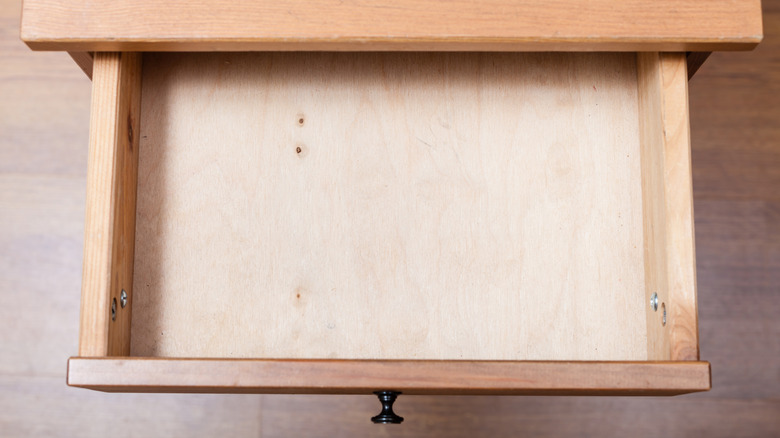
You're in a rush for work and reach for your favorite trousers you meticulously folded on laundry day, only to find the drawer isn't cooperating with you. Normal pressure isn't enough to make it budge, and you may find yourself tugging and pulling in hopes of accessing your clothes, just to find that, once you do get your drawer open, closing it is the same hassle. Stuck drawers can happen for a variety of reasons. Fortunately, just as there are many reasons your drawer may become stuck, there are an equal number of fixes.
A drawer can become stuck when any of its components fail. This could be something as simple as dirty tracks that don't allow for smooth gliding or recurrent problems like humidity-swollen wood. In many cases, the fix for your stuck drawer will depend on what the exact cause is. Vacuuming debris from the tracks or adjusting the hardware may not be enough to fix a misaligned drawer. Instead, you'll likely need a targeted solution, one that tackles the failed component directly.
To steer you in the right direction, we've curated a list of 12 different ways to fix your stuck wooden drawer with common household staples or beginner-friendly tools and supplies. However, in some cases, you may find that the damage is beyond a simple repair, and you may wish to enlist the help of a professional to save your set of drawers for a future of folded clothes.
Clean the drawer tracks
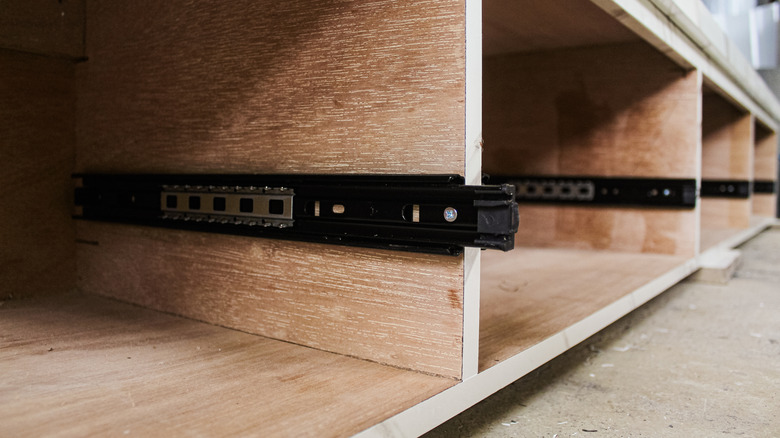
Have you ever found a corner of your house that you forgot to dust? If so, you may be familiar with just how fast dust and debris can collect on surfaces. When it comes to your drawer's tracks, built-up dirt isn't just an aesthetic problem; it can also be a functional problem that prevents the drawer from gliding smoothly. On the bright side, the solution is often simple, requiring just a quick wipe down with a dusting rag or vacuum to remove the accumulated dirt and dust.
Apply petroleum jelly
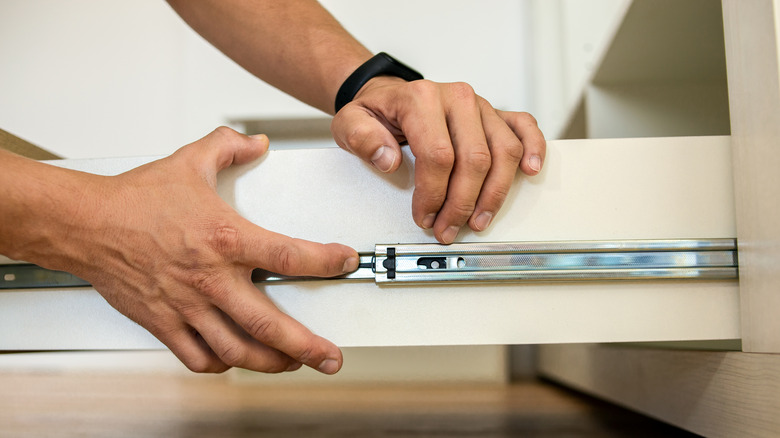
Sometimes, debris may not be the problem, but the issue still lies within your drawer's tracks. Specifically, you may be dealing with too much friction, which causes pulling out your drawers to be difficult or sticky. One way you can tackle this problem is through the use of petroleum jelly. This process is easy, as you can use a brush, cotton swab, or even an old rag to apply the jelly and keep your hands clean. Just make sure to test your drawer in between each application to ensure you use the right amount.
Use a bar of soap
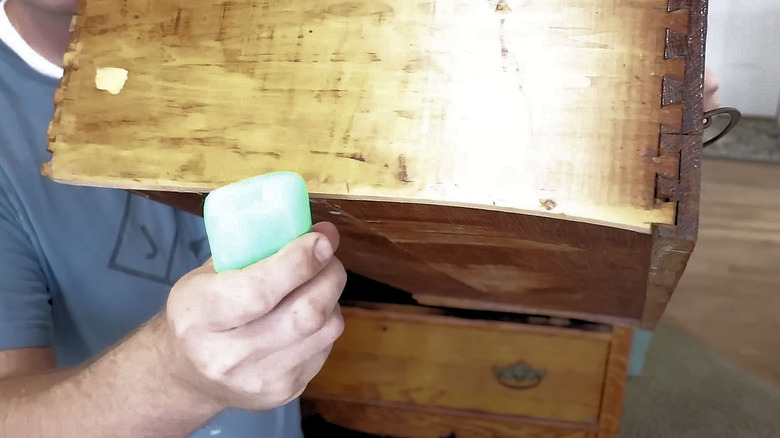
If you don't have petroleum jelly on hand, don't worry. Instead, one alternative is to use a bar of soap for your stuck drawers. Just like petroleum jelly, soap provides lubrication for the tracks and edges of your drawer, reducing the friction that causes it to catch when you're trying to access the inside of your drawer. As a bonus, keeping a bar of soap in the drawer can also help deodorize the furniture. As with petroleum jelly, make sure to test occasionally while applying the bar of soap.
Tighten drawer tracks
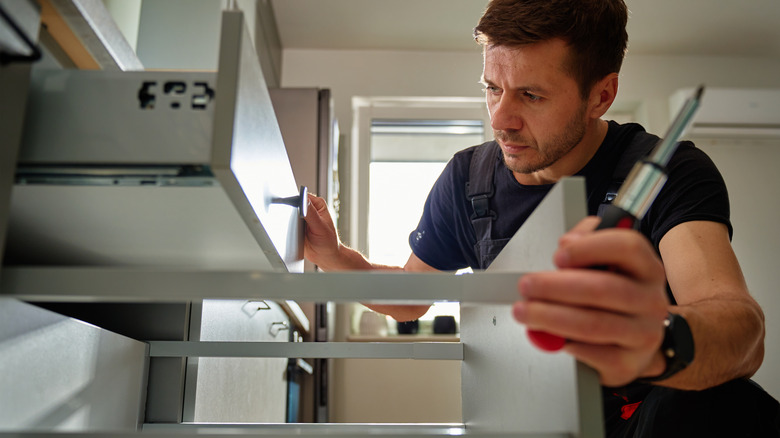
Sometimes, you may find that no amount of cleaning or lubricating is enough to fix your stuck wooden drawer, despite having identified that the track is the problem. As a result, before you try out the other lubricant options to reduce friction for your drawer, you may want to see if the screws along the drawer track need to be tightened. This simple task can be done with a screwdriver and helps ensure all necessary hardware is securely in place with no loose pieces.
Coat the hardware with candle wax
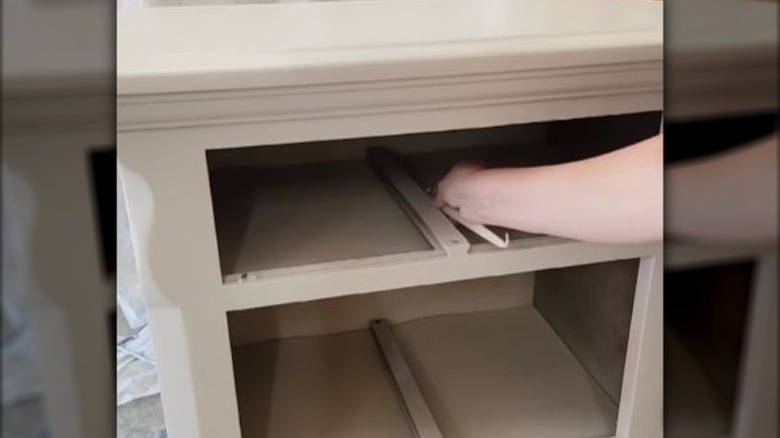
Many candles are made of either paraffin wax or beeswax, both of which can be useful for handling that frustrating stuck drawer. There's no need to break out your matches for this hack, however. Instead, you'll want to rub the unlit candle into the tracks and along the edges of your drawer to smooth out any rough areas leading to friction or catching. For the best results, you may need to remove your drawer from the dresser to reach all the necessary areas. You can also use old wax melts for stuck drawers.
Adjust sagging drawer bottoms
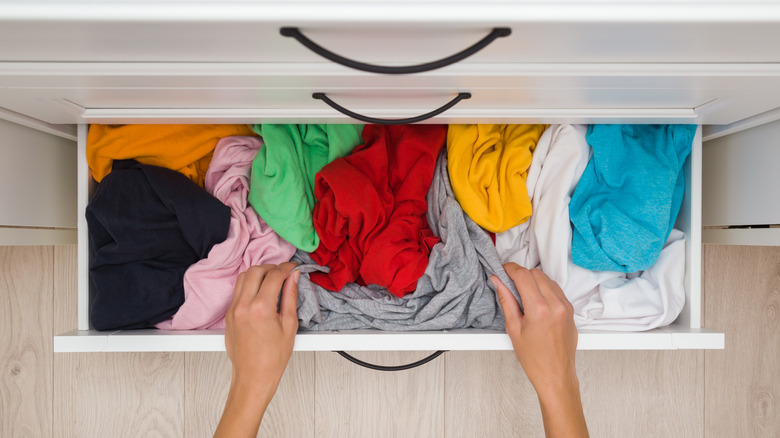
While inspecting your drawers to identify the problem, you may find that your tracks are in perfect shape. If that's the case, the issue may be the drawer itself. Over time, the bottoms of your drawers can become warped. This may come as a result of humidity, but it can also happen after prolonged storage of heavier, bulkier items. When you try to use your drawer, the sagging bottom can catch, resulting in a stuck wooden drawer. Small adjustments, such as adding wood glue and securing the bottom back into place, can often help.
Create a smoother surface with sand paper
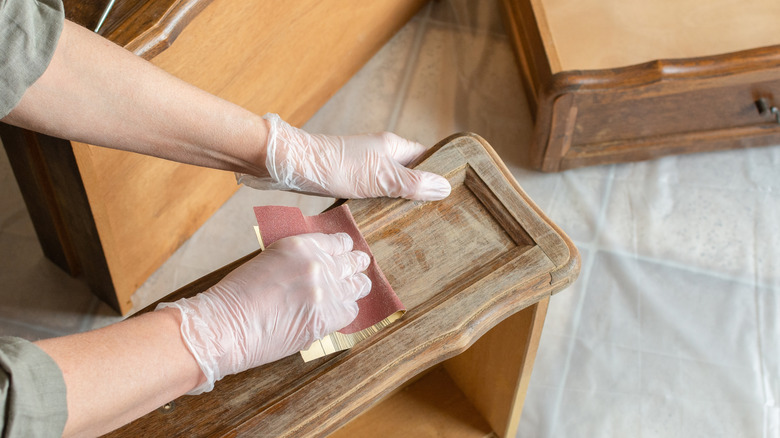
Remember how friction can be a common cause behind a stuck drawer? It's not always because of the friction itself. While any rubbing or grinding parts can make it difficult to open or close your drawer, it can also lead to changes in the shape of your drawers, turning into rough spots that prevent your drawer from moving smoothly. To fix this, you may need to break out some sandpaper and sand away any rough spots until you're left with a smoother surface.
Apply a store-bought lubricant
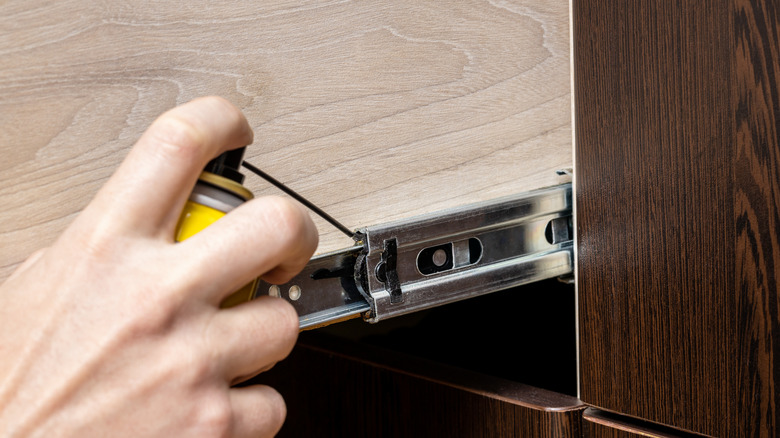
Depending on the severity of your stuck drawer, DIY solutions alone may not be enough. Instead, you may need to choose the right drawer lubricant from the store that's designed specifically with this purpose in mind, helping tackle especially dry and friction-prone tracks for an easy-to-use drawer. When applying these, it's important to follow the manufacturer's instructions for the best results, as application may vary based on the product you purchase for your stuck wooden drawer.
Replace any broken hardware
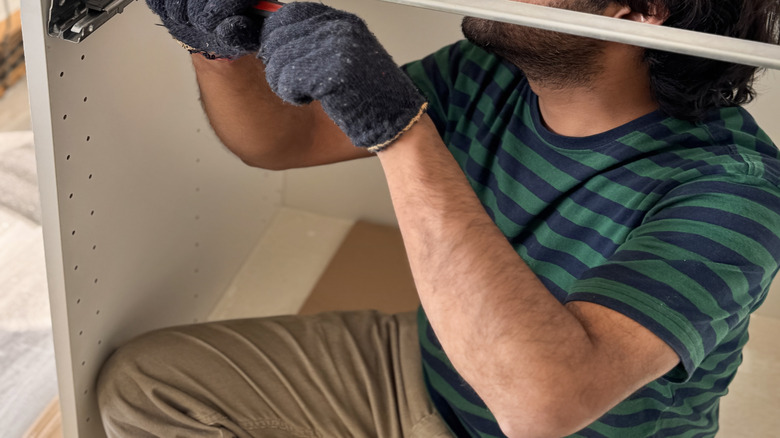
Just as a sagging drawer bottom can cause sticking, broken hardware can prevent smooth movement as well. If the screws holding your tracks in place, or even the tracks themselves, have suffered any sort of damage, it can keep you from having a drawer that glides open effortlessly. This can happen naturally over time, especially if the initial construction wasn't up to par. Regardless of the cause, if this is the culprit behind your stuck wooden drawer, you may need to look into repairing or replacing the broken hardware to restore proper function.
Use nylon drawer slide tape
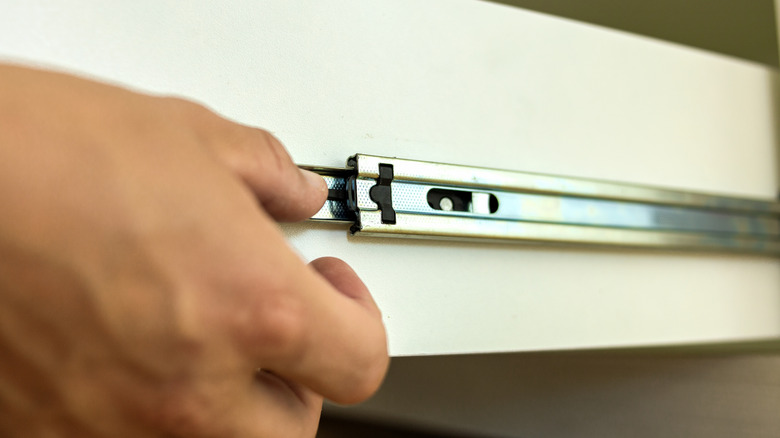
Adding lubricant can be a short-term solution for a stuck or even squeaky drawer, but you may find that it doesn't last enough for your needs. Fortunately, there is a simple solution that can provide lasting results, although the effects still aren't permanent. Nylon tape is a low-friction tape that creates a smooth surface for your drawer to slide on. Unlike lubricants that eventually dry out and leave you in the same position as before, nylon tape can last until it begins to degrade. Even then, replacement is simple.
Reduce humidity and reseal
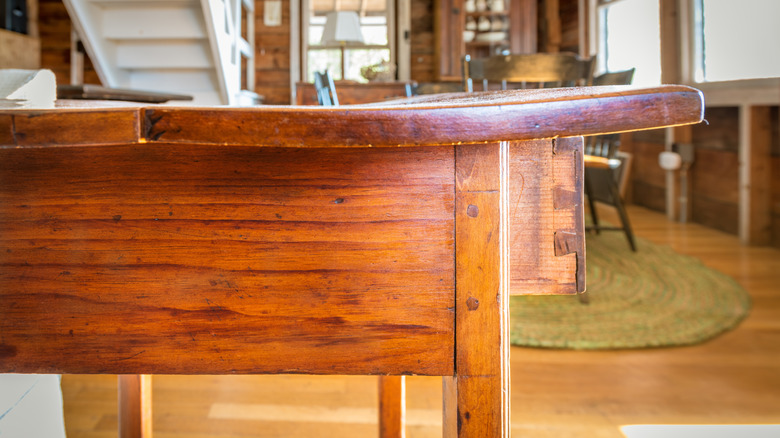
In some cases, sanding, adjusting, or lubricating only addresses the symptoms rather than the root cause. When exposed to prolonged levels of high humidity, real wood can suck in that moisture. This can lead to swelling or warping, among other problems. For minor cases, sanding away or adjusting warped pieces may help your drawer open or close, but the problem will often persist. As a result, you'll want to find ways to reduce humidity if applicable, as well as seal the wood for added protection.
Check for obstructions
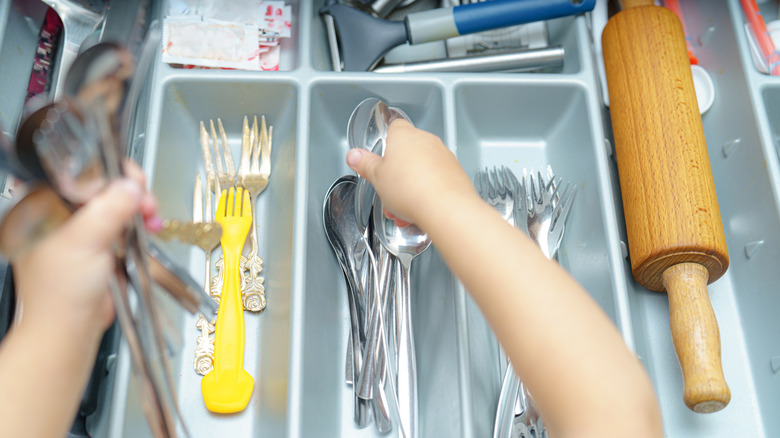
One of the last things to keep an eye out for when trying to diagnose a stuck wooden drawer is any obstructions. Sometimes, you may close your drawer with no problems, just to find it won't open again. This can happen when an item inside snags or shifts out of place, preventing the drawer from moving along its track, an occurrence that's especially common in cluttered kitchen drawers. In this situation, you may need to get creative to remove the obstructing item, depending on how your drawers are structured, like accessing the contents from the bottom.