

The Ultra-Rare Philodendron Variety That Every Plant Lover Wants To Get Their Hands On
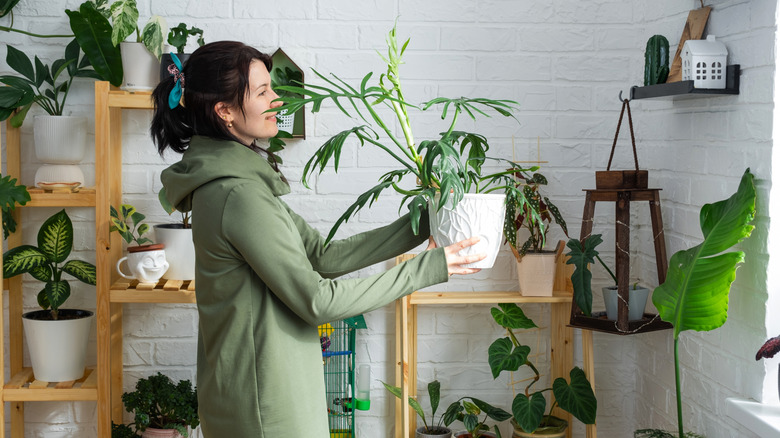
From the Dutch Tulip Mania in the 1600s to today's rare tropical houseplants, people in the plant world have always gotten caught up in seeking rare treasures. Ultra-rare houseplants recently became popular during the houseplant boom of the pandemic, with some of them fetching thousands of dollars each. Many plant collectors coveted these rarities, especially a cultivar known as Philodendron spiritus sancti, often considered the holy grail of houseplants.
Native to Brazil, Philodendron spiritus sancti is a threatened plant species in the wild. It's an aroid, which means that it's a member of the Araceae family, along with Anthurium and Monstera plant varieties. Philodendron spiritus sancti, known as PSS for short by plant collectors, can get quite large in its native habitat. This vining philodendron spends part of its lifecycle growing on other plants and can reach about 10 to 15 feet tall, with leaves that are 5 feet long. Although it's unlikely to reach that size in your home, these full-grown houseplants are quite a specimen.
However, Philodendron spiritus sancti did not retain its holy grail status forever. As the mention of the Tulip Mania foreshadowed, boom and bust cycles are common, and the scarcity that made this plant highly sought after by collectors during the peak of the houseplant boom has ended. Today, tissue-cultured starters of this variety are available online for around $20, plus shipping.
How science transformed Philodendron spiritus sancti
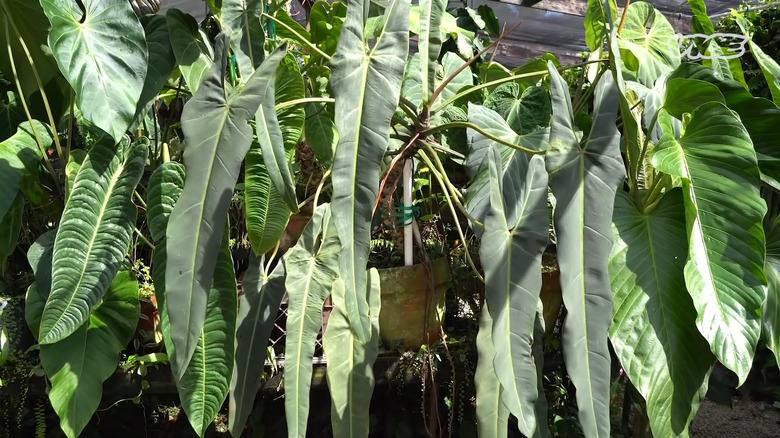
The scarcity of Philodendron spiritus sancti, along with its unusual, narrow leaves, made it popular during the peak of the houseplant boom. During that time, a rare houseplant could cost you more than a bathroom remodel, and PSS specimens fetched prices as high as $14,000. At the height of demand, a large cutting of PSS was stolen from the San Diego Botanic Garden, highlighting the risks of plant scarcity. This is a practice that feeds the houseplant black market but leaves plant caretakers distraught. Even worse, the shockingly high price tags and demand for certain types of plants can lead to unethical harvesting practices.
Black markets and unethical harvesting are just a couple of the results of sky-high plant prices. The good news is that, because of basic economic principles governed by the laws of supply and demand, the Philodendron spiritus sancti, like many other rare houseplants, is now available through mass production of tissue cultures, making it easier for the average homeowner to get their hands on one.
Even though Philodendron spiritus sancti are more readily available to homeowners everywhere these days, that doesn't mean that they aren't still worth good money. While they're unlikely to fetch the high prices that we saw a few years ago, a large 1-gallon potted PSS plant recently sold for about $500 on eBay.
Growing Philodendron spiritus sancti in your home
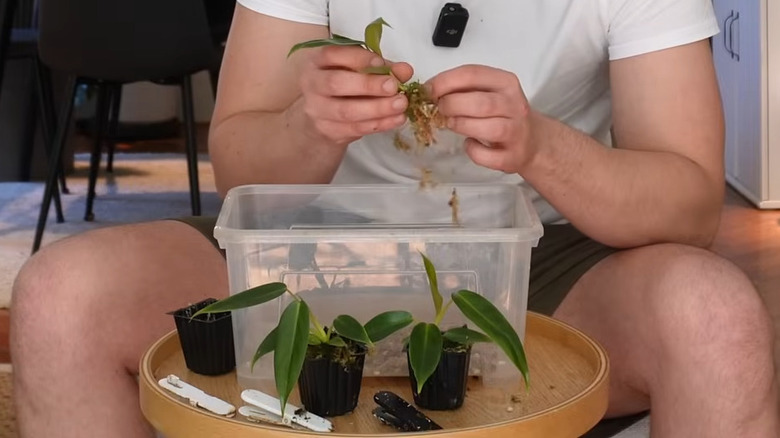
Selling rare philodendrons is not a get-rich-quick scheme, but for $20, it's worth it to try growing one of these beauties in your home. Because it has only recently become widely available, Philodendron spiritus sancti remains less familiar than other philodendron varieties. It's important to know that while it can be grown successfully with the right conditions, it is an incredibly slow-growing plant.
To care for Philodendron spiritus sancti, give it bright, indirect light. It needs moist soil, but overwatering is a common problem, especially during the times of the year when humidity in your home is naturally higher. Humidity should be around 60% to 80% with temperatures of 65 to 80 degrees Fahrenheit. Any good, well-draining potting soil will work.
This philodendron is also a hemiepiphytic vine. That's a big word, but to break it down, philodendrons can be either epiphytic or hemiepiphytic. In their native habitats, epiphytic philodendrons germinate in the canopy, while hemiepiphytic plants like PSS germinate on the ground and then grow up. In a home setting, this means the plant benefits from a moss pole for proper support. These come in various sizes and provide structure for aroid plants.