

The Bold Kitchen Wall Design Choice That May Be A Mistake
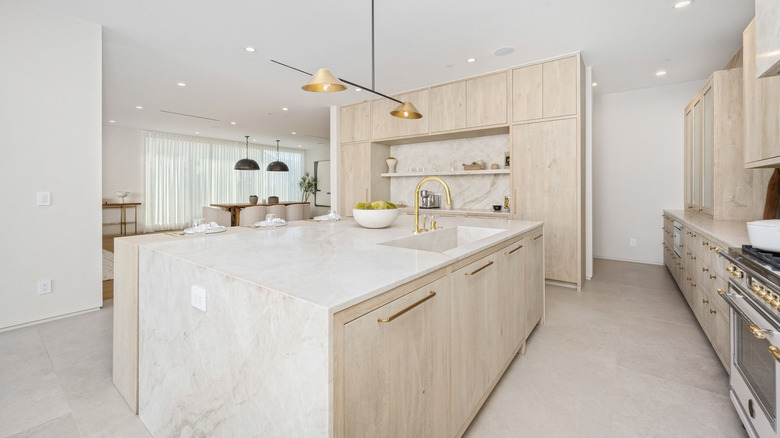
You might have heard designers say that texture can make or break the look of a space. With textured walls trending, some folks are cautioning against them, either entirely or in certain spaces like the kitchen. While textured surfaces add visual depth and intrigue to a room, they present unique challenges regarding cleaning and maintenance. And in a room as well-used and prone to messes as the kitchen, this could become a headache for some. Further, when it comes to aesthetics, some experts are tired of the textured wall trend, forecasting that even new looks may appear tacky in the years to come or add challenges to future remodels.
However, like any trend, textured walls are based on personal preference. Many designers adore them and are delighted in their return, as long as the textures feel fresh and inviting. Though opinions are divided, there is one universal issue many encounter, and it's not as easy to solve as a simple styling mistake you might make with a textured wall. The bigger issue with adding one to certain rooms, especially the kitchen, is that these surfaces are more difficult to keep clean. Folks have found textured backsplashes, in particular, can accumulate grease, cooking oil, and splatters that settle into the nooks and crannies of the wall. Depending on the texture, these surfaces could become stained, singed, dented, or moldy.
Drawbacks to consider before you add a textured kitchen wall
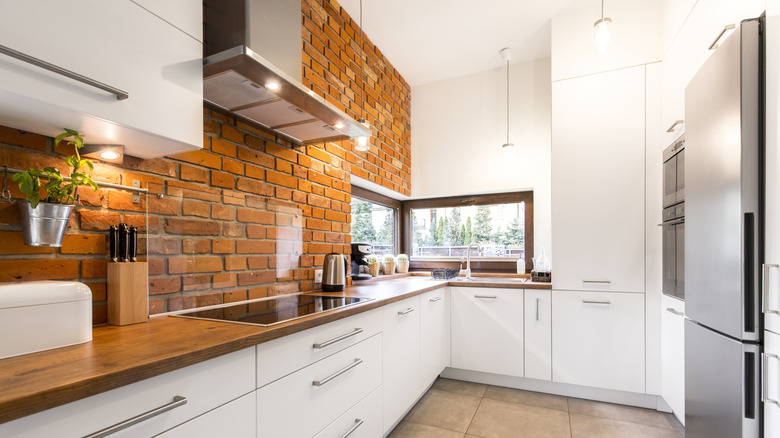
One hangup with textured walls is that certain textures will date the look of your home. For example, the orange peel wall texture looks like it stepped right out of the 1980s. Knockdown texture screams 1990s, and popcorn texture feels cheap and overdone. Today, alternative textures, like limewash, Venetian plaster, skip trowel, Roman clay, wood paneling, and fluted walls, have started to dominate the design scene. However, while these unique design trends for textured accent walls are beautiful, they aren't always ideal in the kitchen.
Dust, debris, and grime can accumulate in cracks and crevices of textured walls, and the method to remove these splatters often involves going beyond your typical cleaning materials to use brushes, scrapers, or other gadgets, making cleaning more time-intensive. Another drawback is that textured kitchen walls might require more upkeep and maintenance. For example, limewash is trendy, but its delicate nature makes it prone to scratches and scuffs. Or, if you opt for a wood backsplash, like paneling or beadboard, it may not be as long-lasting and can develop burns, stains, warping, or water damage, depending on placement. Should you ever intend to remove the textured walls in the future, you might end up spending a lot of time and money. While you could try to skip the scraping with a fail-proof trick to get rid of textured walls, the average cost of removal for one room can easily exceed $1,000, which you'll want to factor in before making the investment.