

The Flowering Mini Pomegranate Variety That You Can Grow In A Pot
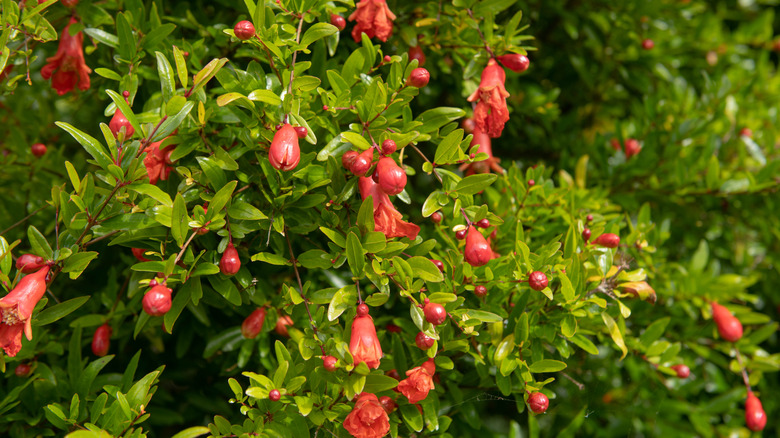
If you love the look of fruit trees but only have a patio, balcony, or small yard to work with, container-friendly options are just what you've been looking for. Choosing the right variety of fruit tree for your outdoor space is important, especially since some of them handle containers much better than others. The dwarf pomegranate (Punica granatum var. nana) works really well for container gardeners, offering easy care, manageable growth, cute mini pomegranates, and brightly colored, orange-red flowers. Even though the dwarf pom is best known as an ornamental plant, the fruit it produces is edible and has a sweet-tart taste that is very refreshing and not overly sweet. This easy-to-care-for little tree adapts well to being grown in containers, which could make it a great plant choice for beginner gardeners as well.
Hardy in zones 7 to 11, this dwarf variety is native to the Middle East and South Asia. Compared to regular pomegranate trees that can reach heights of 30 feet, the dwarf pom can reach about 6 feet tall if you don't keep it trimmed. This shorter height makes it much easier to manage than some other dwarf plants that are suited to small garden spaces. With proper pruning, you can easily keep your dwarf pomegranate tree in the 2 to 3 foot range for smaller spaces. Its foliage consists of small, bright green leaves that are shaped like spears. In the late spring and early summer, the dwarf pom produces vibrant, orange-red flowers that really stand out against the bright green of the leaves. The fruits of the dwarf pom are really slow to develop and can stay on the plant as long as six months. At maturity, these red fruits are about the size of a golf ball.
How to care for a dwarf pomegranate in a container
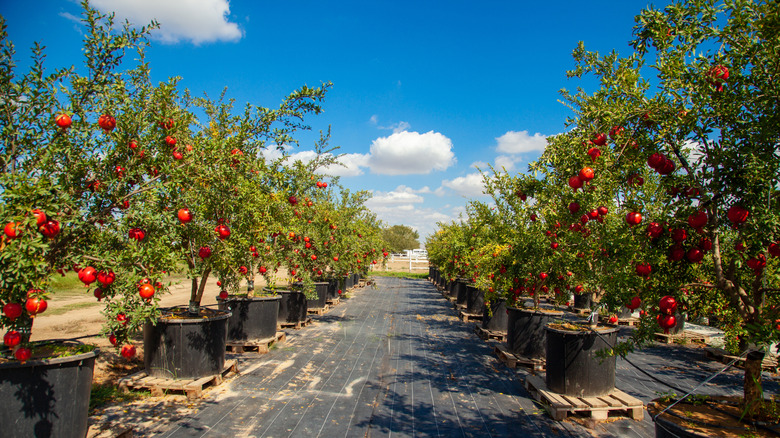
The container you choose plays a role in how well this tree handles living in a pot. A container with proper drainage prevents excess moisture from affecting the roots and causing problems. Cramped roots can affect health and limit the tree's growth. To avoid this, start with a pot that's 10 to 15 gallons in size, giving the tree room to grow. You can repot it as it gets bigger to a pot that's 20 to 25 gallons. The soil you use also makes a difference in how well your tree grows. Use a loose, well-draining potting mix that isn't heavy or compacted. Overwatering is one of the most common issues with container-grown trees, so make sure the soil isn't constantly wet. Allowing the soil to dry slightly between waterings helps prevent moisture-related issues like root rot. Sunlight also plays a key role in keeping your tree growing well and producing flowers and fruit. Make sure your dwarf pom gets at least 6 to 8 hours of full sunlight daily.
Most of the day-to-day care for your dwarf tree is simple once you understand its growth cycle. Pruning is usually done in the late winter or early spring and is mostly just light pruning to maintain the tree's shape. Remember the Three D rule for proper pruning, and always remove any dead, diseased, or damaged branches that are on the tree. Take off any branches that are crowding others so plenty of air and sunlight can get to all parts of the tree. During the winter, it's normal for the tree's growth to slow down or for it to lose leaves as part of its natural dormant period. This seasonal slowdown is normal and doesn't indicate any problems.