

The Simple Soil Addition That Could Help Your Lavender Plants Flourish
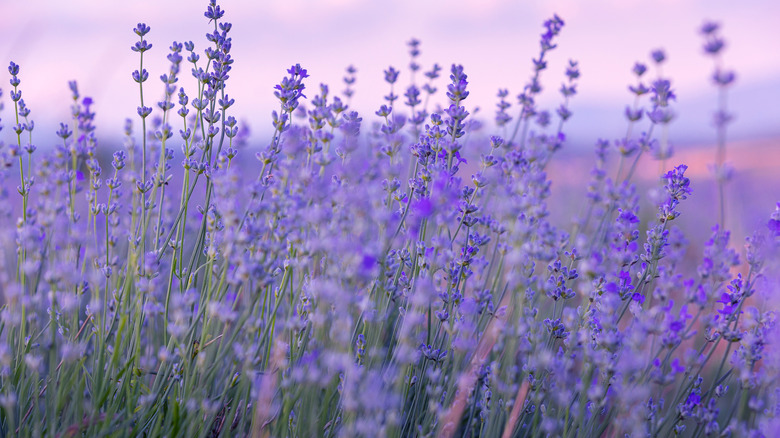
Lavender (Lavandula angustifolia) is relatively easy to grow, and who doesn't want to grow it? It's hard to beat those vibrant purple flowers on slender stalks with their heavenly aroma and variety of uses. The herb's long blooming season means a sustained stay for its fragrance and beauty. Lavender has a few special needs, such as requiring excellent drainage, but not so many quirks that make this herb prohibitive to grow at home. Lavender has a preference for slightly alkaline soil, though it's not a dealbreaker — the plant is capable of growing in soils with a pH between 5.5 and 8.5, but the sweet spot pH level is between 6.5 and 7.5.
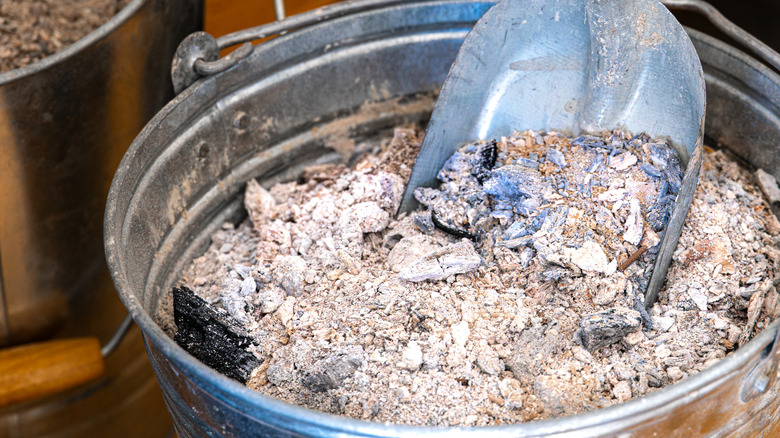
An easy and inexpensive (or even free) way to increase alkalinity in soil is with wood ash from your fireplace or wood stove, or bought commercially. Carbonates produced when wood burns interact with acidic components in the soil, neutralizing them and raising the soil's pH. Lavender is just one of several plants that love wood ash. Let's look at how to use this amendment on your lavender plants for optimum benefit.
Give alkaline-loving lavender a wood ash amendment
Before you amend the soil where you're growing or plan to grow lavender, ask yourself: Have you had your soil tested recently? If not, consider a full laboratory soil test or at least a way to measure the pH of your soil, such as with a pH testing kit from a garden center. You can also DIY a pH test with vinegar and distilled water. You won't need to add wood ash if test results show that your soil is already on the alkaline side.
Once you determine your soil's needs, take safety precautions before applying wood ash. Soil scientist Dr. Dan Sullivan at Oregon State University compares it to another highly-alkaline substance, bleach, and suggests gloves, eye, protection, and a dust mask when working with ash. Ensure that ashes are completely cooled and remove chunks of charred wood before using in the garden.
In early spring, apply the wood ash by sprinkling a thin layer. Add sparingly since wood ash contains nutrients like potassium, phosphorous, and calcium, but lavender prefers more nutrient-poor soil. Limit annual application to 10 pounds of ash per 100 square feet of soil, which works out to 1 pound per 10 feet in smaller gardens. Unless you have a large crop of lavender, your yearly wood ash use on lavender likely won't even empty a 5-gallon bucket. The slightest bit of movement can send ash particles into the air, so capture more of those particles by moistening the soil before applying the wood ash. If you're new to growing this delightful purple herb, be sure you're up to speed on how to easily grow lavender for an endless supply of dazzling purple flowers.