

Is This Low-Maintenance Home Heating Solution Worth Your Investment?
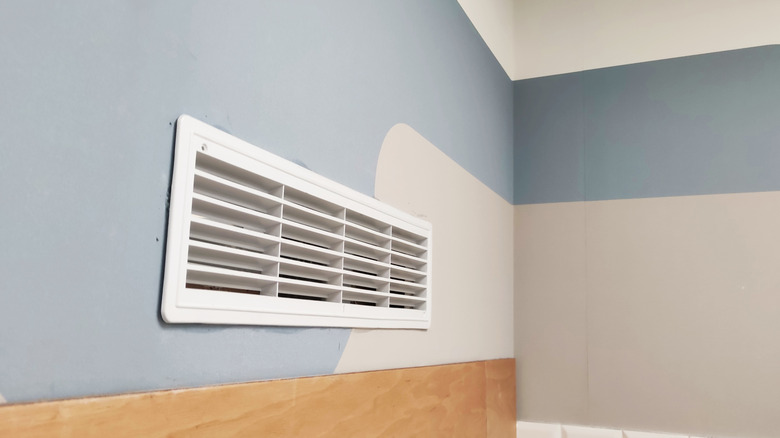
Staying safe and warm has always been a priority during colder fall and winter months, but this is especially true in the face of natural disasters like winter storms — which are becoming more common and more disastrous due to the effects of global climate change. There are a number of different heating devices you can install as part of your home's HVAC system. However, more complicated machines are more likely to fail for reasons you can't fix with just a set of DIY tools that every household should have, which may just leave you stranded in the cold waiting for maintenance crews. If you're looking for a low-maintenance option to heat your home, it might be worth looking back to classic options like a gravity furnace.
Gravity furnaces are a very old innovation, having been popular heating options in the 19th and 20th centuries before gas furnaces became the standard. They work utilizing a basic element of physics: Heat rises, or rather, hot air will travel upward when primarily affected by gravity thanks to the effects of heat transfer through conduction and convection. Traditional gravity furnaces would be housed in a lower area of the house, where they heated a combustion chamber using coal and let that hot air rise through ducts into the rest of the home. Modern fuel options like propane and natural gas are available if you wanted to install a gravity furnace today, but the ease of using such a device is countered by its inefficiency, increased costs, and other potential detriments to your health.
The benefits of installing a low-maintenance gravity furnace in your home
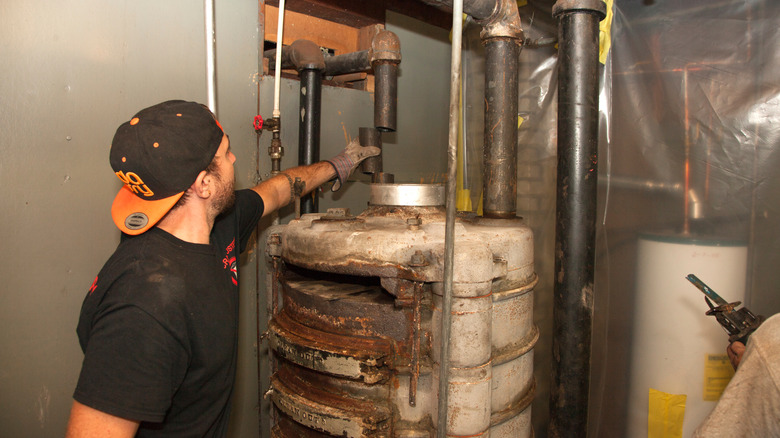
The first and most obvious benefit to installing a gravity furnace is that there are less moving parts to worry about, hence its status as a low-maintenance home heating solution. Not only does this mean a gravity furnace lasts longer (though it's recommended you replace a furnace after 15 years or so), the lack of pieces like air blowers will also result in a quieter heater that kicks up less dust. Your furnace's placement can affect the lifespan of the appliance given environmental factors like temperature, so the fact that gravity furnaces need to be isolated in lower basement areas will be a boon.
Relying on natural forces like convection means you can heat your home consistently, despite lacking any modern bells and whistles. Gravity furnaces are great at uniformly heating a home because they form a loop of heat rising and cool air falling down toward the level of each vent. Functional gravity furnaces likely won't need to be replaced anytime soon, but even when they do, it won't cost an arm and a leg. A natural gas furnace might cost as much as $26,000, as compared to a gravity furnace lingering around $8,000 minimum — closer to the $7,000 price tag of options like a new heat pump.
Using a modern gravity furnace still has plenty of downsides
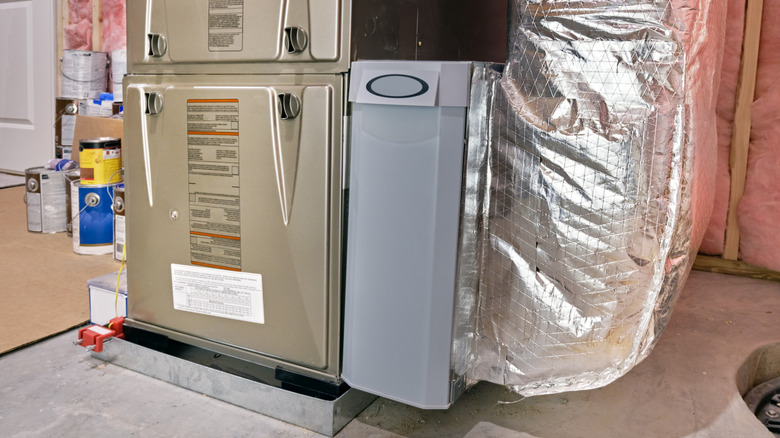
For all the benefits of looking back to older technology, a low-maintenance heating solution like gravity furnaces will have antiquated elements, too. Most notably, even if this system is good at uniformly heating a home, it will likely take a long time to get there. The fact that a gravity furnace needs to run longer also means it will be less energy efficient than options like electric space heaters, and by extension also contribute more greenhouse gas emissions to the atmosphere. It will reach a similar level of heat exchange compared to forced-air systems, but requires more space for the bulky furnace and ducts — which also means a gravity furnace may not be compatible with AC. If you happen to be using an original gravity furnace rather than one with modern energy sources, you should also be aware that there isn't going to be air filtration in place, which can be especially problematic if the gravity furnace used asbestos for heat insulation.
It's also worth noting that even though gravity furnaces are broadly low-maintenance options to heat your home, the fact that they aren't as common anymore means it could be hard to find fixes when they're needed. Compared to options like forced air heating systems through central ducts, radiant heating systems through the floor, traditional radiators, or even installing a heat pump alongside your air conditioning, you're going to find less experts in repairing gravity furnaces. With all of these concerns in mind, it's hard to recommend a gravity furnace in 2025, even if you like the idea of making less maintenance calls for your HVAC systems.