

The Easy Trick That Makes Rock Salt Work Faster On Your Icy Driveway
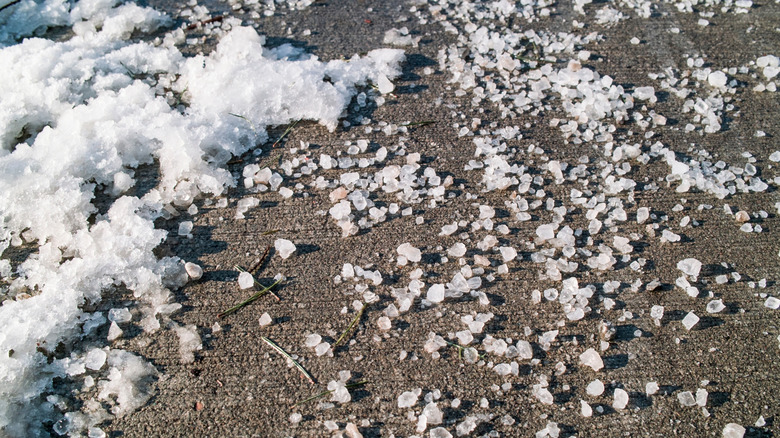
Cold winter mornings are beautiful, but they often bring the unwelcome surprise of a driveway coated in a glass-like sheet of ice. While most homeowners instinctively reach for a bag of sand or rock salt, those options do not always deliver immediate results. The latter, scientifically known as sodium chloride, can often disappoint when the salt granules just sit there without making a dent in the frozen layer. So how can you get the rock salt to do its thing and get your driveway clear? Help it by spraying some warm water on it.
Rock salt works by lowering the freezing point of water, creating a saltwater brine that seeps into cracks in the ice and breaks it apart. But on extra frigid days, there simply isn't enough ambient warmth to start this chemical reaction. As a result, the ice on your driveway can remain slick and completely unmelted.
Adding some warm water to the salt acts like a jumpstart for your de-icing efforts. By introducing a little thermal energy and instant moisture, you force the salt to get to work and transition into a liquid brine. This warm, concentrated solution can now bore through the ice much faster than dry crystals ever could. A quick safety note: this warm water method is intended only for standard rock salt. You should never use it on either calcium chloride or magnesium chloride ice remover pellets, as these materials react exothermically with warm water and will create super high heat reactions when combined with it. If you don't have standard rock salt, you'll need to start with cool water first.
The warm water trick that helps clears your driveway
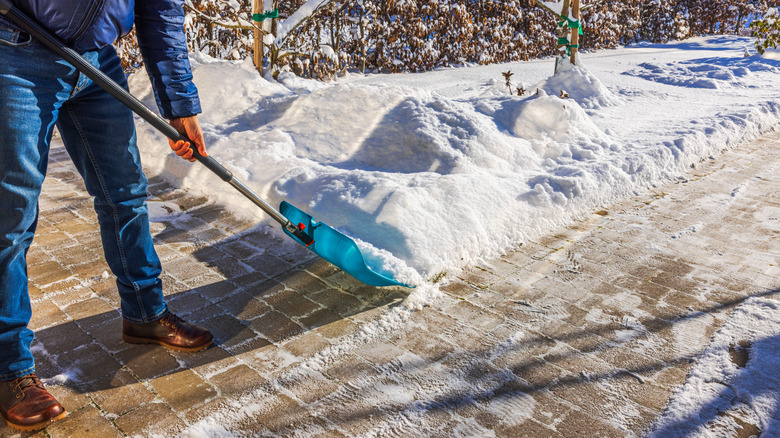
The process begins with making sure there's an even application of rock salt on your driveway. Avoid the temptation to throw it around in clumps; instead, aim for a consistent coating across the entire icy surface to ensure there isn't any buildup stuck to the pavement afterward. Once you have chosen the right type of winter salt to use, spread it evenly and use a watering can, spray bottle, or hose hooked up to your kitchen sink to lightly spray the water over the area. You aren't looking to wash the salt away, but to dampen it, activating the granules. This helps to break down the ice structure from the inside out, significantly softening the bond between the frozen layer and your driveway.
Give the mixture about fifteen to thirty minutes to work its magic (just enough time for you to go back inside and warm up a bit). By then, you should see the ice turning into a slushy consistency, which is your cue to grab the snow shovel. Because the warm brine has now detached the ice from the concrete or asphalt, you can easily scrape the driveway clear down to the surface, preventing a dangerous refreeze later in the evening. This targeted use of warm water reduces the need for any snow shoveling tricks and helps keep driveways and walkways clear. It turns a grueling winter chore into a quick, manageable task that'll keep your home safe and clear all season long.