

Extend The Life Of Your Peeling Laminate Countertop Corners With This Easy DIY
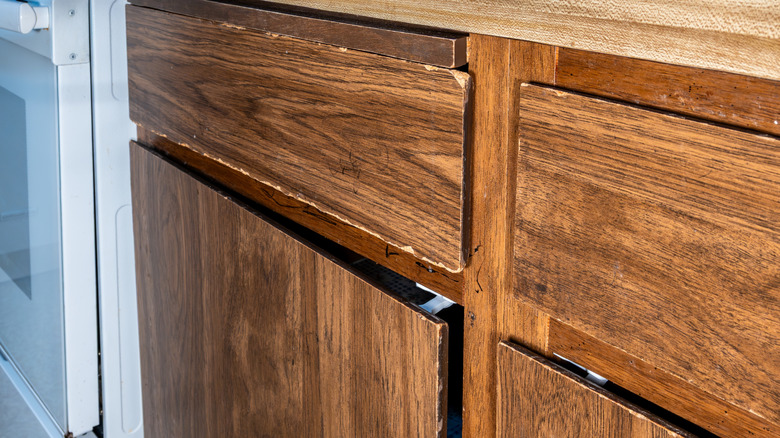
If you've lived in a home with laminate countertops long enough, chances are you've noticed the corners or edges starting to peel. It often begins subtly: A tiny lift near the sink or maybe a corner that catches on a sponge. Over time, moisture sneaks in, the laminate curls more, and what once looked like a small issue becomes a bigger problem. Many homeowners assume this kind of damage automatically means replacement, which can be expensive and time-consuming.
The good news is that, in many cases, you can extend the life of your countertop with a simple DIY fix before calling in the professionals. In fact, there are many tips to extend the life of your laminate countertop. For example, you could try something called contact cement. All you need for this DIY is contact cement, plus medium-grit sandpaper, a small disposable brush, and something to keep the surfaces apart while the adhesive sets, such as a popsicle stick or pencil. You probably have most of these already in your home.
Compared to the cost of replacing a countertop or hiring a repair service, this is a cheap and easy first step that can buy you months or even years of extra use out of your counter. Contact cement adhesive typically costs under $16. Taking the time to repair peeling edges isn't just about looks; it also helps prevent further moisture damage and keeps the core material from breaking down faster. If you're new to laminate counters, there are 9 things to avoid at all costs if you have laminate countertops.
How to fix peeling laminate counters with contact cement adhesive
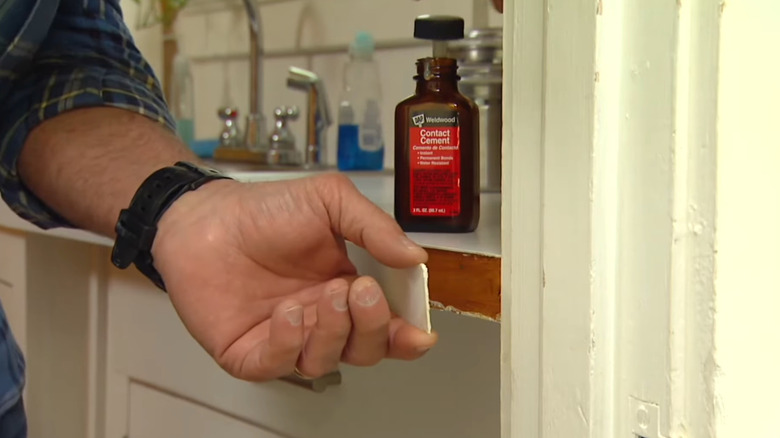
Once you have your contact cement ready, the process itself is straightforward. Start by gently lifting the peeling laminate and scraping off any dried bits of glue and sanding any rough parts. Then, you can apply a thin, even layer of contact cement to both surfaces with a disposable brush (the underside of the laminate and the exposed countertop base). This next step is crucial: The contact cement needs time to tack up. Use a pencil, popsicle stick, or a similar object to keep the two surfaces from touching. Let the adhesive sit for about 20 minutes, or until it looks glossy and slightly dry to the touch.
Once it reaches that stage, carefully remove the spacer and press the laminate firmly back into place. Apply steady pressure along the edge, paying special attention to the corners. You can even use painter's tape or a clamp to hold the area in place while it cures.
This method works because the contact cement forms a strong bond when two tacky surfaces meet. To one-up your DIY, you can even try to seal the edge once it's fully cured. If you don't have contact cement available, you can try ironing the peeling laminate back on by using a medium-hot iron. This step will help to reactivate the glue on the laminate. This DIY won't fix severe structural damage, but it's a smart, inexpensive way to problem-solve before committing to a major renovation. While you may be wary of your laminate countertops, there are actually a lot of pros of installing the outdated countertop material Gen Zers actually prefer.