

8 Leftover Scraps Your Lavender Plant Will Love
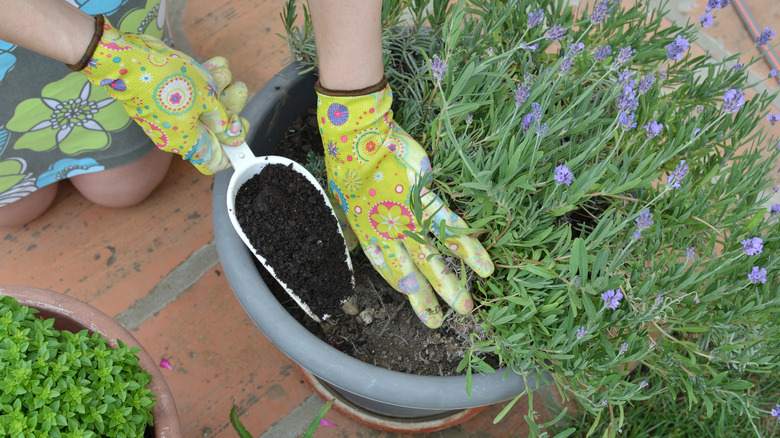
Lavender (Lavandula angustifolia) belongs just as much in the garden as it does in the kitchen. Its soft, scented leaves, rich purple blooms, and the gentle buzz of bees and butterflies it brings to a garden can lift your mood almost instantly. And, thankfully, lavender isn't too difficult to grow. Still, it needs the right environment to grow its best. That is where leftover scraps like eggshells, nut shells, potato peels, and rice water can help. However, you need to use these carefully.
Avoid using too much of any leftover scrap as it might create nutrient imbalances in the soil, and adding too many nutrients, especially nitrogen, is counterproductive in lavender. Do not fertilize with any additives unless you first test the soil. It is something you should always do before using any soil amendment. That is because sometimes it is not a lack of nutrients causing poor plant growth, but rather a soil chemistry imbalance making nutrient uptake difficult for the plants.
Crushed eggshells
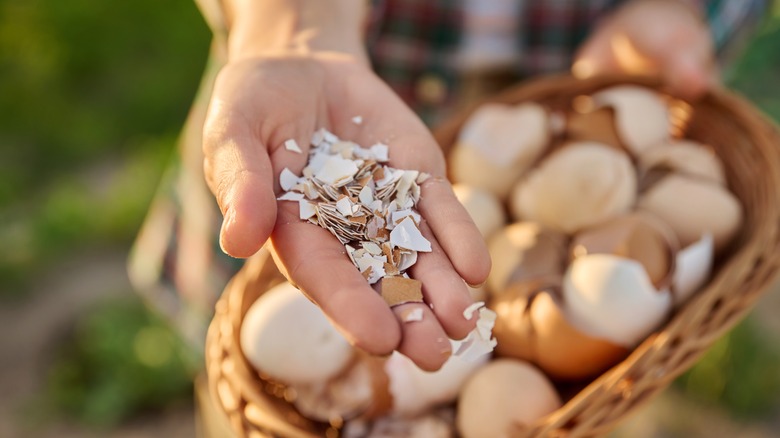
Lavender thrives in soil with a neutral to slightly alkaline pH, ideally between 6.5 and 7.5. To help, sprinkle crushed eggshells around your growing lavender plants. Eggshells are primarily composed of calcium carbonate. When you add them to the soil, they act as natural liming agents, slowly raising the soil pH. Also, adding eggshells to the soil makes calcium available to plants, which is essential for plant health. Just make sure to crush the eggshells into a fine powder before adding them to the soil. If you add whole eggshells, they will take forever to break down.
Wood ash
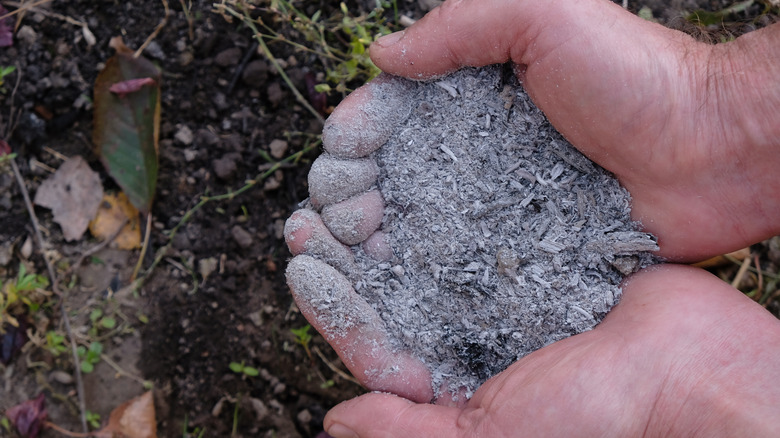
Wood ash is another good option for helping the lavender plants in your garden. Just like eggshells, it also raises the soil pH. However, compared to eggshells, wood ash is much more soluble and should only be used sparingly. Otherwise, it might increase the soil pH too quickly or too much. Nevertheless, wood ash also adds potassium to the soil, which makes lavender more hardy against stress factors, like winter. Just make sure the ash is sourced from clean, chemical-free wood material.
Nut shells
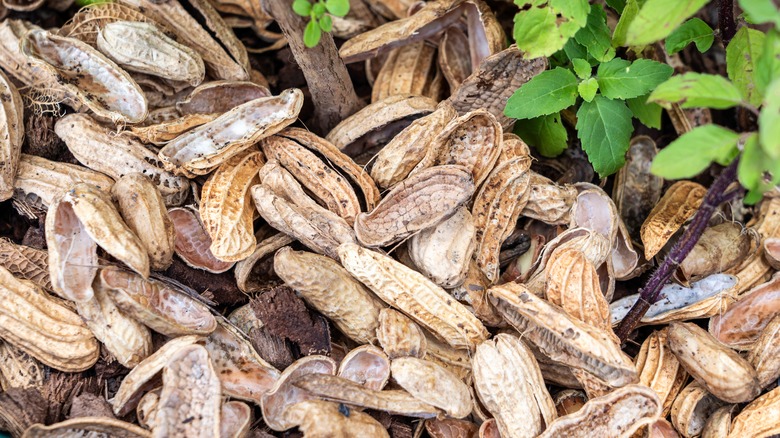
Lavender grows best in well-draining soil. In poorly drained soil, its growth slows and it becomes prone to problems like root rot, which can kill the plant. That is where using leftover nutshell scraps can help. When added to the ground, these shells create air pockets and improve soil porosity, which can help increase water filtration through the ground. Just make sure to wash the shells before use to remove any salt. Also, don't use black walnut shells, as they contain juglone, a natural herbicide.
Banana peels

Banana peels are a rich source of potassium. In fact, nearly 10% of a banana peel's dry weight is made up of potassium. You can use them to give your plants a boost of potassium, phosphorus, and other plant nutrients. Just make sure to compost them first or dry and grind them into a powder before use. If you add raw, unprocessed peels to your lavender plants, it can attract pests and mold, one of the major drawbacks of using banana peels as fertilizer.
Potato peels

Like banana peels, potato peels are another common kitchen scrap, and you should not throw them away if you are growing lavender. They are a rich source of potassium and magnesium, as well as many other nutrients. However, don't add raw peels to your soil, which can attract pests. Grind it into a powder or compost it first, which has the added benefit of increasing microbial activity that helps the compost break down faster and release nutrients more readily.
Orange peels
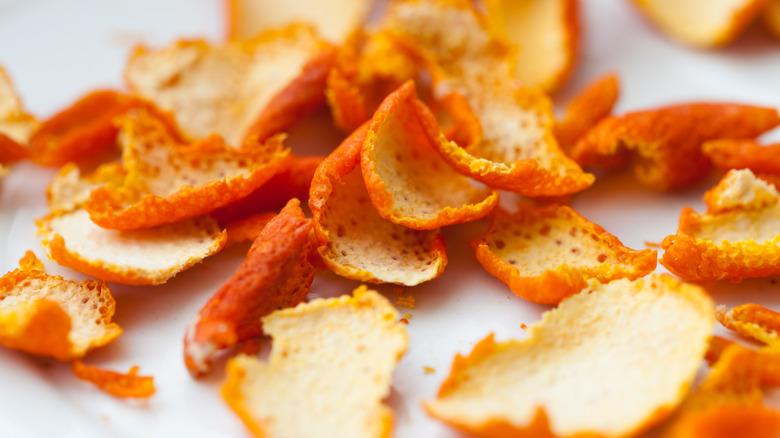
Orange peels are another common kitchen leftover scrap you can reuse in the garden as a natural fertilizer. And what is really great about using orange peels is that they break down slowly, releasing nutrients over a long period. Also, orange peels contain a compound called limonene, which can help keep insects at bay. However, just like other peels, dry and grind into a powder or compost orange peels before use to avoid attracting foraging animals. Also, since orange peels are acidic, don't use too many of them to fertilize lavender plants in your garden.
Rice Water
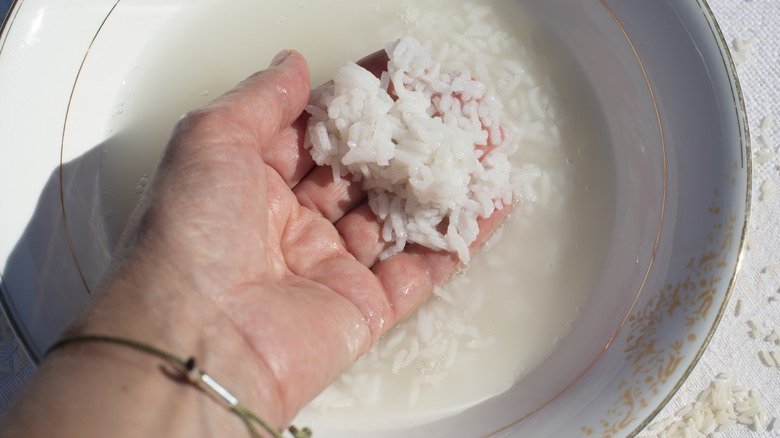
Water used to rinse or soak rice often contains trace minerals, nutrients, and micronutrients that could help fertilize lavender plants. In addition, using rice water can boost soil microbial activity, which helps your plants grow stronger. You can pour rice water on your lavender right away, but letting it ferment for a bit promotes beneficial bacterial growth. Just be sure not to use rice water that has added salt and use sparingly. Overwatering is one of the mistakes to avoid when growing lavender.
Oyster shells
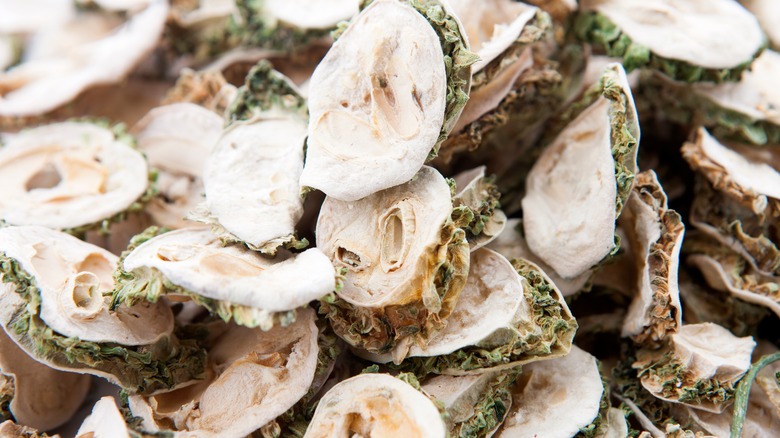
Oyster shells are another one of the food scraps that can be used to fertilize your garden plants. Oyster shells enrich the soil by increasing its organic matter. It also boosts microbial carbon and kickstarts soil enzymes. Another advantage of adding oyster shells to your lavender plants' soil is they contain chitin. Adding chitin-containing fertilizers to the soil increases beneficial soil microorganisms, which can help control root-knot nematodes. Make sure you boil the shells first to sterilize them and remove any salt.