

Why This Popular Household Remedy Won't Fix Your Window Condensation
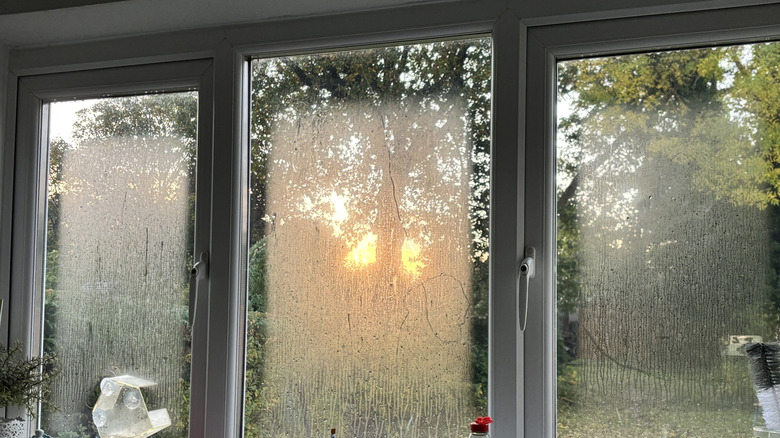
For many homeowners, winter is a time of idyllic indoor coziness. But for some, the warm and toasty winter scenes at home might get slightly spoiled by an unwelcome guest: window condensation. As the weather gets colder outside, it's not uncommon for condensation to appear in your home. After all, it's the result of warm, moist air coming into contact with the cold glass surface. The vast difference in indoor and outdoor temperatures during winter creates the perfect environment for condensation to form on your windows. Although it's a natural occurrence, it's understandable that you might want to put a stop to it. That's when you might turn to common tips and tricks to prevent window condensation, like cleaning your windows with vinegar. However, while vinegar can make your windows cleaner, it doesn't have the ability to permanently stop condensation.
Apart from cramping your view by causing your windows to fog up during the winter, the accumulated moisture from condensation can cause structural damage, discoloration, or rotting of your windows. Plus, the dampness can provoke mold growth, which can pose health risks like respiratory problems or infections. The reason why many believe vinegar is an efficient solution for fighting window condensation is because it's mildly acidic. This property supposedly helps it break down salts and minerals that aid the build-up of moisture, which is the real enemy here. However, it doesn't eliminate the root cause.
Vinegar doesn't fix the root cause of condensation
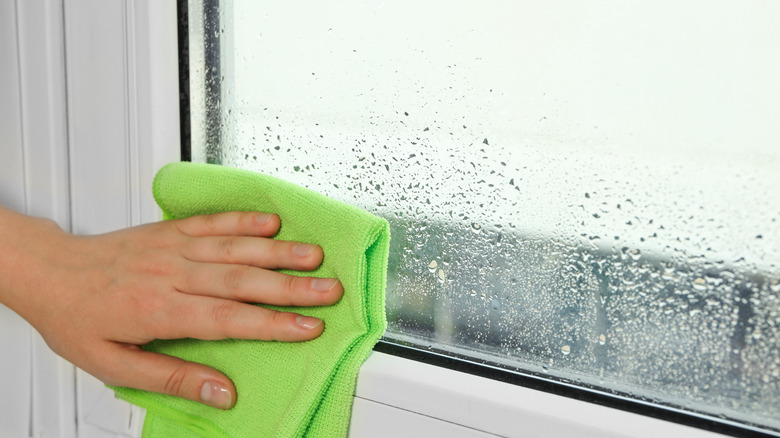
Vinegar is a powerful household cleaner, and as such, it can effectively remove grime from your windows and disinfect them. While you're cleaning your windows with vinegar, the built-up moisture on the surface is naturally removed as well. However, this doesn't permanently stop condensation from forming on your windows. That's because vinegar doesn't help remove the root cause of condensation, which is humidity in your home. It only temporarily reduces the physical effects of condensation on your windows, but it's not a viable long-term solution. To get anything out of this anti-condensation method, you'd need to frequently reapply vinegar to your windows as the humid air can't condense onto a damp surface.
To effectively stop window condensation, you'll need to reduce the amount of moisture in your home before it reaches the cold window glass. Improving your home's ventilation is one of the go-to ways to eliminate excess moisture, banishing window condensation and preventing mold growth in your home during winter. Make sure to frequently open your windows, use extractor vents, or turn on a dehumidifier to let fresh air circulate and bring down the moisture levels in your space. Good insulation is another important part of the equation. To ensure top-notch insulation in your home, consider upgrading your windows to double- or triple-glazed models for maximum protection against condensation.