

These Houseplants Are Magnets For Pesky Mealybugs
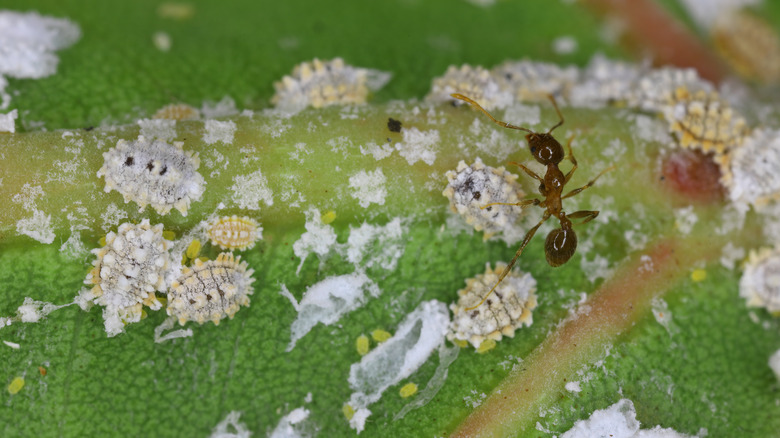
Mealybugs are tiny, wax-covered, sap-sucking insects that often attack plants. They usually sneak into houseplants when a plant is brought in from outdoors or when a new, already infested plant comes home from the nursery. If you don't take care of them in a timely manner, you'll soon be looking for a way to get rid of your dead plants. Now, there are a number of houseplants that mealybugs attack, but their favorites include jade, hoya, fern, cactus, and coleus. Besides these, they also attack poinsettias, ZZ plants, ponytail palms, dracaenas, and ficus.
All these plants either have soft, succulent tissues that are easy to pierce and from which mealybugs can suck out the plant juices, or they offer safe hiding spots for these pesky little bugs where they can feed and multiply without being disturbed. That is why plants with tender new growth and plants that form tight crowns, branch crotches, and deep axils are especially at risk.
It's not just the leaves and soft stems that mealybugs attack, though. In certain houseplants, like African violets, mealybugs can infest the root system, weakening and killing your potted houseplants, without you suspecting anything.
Signs of mealybug infestation in houseplants
The best way to identify a mealybug infestation in your houseplants is to examine them physically. Start by looking for white cotton-like material. A powdery wax covers mealybugs themselves and their eggs. Carefully look at the undersides of leaves as well as the bases of long petioles and points where leaves meet stems. These places often shelter mealybug colonies.
Mealybug nymphs, however, are hard to see because they are extremely tiny and haven't yet developed the waxy coating. So, for them, use a bright light to examine your plans carefully. You can also look for honeydew on plants. It is a sticky, sugary substance that mealybugs secrete naturally that coats the plants and attracts sooty mold, which further weakens the plants.
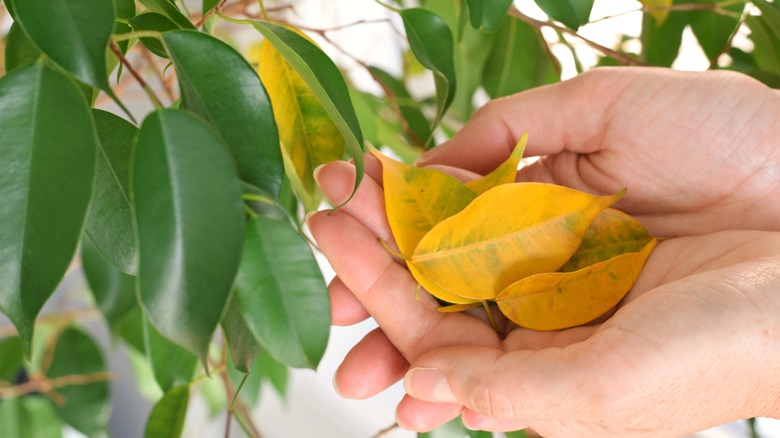
Furthermore, mealybug feeding often leads to yellowing, stunting, and reduced vigor, as sap loss weakens tissues and slows houseplant growth. Also, make sure to check the pots, drainage holes, and potting soil for mealybugs. And if your plants are showing signs of water stress without any apparent reason, check the roots as well. Some mealybug varieties also hide in the roots.
Treating houseplants to get rid of mealybugs
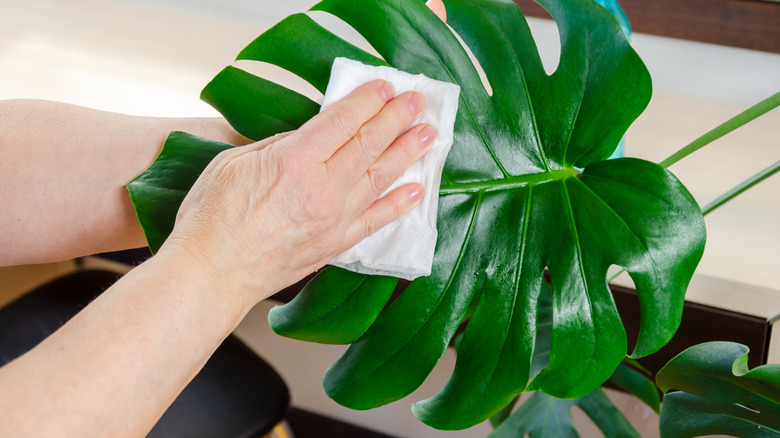
The first thing to do when you spot a mealybug infestation in one of your houseplants is to try to contain it so that it doesn't spread to other plants as well. Once you have done that, carefully locate and remove any mealybugs you can find on your plant by hand. You might also use a cotton swab dipped in rubbing alcohol to wipe mealybug colonies and eggs on your plants.
In addition, you can use a sharp jet of water to rinse the foliage. It will dislodge any bugs still attached. But make sure to check any crevices afterwards carefully. You can also prune heavily infested parts with mealybugs using clean tools. Using dirty tools is one of the most common plant pruning mistakes that everyone needs to avoid.
If the problem is root mealybugs, however, you will need to remove your houseplant from its pot for treatment. Don't worry, though — it's easy. All you need to do is dig up the plant and wash the soil away to examine the roots. Remove any roots that are too damaged. Then, simply put the plant back into fresh medium in a cleaned container, and you are good to go.