

The Indoor Plant That Thrives In Humid Areas Of Your Home And Has A Lovely Lemon Scent
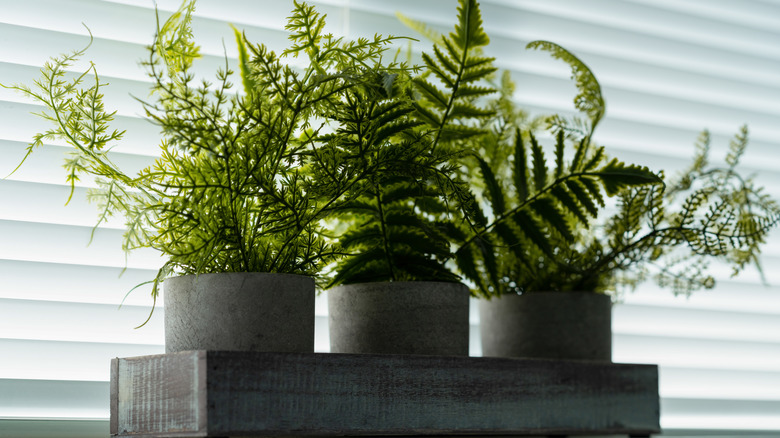
Ferns are a mainstay among indoor plants, thanks to their elegant, feathery foliage and ability to thrive in low light. Since ferns thrive on moisture in the air, they are a smart houseplant choice if you have pockets of humidity in your home. How do you choose a fern to make the perfect houseplant? A fern that provides a bonus, like a fresh fragrance, could be the right selection. The lemon button fern (Nephrolepis cordifolia 'Duffii') is a great indoor plant that flourishes in humid areas, offering a delicate lemon scent. Rubbing or crushing the foliage can boost the lemon fragrance, keeping your home smelling fresh.
This petite fern is a dwarf cultivar of the standard tuberous sword fern (Nephrolepis cordifolia), and is a variety of a Boston fern (Nephrolepis exaltata). These ferns grow no more than a foot tall and wide, and the rounded edges of their fronds look like little buttons. Much like many other ferns, lemon buttons can be easy to tend but have specific instructions to help keep them from flaking, withering, or turning yellow. While requiring a humidity level of about 50%, it's important to understand how to care for them in order to meet their humidity needs.
Growing lemon button ferns indoors
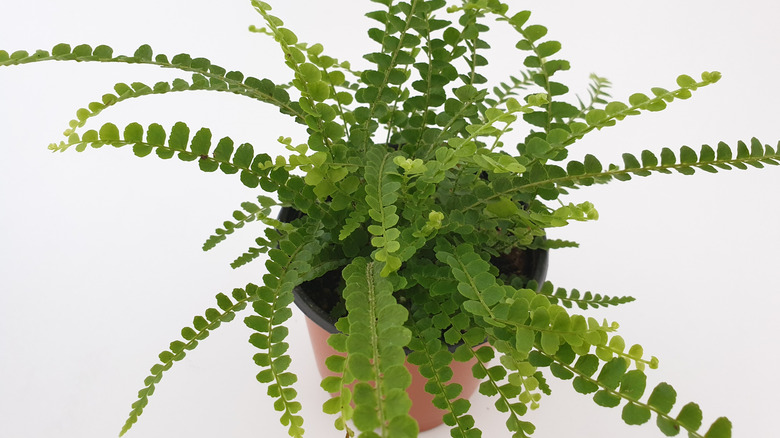
Lemon button ferns require a sufficient soil medium and a container with holes to provide ample drainage for them to grow. The fern should get bright, indirect light, such as from a window facing east. This plant wants consistently moist soil but not so soggy that it would rot the roots, and it should be watered at least once a week. The fern does well at temperatures above 60 degrees Fahrenheit. This houseplant should be fertilized monthly from spring through summer, using water-soluble 20-20-20 fertilizer at half strength. After you purchase a lemon button fern, be sure to follow the label for proper instructions.
It's essential to choose a humid area in your home to place your lemon button fern. This foliage is a good choice among plants to keep in a bathroom for humidity and aromatherapy. Here are some helpful tips for growing healthy houseplants in bath areas. In addition to bathrooms, other interior areas that tend to be the most humid are kitchens, basements, and laundry rooms, all of which could be the right home for your fern, as long as you also meet the plant's lighting needs. Light may be a challenge in a basement, but lemon button fern owners report success with grow lights.
To achieve the fern's preferred humidity level, consider a pebble tray filled with water placed under its container, or a humidifier. If owning a lemon button fern is appealing to you, but you're not sure your home can provide enough humidity, you have a couple of choices. You can learn how to increase humidity levels for plants using tricks like grouping plants together or placing a bowl of water near humidity-loving ferns. Another choice is to plant lemon button ferns in a terrarium in your home, for which it's well suited.