

The Bathroom Essential That Will Make All Your Chrome Surfaces Shine Like New
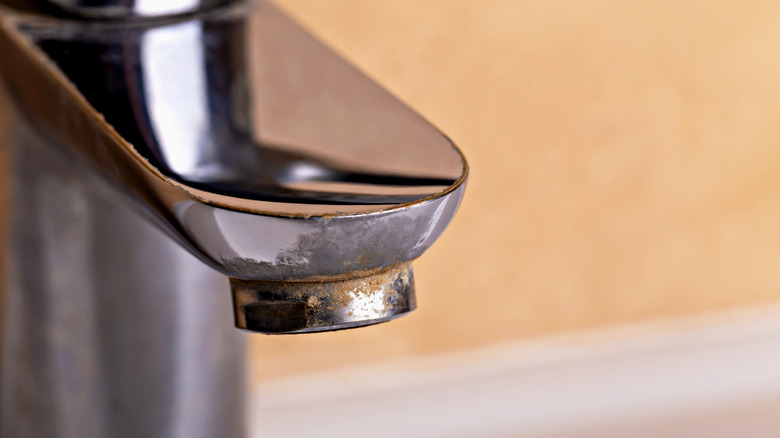
There could be a myriad of reasons behind the cloudy appearance of your chrome fixtures. You may be dealing with the classic issue of hard water stains, which appear when your water supply makes its way through minerals with high levels of calcium, such as chalk or limestone. As the water evaporates, it leaves behind the deposits, making the unappealing white and crusty clouds that you see on your chrome faucets and hardware. You may also be dealing with product residue, such as soap or shampoo, or even mold. If you want an easy way to clean the chrome hardware in your home and make your fixtures look new again, you only need one simple ingredient you can find in your bathroom: Toothpaste.
Thanks to its abrasive properties, toothpaste can act as a makeshift chrome cleaner. It also contains baking soda, which works as an excellent abrasive that won't scratch the material. Whether you're cleaning a chrome lamp, a silverware set, or a sink faucet, you can use toothpaste as a quick and easy way to shine up this sensitive surface. Depending on how tough the stain is, this trick should take less than 30 minutes. You can also clean multiple spots in your bathroom with toothpaste, including your shower doors and porcelain sinks.
How to use toothpaste to clean chrome
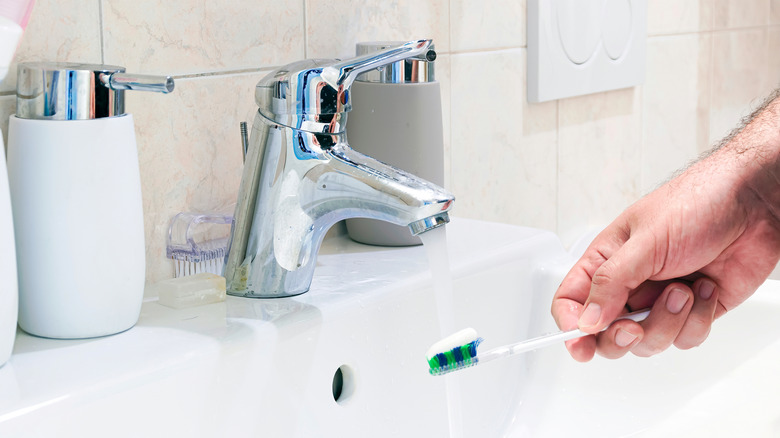
This bathroom essential can not only banish stubborn hard water stains but also polish tough areas like your shower glass, chrome sink faucet, or bathtub hardware. This cleaning tactic can work on all types of chrome items, like furniture, silverware, or entryway hooks. Before adding toothpaste to chrome, ensure you are using a non-gel toothpaste, as gel toothpastes don't contain the same helpful abrasive ingredients. Similarly, avoid toothpastes with added dyes that may leave unwanted color streaks.
You can either use your finger or an old, soft toothbrush to apply the paste to the dirty chrome areas. The latter option of the toothbrush works best, allowing you to rub the product deeper into the stain. However, be cautious, as you don't want to accidentally scratch the surface.
Allow the paste to sit on the affected area for anywhere from one to 30 minutes before wiping it off and polishing with a clean toothbrush, sponge, or soft cloth. After you wipe and polish with the toothpaste, rinse the area with water and dry it completely. You can then buff the area with a dry cloth. Remember that leaving water remnants behind can easily turn into new hard water stains, which will require starting the process over again later.