

12 Timeless Kitchen Floor Ideas To Try In Your Home In 2026
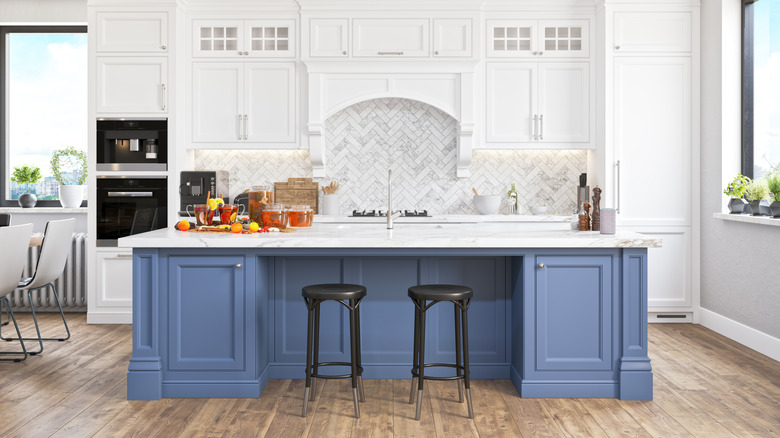
If you're trying to design your new kitchen to ensure it doesn't fall out of fashion, then please, do not forget about your floor. We know how easy it is to overlook. After all, it's only there to be walked on, right? The problem with this way of thinking is that it overlooks a fundamental part of kitchen design. Your flooring, quite literally, lays the foundation for the rest of your kitchen, and if timelessness is truly your goal, then it's important to choose the right one.
The key to this lies in matching your floor to your home's architecture and overall aesthetic. For example, do you live in an old cottage with a farmhouse style kitchen? Or is your home newly built, with modern, handleless cabinetry and fully-integrated appliances? Whatever your answer, there are plenty of ways to achieve timelessness with your kitchen flooring, and there are some that can be tweaked to suit both classic and contemporary homes alike.
In this guide, we'll cover 12 timeless flooring ideas to consider in your new kitchen. Some, like solid wood flooring, will pique the interest of those hoping to draw on the traditions of shaker style. Others, like poured concrete, will fan the flames of desire in those striving for a look both sleek and chic. What they all have in common, however, is timelessness, so if you're after a floor that you'll love forever more, this guide is most certainly for you.
Light-toned flooring creates a neutral, versatile backdrop that stands the test of time
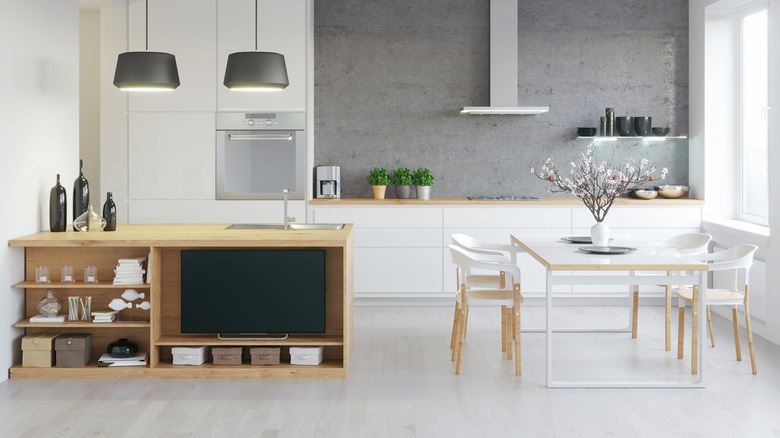
Light-toned flooring provides a backdrop to your kitchen design that's both neutral and versatile. It's easy on the eyes and steals little attention away from the other colors, accessories, and accents that you weave into your wider kitchen. This lack of visual drama means you're far less likely to tire of it, which, translated, means it will stand the test of time.
It's an especially great choice in smaller kitchens, where darker flooring could quickly cause the space to feel claustrophobic. Yes, darker tones may look nice to start with. They may even make your space feel cozy and warm. However, if your kitchen is prone to clutter, or you have a growing family demanding more and more space, then that dark flooring is only going to contribute to a future feeling of confinement. Lighter colors, however, work in the opposite way. They lend a feeling of spaciousness that it's hard to imagine living without once installed.
To help make this idea as timeless as possible, shoot for muted tones. Beige, cream, sandstone, and gray are all great choices. They'll work with an array of kitchen styles, too, meaning that while you may wish to update your cabinetry and hardware from time to time (perhaps the next time copper fixtures are "in"), your flooring needn't move a muscle to accommodate your future changes.
Large, nondescript planks and tiles age gracefully while helping to visually stretch smaller spaces

A common misconception is that large-format flagstone tiles are best reserved for larger spaces, when in fact they're perhaps nowhere better used than in smaller rooms. Since it requires fewer of them to cover the floor space, the end result feels more seamless and therefore more expansive. Another misconception is that larger-format flooring is a modern invention. It's true that large-format tiles have certainly undergone an advent in the last few decades, as manufacturing processes have enabled them to be easily made and therefore more widely available. However, you need only look at the long floorboards used in traditional homes to realize that large-format flooring transcends the trends of centuries.
As with any type of flooring, the trick to ensuring that bigger tiles look better in your home is to choose your planks or tiles carefully. Flooring will only ever feel timeless if it blends seamlessly with the rest of your house, which means that, as well as tying it with your kitchen design, you should also match it to the architecture of your home. For example, large, concrete tiles work exceptionally well in industrial spaces. Similarly, large-format wood planks run beautifully underfoot in traditional cottages, especially those with matching beams along the ceiling.
Whichever style you go for, make sure to choose your tones and patterns with care. For a timeless look, nondescript tiles are far more likely to age gracefully than something really distinctive or trendy. Don't forget, fashion can fall out of favor as quickly as it becomes popular. In other words, if you decide to follow the latest trends, your kitchen could quickly find itself left behind.
Fine, minimal grout lines will never age as part of a modern kitchen style
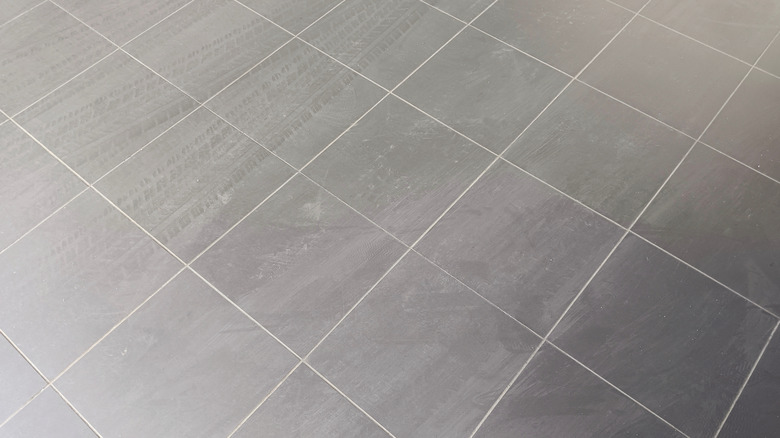
If you're opting for a modern kitchen style, then minimal grout lines are sure to help your floor look good in the long term. They suit the clean lines of modern design more than chunkier grout, which is a big tick in their favor. So, too, is the fact that thinner grout lines are easier to clean, which is sure to add to their staying power. They are also an excellent choice in smaller kitchens, where fewer "interruptions" to your flooring can help to achieve a sleek, spacious look. Wherever you use them, the key to success with minimal grout lines is to use rectified tiles. These are mechanically cut so that their edges are laser-straight. In turn, this means that they can be bonded with less grout than traditional, rougher-hewn tiles.
Now, you'll still need to choose your kitchen grout color carefully, as it won't be completely invisible. What's more, as with other flooring ideas, it's important to match this style to your type of house. For example, whereas large concrete tiles and minimal grout may look nice for a while in a traditional cottage, they could eventually become conspicuous simply because they aren't an architectural match. That's not to say that you can't use thinner grout lines in a cottage-style setting, it's just that you may need to get a little creative with your tile choices. Classic checkerboard tiles, for example, may suit a more traditional cottage better than large, uniform concrete tiles. Alternatively, you could go for natural stone tiles in a smaller size to match the architectural style of an older, traditional building.
Herringbone tiles bring ancient sophistication to an array of kitchen aesthetics
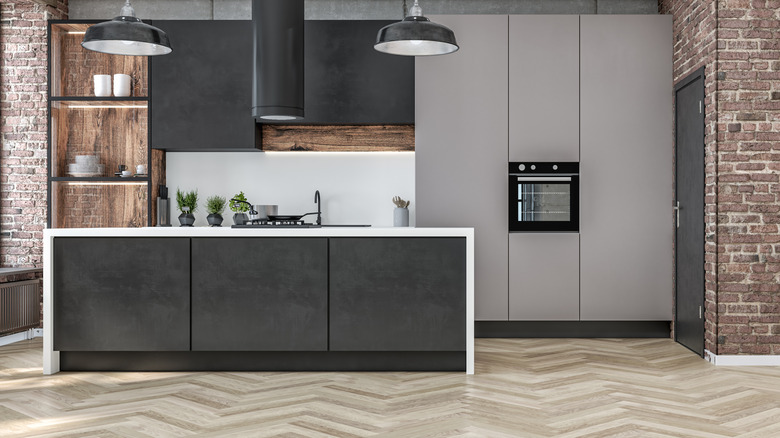
Herringbone tiles are suited to a range of styles, from rustic farmhouse to sleek, modern, even minimalist schemes. They are also utterly timeless, and in case you're concerned about their staying power, you should know that the pattern has thousands of years of history, with origins that date as far back as ancient Mesopotamia and Egypt. In other words, they've been around for a while, and are unlikely to go anywhere anytime soon. They're available in both stone and wood, as well as in vinyl. And while the best herringbone floor materials will depend on your household's needs, they all help to make a smaller space feel expansive. What's more, since they're available in a multitude of styles, you can specify one that's as dark or as light as you like.
Darker-toned herringbone lends itself better to flooring in larger kitchens. Lighter tones, meanwhile, may be more appropriate for smaller spaces. To ensure you retain the "timelessness" that inspired you to choose herringbone in the first place, shoot for a tone that's somewhat neutral. In the short term, this will provide a foundation for bolder colors in your wider kitchen design. Longer-term, it'll help to keep your design options open should you ever decide to remodel the rest of your kitchen.
Natural slate grounds modern kitchens with timeless natural colors
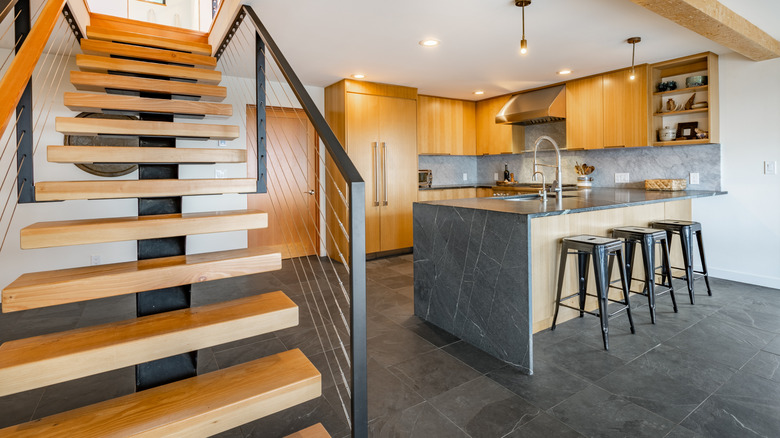
If you struggle to stick with one design scheme for more than a few years, then you'll want a flooring that can lend itself to different, future schemes. If so, natural slate is a superb choice. It can be sourced in an array of tones, including classic slate gray, as well as earthy browns, reds, and even greens. It's also a superb conductor of heat, making it the perfect partner for underfloor kitchen heating.
In older buildings and cottages, it's a natural partner, pairing harmoniously with more traditional architectural features. But it's equally at home in newer builds, helping to ground modern kitchens with timeless natural colors — especially when paired with minimal grout lines. In either case, opting for neutral, earthy tones will provide a foundation for various color schemes — both now and in the future.
Wood partners effortlessly with shaker-style cabinetry for a look that doesn't age
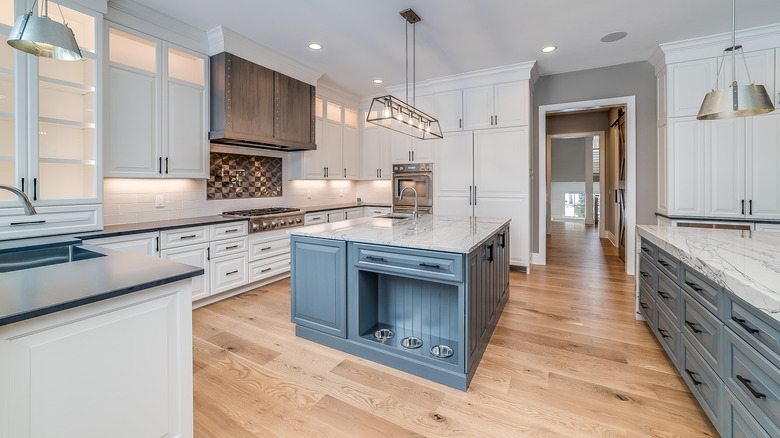
Wood has a long and storied history of use in our homes. It's used to frame our houses, to joist and truss our roofs, and it's the material of choice for flooring in countless homes around the world. It's also synonymous with the shaker style — perhaps the most timeless kitchen style of all. Shaker kitchens have their roots in Quakerism, which itself favors genuine quality and craftsmanship over trends and replaceable styles. In other words, if it's timelessness you want, then a shaker kitchen with wood floors could well be the solution for you.
Now, one of the things to know about shaker-style kitchens is that they usually only refer to incorporating wood into the cabinetry. More than that, untreated wood, even hardwood, is not usually recommended for kitchen flooring. Being naturally porous, wood is prone to absorbing spillages. It can also warp over time, especially in rooms with severe humidity and temperature fluctuations. That's not to say that you can't use wood, it's just that you'll need to treat it first.
By applying a lacquered finish, for example, you can prevent anything from seeping into the wood, while protecting it from long-term warping damage. Lacquer will also make the wood easier to clean — surely a must for any kind of kitchen flooring. In fact, with the right finish, you'll find that few types of flooring are more timeless than the beautiful simplicity of floorboards. Not only do they look fantastic, but they can also be sanded and refinished, allowing your future self to give your flooring an entirely new look.
Concrete flooring has a long and durable history that can cope with future re-stylings
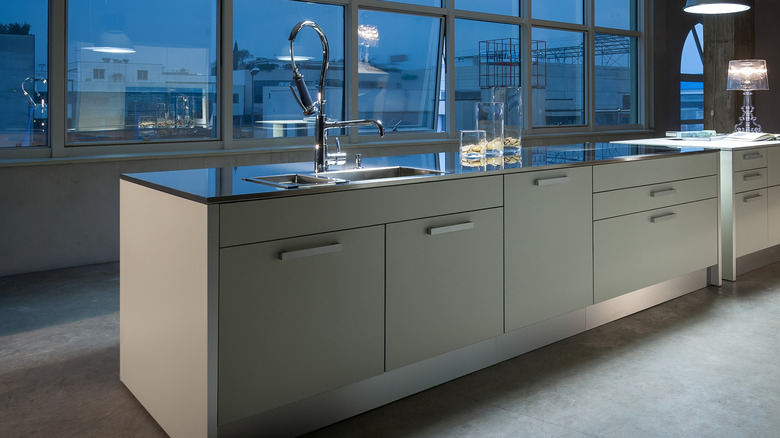
When you think "industrial chic," concrete probably features somewhere in the vision of your mind's eye. It has a long history in industrial flooring, and is the material of choice for such modern schemes. Of course, whether concrete flooring is right for your space depends largely on the design you've envisioned. However, since it provides such a neutral foundation, it's actually a fantastic way to ground an array of different styles and allows you to be bold with accent colors above and around it.
Concrete will last for decades, too. In a smaller room, you could use smaller concrete tiles to give the illusion of more space. This would be the best way to give the look longevity in a cottage-style kitchen, where smaller tiles and visible grout lines will complement the property's wider architecture. In a larger space, you could opt to pour the concrete over your floor, achieving a seamless, grout-free look — much like a screed. This would work especially well in modern kitchens, delivering a smooth, seamless finish that matches the rest of your space.
Terracotta tiles remain rustic without ever appearing outdated

Despite its association with more traditional interiors, its natural warmth means there are lots of creative ways to use terracotta tiles in your home. It suits itself well to an array of design styles, too, from traditional and rustic to modern and eclectic. It's not currently "in vogue," in the sense that subway tiles were all the rage just a few years ago. Yet, it hasn't fallen out of favor, either. Instead, it's remained steadfast — a reliable choice for homeowners hoping to bring that rustic warmth into their interiors. Such steady popularity dates back thousands of years, too, in fact terracotta has origins of use in the home as far back as Neolithic China.
Now, while its use back then boiled largely down to the ready availability of clay, it's hard to deny its appeal as a design choice in modern interior styling. It plays especially well with neutral materials like wood, concrete, and even black metal hardware. It's also visually much warmer than other materials featured so far, such as concrete. For a truly timeless look, pair terracotta with a farmhouse style kitchen, or match its rustic texture with that of more traditional buildings. It'll certainly work with contemporary schemes, but over time, you may find that it jars with the sleek, clean lines of a modern house kitchen.
Sandstone tiles lend warmth and old-world charm to kitchens of myriad styles
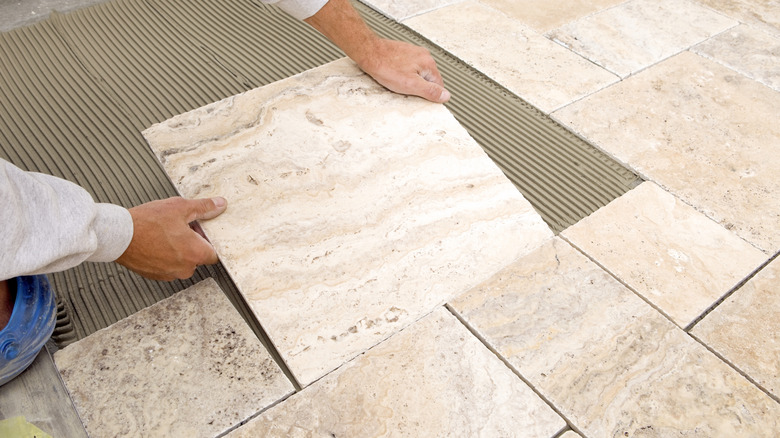
Neutral and natural — two attributes that many of the most timeless floorings have in common — sandstone tiles are ideal for floors where warmth is the name of the game. Like other ideas, they work well with myriad schemes, from traditional shaker style kitchens, to sleek, contemporary styles. You can source them in a variety of natural colors, too, from golden yellow and earthy brown to varying hues of red and gray. And if you're trying to choose the best tiles for your kitchen, a notoriously busy room, it's nice to know that sandstone is also incredibly hard-wearing.
To make your stone flooring feel more timeless, Interior Designer Marie Flanigan tells Homes and Gardens that an irregular laying pattern is best. Perfectly-aligned, symmetrical tiles certainly have their place, especially in modern schemes. But as Flanigan says, an irregular pattern "just feels a little bit more old world, like it was hand laid long ago." In other words, you may feel less inclined to replace it in the future if it feels like an original part of your home.
Tumbled stone tiles will look like they've always been there
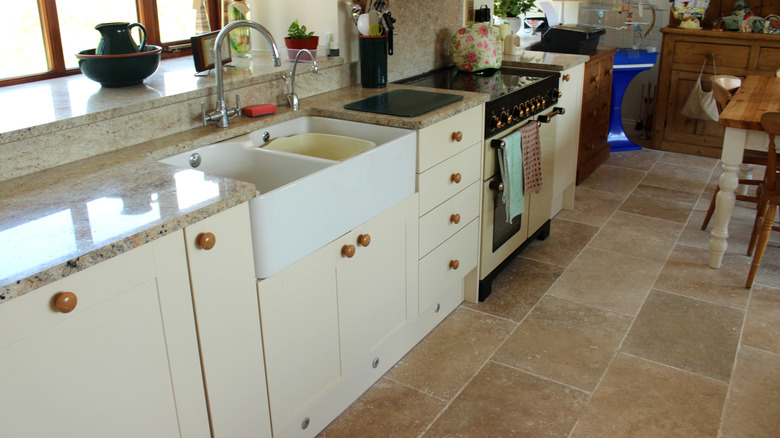
This idea is about infusing your floor with the same timelessness as the very walls of your house. It's especially useful in older, character-filled cottages, where such features are central to the vibe of the interior. It's not always easy, though, and if you've tried before to "accent" your home's original character with more modern flooring ideas, you may have learned the hard way that they can quickly become conspicuous.
Tumbled stone tiles, on the other hand, can feel like they've been in place for years, which is surely the true meaning of the word "timeless." They come in the same shapes and sizes as other stone tiles, however, they undergo a process known as "tumbling," which sees them rotated in a drum with agitants like pebbles and grit. The resulting imperfections soften the harsh lines often associated with brand-new tiles. Instead, they look worn and well-used, their subtle imperfections creating the illusion that the tiles have always been there.
Patterned tiles are an ever-popular choice that can help a space feel clean

The use of patterned and mosaic tiles in home design dates back thousands of years, from the mosaics of Ancient Rome to the frankly-astonishing patterned tiles that were made in Medieval Persia. Today, they are available in an array of shapes, sizes, and patterns, which is a boon to home designers hoping to add some pizzazz to their home interiors. They're especially useful in the kitchen, where those patterns can actually help to achieve a cleaner look.
Now, we're not saying that you shouldn't clean your kitchen floor; we surely don't need to explain the importance of kitchen cleanliness! It's just that, with lighter floors, the dirt that inevitably builds up in the kitchen tends to show itself quite quickly. Patterned tiles, however, work to "disguise" this build up, allowing you to enjoy a cleaner-looking floor for much longer.
If you're planning to give this idea a go, then aim to choose tiles that dovetail with your home's architecture and overall design. For example, beautiful as they are, Moroccan-style tiles may quickly become conspicuous in a modern new-build house. Similarly, geometric-patterned tiles are unlikely to stand the test of time if installed in a farmhouse-style cottage. Your patterns don't need to be particularly "busy," either. The goal is to find a style that matches your home. When you do, you'll find that even the most subtle pattern can help quell your desire to clean daily.
Checkerboard tiles feel both traditional and contemporary
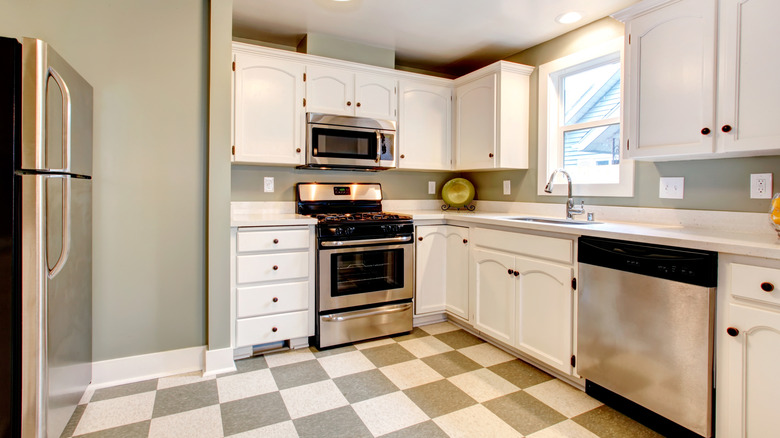
Using checkerboard tiles in the kitchen is one of the oldest tricks in the book. And while it's certainly faded in and out of popularity since its explosion in the '50s, it's done so over and over again, and over the course of multiple eras. In other words, it doesn't timestamp your kitchen with the style of a single, bygone era. Instead, if used thoughtfully, this ageless motif feels both current and considered.
The key to success is choosing the right colors. For example, dropping in the same black and white checkers from your favorite childhood ice cream parlor is unlikely to feel timeless at the heart of a traditional cottage. Sure, it might feel daringly retro when you first install it. You may even receive some compliments. However, in time, you'll almost certainly want to change it. Instead, choose checker colors that match your home architecturally, like earthy reds, browns, and yellows. You could even use tumbled stone tiles to build out your checker pattern, giving the floor the aged, well-used look of a feature that's always been there.